dailynewsnblog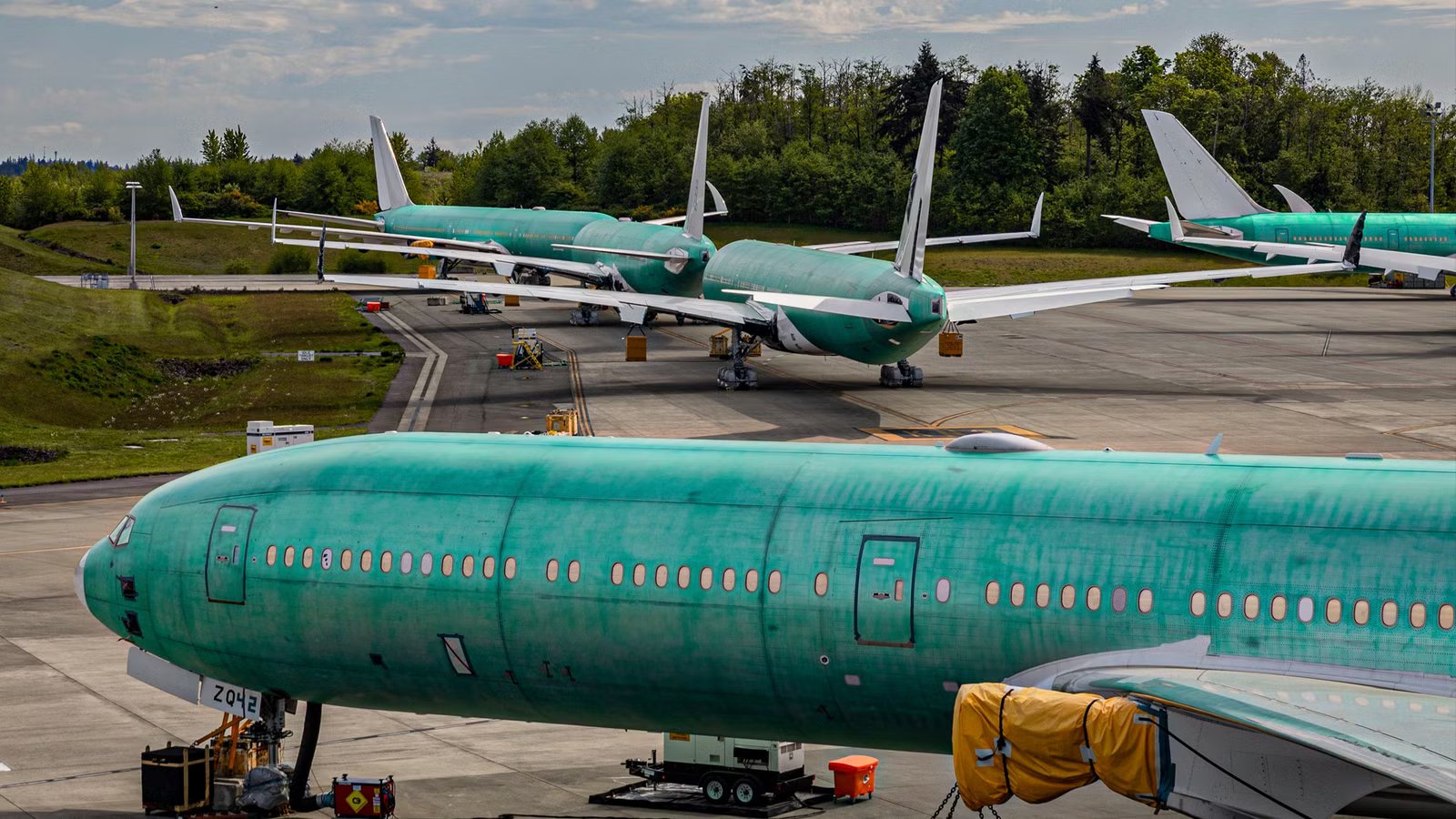
The 2026 Farnborough Airshow came and went, with plenty of orders sealed and the latest technology on full display. With  Emirates President Sir Tim Clark being present, attention naturally turned to the Boeing 777X. When asked about the first ten early-production Boeing 777-9 airframes sitting in storage at Everett, Clark explicitly refused to accept the aircraft built between 2019 and 2020 and quipped that “Heinz would be interested – baked bean cans.” The comment highlighted a surreal reality in modern commercial aviation: that a 252-foot (76.7-meter) flagship widebody can be fully assembled, painted in customer livery, parked on a tarmac, and rendered financially obsolete before it ever flies a single revenue mile.
This rejection is the culmination of a seven-year certification delay that fundamentally broke Boeing’s manufacturing model. The Everett assembly line was kept running while Federal Aviation Administration ( FAA) regulators overhauled compliance standards following the Boeing 737 MAX groundings. During this time,  Boeing accumulated roughly 30 to 40 early-build 777-9 airframes in stored inventory. What was originally intended as a proactive build-and-store strategy to protect global supply chains morphed into a $15 billion accounting nightmare, forcing airframe structural changes that cost more to execute than the stored aircraft are worth.
More Difficult Than First Anticipated

So how can a brand-new widebody airliner end up facing the scrapyard? In traditional aerospace production, airframe manufacturers historically began assembling customer aircraft before completing every phase of regulatory flight testing. When Boeing launched the 777X program in 2013, the plan assumed that regulatory approval from the FAA would proceed on schedule, allowing early production models to roll off the line in 2019 and undergo minor retrofits before delivery.
That operational strategy disintegrated as FAA certification rules underwent a sweeping transformation. As regulators abandoned delegated certification practices and scrutinized every flight control algorithm, structural fitting, and software interface, the certified baseline design shifted continuously. Each regulatory modification required Boeing to adjust subsequent manufacturing drawings, leaving the early 2019 and 2020 production frames increasingly out of alignment with the evolving certified standard.
As flight testing stretched from months into years, the inventory at Paine Field expanded into a massive logistical burden. Sitting outdoors in the damp Pacific Northwest climate, early-build fuselages accumulated atmospheric weathering while their internal systems grew technologically obsolete. Rather than generating delivery milestone cash flow, these stored widebodies steadily consumed capital, ultimately driving roughly $15 billion in cumulative accounting charges and program write-downs for Boeing.
Not Something Any Airline Would Want

Bringing a stored widebody up to airworthiness standards does not happen overnight and takes a lot of time to complete. Unlike standard assembly, where technicians install components sequentially inside open fuselage barrels, change incorporation forces mechanics to work backward. Engineers dismantle completed passenger cabins, tear open composite floor beams, cut into sealed wing skins, and remove complex wiring looms just to reach the structural fittings that need replacement.
Structural teardowns incur an immense labor penalty that completely upends production line economics. Retrofitting an early-build widebody takes up far more total labor hours than building a brand-new production frame from scratch. Technicians need to perform delicate surgical modifications around existing hydraulic lines and flight control cables, elevating the risk of inadvertent structural damage during the rework process.
Compounding the financial burden is the weight penalty that retrofitted aircraft routinely carry. Adding structural reinforcement plates, secondary wiring bypasses, and heavier mounting brackets increases the operating empty weight of the airframe. For long-haul carriers operating 16-hour transpacific routes, carrying even an extra 1,500 pounds (680 kg) of structural dead weight reduces payload capacity and burns extra jet fuel across a 20-year operational lifespan, making retrofitted frames distinctly less attractive to premier airlines.
Scrapped Before It Could Even Begin Service

The financial reality of incorporating the change came to fruition in late summer 2025 with the quiet dismantling of airframe WH007. Identified as Line Number 1611, the jet was the seventh 777-9 constructed by Boeing and was originally painted with a partial Emirates livery on its folding wingtips. Manufactured in late 2019, WH007 was meant to be an early customer delivery, but instead spent six years parked on the tarmac at Paine Field waiting for regulatory approval that never arrived.
During its six-year outdoor storage, WH007 suffered from severe structural and system drift relative to the latest flight-test aircraft. The airframe featured early-generation composite wing layups, older flight control wiring harnesses, and early core structural fittings that the FAA subsequently mandated be replaced. To bring WH007 up to the final Q2 2027 certified design baseline, Boeing engineers faced the prospect of cutting open major pressure bulkheads and replacing primary wing-to-body join fittings.
When Boeing financial analysts evaluated the math, the conclusion was not a good one, because the cost of performing change incorporation on WH007 exceeded both the residual value of the airframe and the cost of building a fresh jet on the active production line. In late summer 2025, Boeing made the unprecedented decision to scrap the zero-flight-hour flagship widebody, harvesting usable avionics and titanium components before cutting up the composite fuselage. The destruction of WH007 proved that under modern certification regimes, an uncertified widebody can become financially worthless before taking off on its first commercial flight.
Not What Boeing Would Have Wanted

The financial breakdown of change incorporation eventually culminated in the biggest blow yet to the 777X program, with the formally rejected initial batch of ten 777-9 airframes from Emirates. As the launch customer for the type with 270 firm commitments across the 777X family, the Dubai-based carrier holds immense leverage over the program. Clark made it clear that taking airframes constructed between 2019 and 2020 was unacceptable, telling reporters that “we’re not taking that batch and that’s it” because the aircraft would be roughly eight years old by the time they entered revenue service in Q2 2027, consuming half of their main 15-year operational lifespan on the ground.
Accepting early-build airframes that required extensive patchwork for structural modifications presented severe operational drawbacks for Emirates’ premium long-haul strategy. Operating a non-standard sub-fleet of ten heavy airframes alongside freshly built production models would introduce maintenance complexities, reduce belly-hold freight capacity, and increase fuel burn across ultra-long-haul routes connecting Dubai to North America and Australasia.
With Emirates refusing the early airframes, Boeing altered its near-term delivery prioritization. Instead of attempting to hand over reworked 2019 airframes to its largest customer, the manufacturer focused on delivering freshly built, standardized production models starting with European launch carrier  Lufthansa in the second quarter of 2027. The operational shift does still leave roughly 30 early-build 777-9s stranded as uncommitted white tails at Paine Field, leading Boeing to either find secondary buyers willing to accept discounted, heavier airframes or write even more of them off entirely.
The Emergence Of Shadow Factories

A common operational challenge during prolonged certification delays is determining where and how a manufacturer can actually manage dozens of 250-foot (76.2 meter) widebody aircraft requiring deep structural retrofits without paralyzing its primary assembly lines. When aircraft roll off the final assembly line without regulatory clearance, they cannot simply be parked and ignored. Each stored airframe requires continuous monitoring, engine preservation runs, protective weather wrapping, and periodic repositioning across the tarmac at Paine Field.
To execute the massive rework program without disrupting new aircraft production, Boeing repurposed expansive floor space inside its historic Everett factory complex. By using bays previously dedicated to the iconic 747 jumbo jet line, engineers established a specialized shadow factory focused entirely on change incorporation. Rather than moving smoothly down an automated assembly flow, early-build 777-9s must be towed into these specialized modification bays for months of static teardown, structural reinforcement, and systems integration.
Operating a parallel shadow factory imposes a heavy capital and logistical drain on the entire Everett industrial complex. Stranded inventory has now tied up over $5 billion in working capital, while highly skilled mechanics and structural engineers are pulled away from active production lines to perform tedious retrofits on six-year-old airframes. Boeing has inadvertently diverted engineering resources, creating secondary bottlenecks across Boeing’s commercial lineup and complicating efforts to ramp up production rates on other widebody programs.
The Real Turning Point

The 777-9 obsolescence crisis will now start to drive major changes in how global aerospace manufacturers manage complex commercial aircraft development programs. The 777X delay saga has already had the industry on high alert, but the landmark decision from Emirates to reject the aircraft will likely be the biggest turning point yet. Starting production before receiving final regulatory certification was always considered an acceptable industrial risk designed to shorten the time between initial flight testing and first customer delivery. However, the combination of stricter post-737 MAX regulatory oversight and complex modern composite structures has exposed concurrency as a multi-billion-dollar trap.
Moving forward, airframe manufacturers across both Boeing and Airbus are shifting toward a strict, sequential development model. Regulators like the FAA and EASA no longer allow delegated certification flexibility, requiring exhaustive validation of every structural calculation and software line before issuing type certificates. As a result, building dozens of customer aircraft before achieving airworthiness approval is no longer economically viable, as the cost of change incorporation can easily exceed the value of the airframe itself.
While the certified 777-9 will eventually serve as the premier long-haul flagship for international carriers throughout the 2030s and 2040s, the early production fleet at Paine Field stands as a monument to a failed manufacturing strategy. The decision to scrap zero-flight-hour airframes like WH007 is a signifier that in modern aerospace engineering, a completed airliner is only as valuable as its regulatory compliance documentation.