dailynewsnblog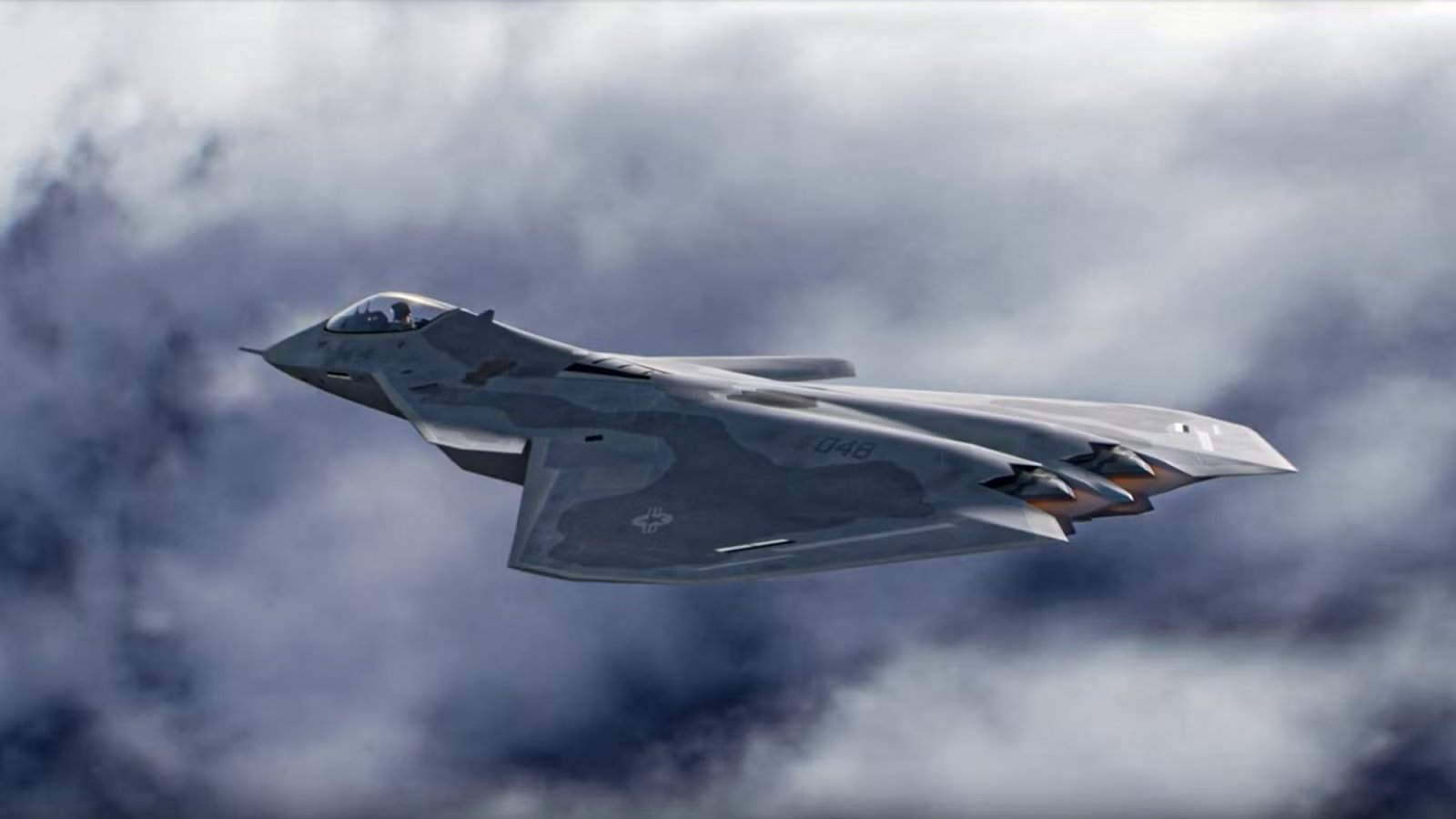
A fighter jet’s engine is a critical part of the aircraft and its capability. For most past competitions, aircraft manufacturers pitched their demonstrators powered by an engine that they selected. But this was different for the program that led to the F-22 Raptor. Both Northrop Grumman with its YF-23 and Lockheed Martin with its YF-22 were required to build two demonstrators, with one powered by the Pratt & Whitney YF119 and the other by the General Electric YF120 next-generation engines.
This is similar to how the US Air Force has run its replacement NGAD program, but with a twist. In March 2025, the United States Air Force selected the Boeing F-47 as the sixth-generation manned component of the program. However, as of mid-2026, it appears the Air Force has not yet selected an engine for the aircraft.
The Selection Of The Boeing F-47

While the F-22 Raptor is considered the world’s most capable air-to-air superiority fighter, its advantages have progressively eroded since it entered service in 2005. The development of new integrated air defense systems is believed to have made the aircraft more vulnerable, while long-range fighter jets like the J-20 are assessed to pose a threat to its tanker aircraft and other enablers. Ongoing upgrades are expected to keep the Raptor at the cutting edge into the 2040s, but it is still at its core a 1990s design.
Range, thermal management from new systems, maintenance-heavy stealth coatings, and some physical design choices all limit how much the aircraft can realistically be upgraded. Consequently, the Air Force is looking for a much larger family of integrated next-generation systems to replace it. The program, called the Next Generation Air Dominance program, includes the manned F-47 fighter and unmanned Collaborative Combat Aircraft.
One of the key features of the new aircraft will be its next-generation Adaptive Cycle Engines. These are designed to increase fuel efficiency by around 25% and boost its range. They will allow more advanced thermal management to allow the aircraft to handle huge amounts of sensors, avionics, and other electronic systems generating tremendous heat. The engines will also generate much more electricity.
The Need For Variable Cycle Engines

GE Aerospace has been developing variable-cycle and adaptive-cycle engine technologies since the 1980s, building on even earlier research. Unlike Pratt, GE offered an early variable-cycle engine for the program that led to the F-22, but it was rejected by the Air Force in the early 1990s. While the GE engine largely outperformed the more conventional Pratt engine, the Air Force considered GE’s offer too risky and immature, and the Pratt option was safer and good enough.
Now the Air Force is looking for a generational leap over the F119 and believes this requires an Adaptive Cycle Engine. Decades have passed, and technology has improved and matured since GE’s initial offering. GE’s engine development for the upcoming sixth-generation fighter has been ongoing since 2007 with the ADVENT program and then with the AETD program in 2012.
Program (per GE Aerospace, etc.) | Years | Engine/s | Aircraft |
|---|---|---|---|
Advanced Tactical Fighter (ATF) Propulsion Competition | 1983-1991 | GE YF120 vs Pratt & Whitney YF119 | Advanced Tactical Fighter (later F-22) |
Adaptive Versatile Engine Technology (ADVENT) | 2007-2012 | Early adaptive-cycle technology demonstrators | Foundational work |
Adaptive Engine Technology Development (AETD) | 2012-2016 | GE and Pratt demonstrator designs | NGAD begins 2014 |
Adaptive Engine Transition Program (AETP) | 2016-2022 | GE XA100 vs Pratt XA101 | NGAD |
Next Generation Adaptive Propulsion (NGAP) | 2022-present | GE XA102 vs Pratt XA103 | NGAD/F-47 |
Projected engine fielding | 2030-2031+ | Winning engine | F-47 |
The Air Force is currently running its Next Generation Adaptive Propulsion (NGAP) program in parallel and has awarded GE Aerospace and Pratt & Whitney contracts to develop a mature adaptive cycle engine technology. In 2016, GE announced the Air Force had “awarded GE Aviation a $1 billion contract to continue maturing its three-stream adaptive cycle engine via the Adaptive Engine Transition Program (AETP). AETP is scheduled to run through 2021 with extensive component, rig and engine testing.”
GE Aerospace Picks Up From F-22 Competition

The Air Force disclosed in 2020 that it had flown full-scale NGAD demonstrators and both GE and Pratt have ground-tested adaptive cycle demonstrator engines. It is possible the demonstrator aircraft flew with these engines, but it is not confirmed. But while the Air Force announced it had selected Boeing as the prime contractor for its next-generation fighter jet, it has not yet announced a winning engine manufacturer.
The GE demonstrator is the XA100 (developed under the Adaptive Engine Transition Program), and it offers around 25% better fuel efficiency, significantly increased thrust, and much better thermal management. GE claims the “XA100’s advanced technologies and adaptive modes allowed the XA100 engine to deliver 25% fuel efficiency resulting in a 30% range increase, 2X mission systems cooling, and 25% improvement in acceleration over the most advanced engines being produced today.”
Meanwhile, Pratt is developing its competing XA101 engine. Less is known about the engine partly due to Pratt being more coy about it. It is known to be an Adaptive Cycle Engine and is intended to offer a generational upgrade over the F-22’s F119 and the F-35’s F135. These ongoing projects have allowed the companies to move onto the next stage of the competition: Next Generation Adaptive Propulsion (NGAP). GE is developing the XA102, and Pratt is developing the XA103 for NGAP.
On To The Next Generation Adaptive Propulsion (NGAP) Program

With the AETP program now having matured adaptive-engine technology, the current NGAP builds on that work to produce an engine for the F-47. Put another way, the experience gained during the XA100 and XA101 programs allowed both companies to progress into the Air Force’s Next Generation Adaptive Propulsion (NGAP) program. In April 2025, GE stated it had completed the XA102’s Detailed Design Review with the Air Force clearing a major milestone on the road toward fielding the engine.
As this program continues and as Boeing develops the F-47 that will be able to operate either engine, the Air Force is considering which engine to select. This offers it several advantages. It allows the aero engine companies more time to technologically develop the complex engines, it keeps the competitive pressure between GE and Pratt in place for longer, and allows for budget flexibility.
Not knowing which engine is to power an aircraft would typically be a major design hindrance. However, Boeing believes it can continue refining the F-47’s structure, inlets, and cooling systems without knowing which engine will be selected while that engine continues to be developed. Separately, a YouTube channel (Project Fear) got into the news for filming what may have been a demonstrator F-47 in flight near Area 51 in June 2026. The design had canards and was described by the crew as incredibly quiet. What they saw and filmed remains a point of intense debate.
The Engines Are Likely Highly Mature

An engine will ultimately need to be selected before the F-47 enters flight testing with its production standard propulsion system. The Air Force (optimistically) wants a production-representative example of the F-47 flying by 2028 and for the type to enter initial operational service in 2029/2030. This suggests the Air Force will select a winner soon.
Saying the F-47 will fly three years before its engine is ready is misleading and too simplistic. Early demonstrators of the F-47 have likely been flying with early demonstrators of its eventual engines for six or more years now. Early testbed examples of the F-47 may be powered by interim or surrogate engines while its final engine is developed, but this is not confirmed. For now, so little is publicly known about the maturity and status of these engines that discussion can easily veer into unfounded speculation.
It is plausible that it won’t be until 2031 that a fielded engine is ready, but this is unclear based on publicly disclosed information. There is reason to believe that the engines are already approaching a high state of maturity even though a winner has not yet been selected. Both companies have accumulated thousands of hours of component, rig, and full-engine testing over successive adaptive-engine programs. The production XA102/XA103 designs remain in development, but they are evolutionary descendants of the XA100/XA101 and not clean-sheet engines.
Advanced Fighters Commonly Have Interim Or Downrated Engines Initially

It is quite common for advanced fighter jet programs to enter service before receiving their intended engines; early examples have to make do with legacy interim engines. One example is the Russian Su-57 Felon that remains powered by the legacy interim AL-41F1 engine. The aircraft entered service in 2020, and as of mid-2026, the entire operational fleet continues to use these engines. A test article has only recently appeared with the intended Izdeliy 30.
The Chinese J-20 is another example. It was initially developed with the Russian AL-31FN, first flying in 2011 and entering service in 2016. Between 2018 and 2022, it started to transition to the interim Chinese-built WS-10C engine. Reports started to emerge between 2023 and 2025 that low-rate production of the aircraft was underway with the intended WS-15 engines. It appears the WS-15 finally entered service in 2025.
Another example includes the venerable F-14 Tomcat, which had to make do with the Pratt & Whitney TR30 while the F401 was being developed. However, the F401 was eventually canceled, and the Tomcat was instead fitted with the GE F110. The Super Hornet was intended to use a more advanced variant of the F404 but ended up with a more evolutionary upgrade in the form of the F414.