dailynewsnblog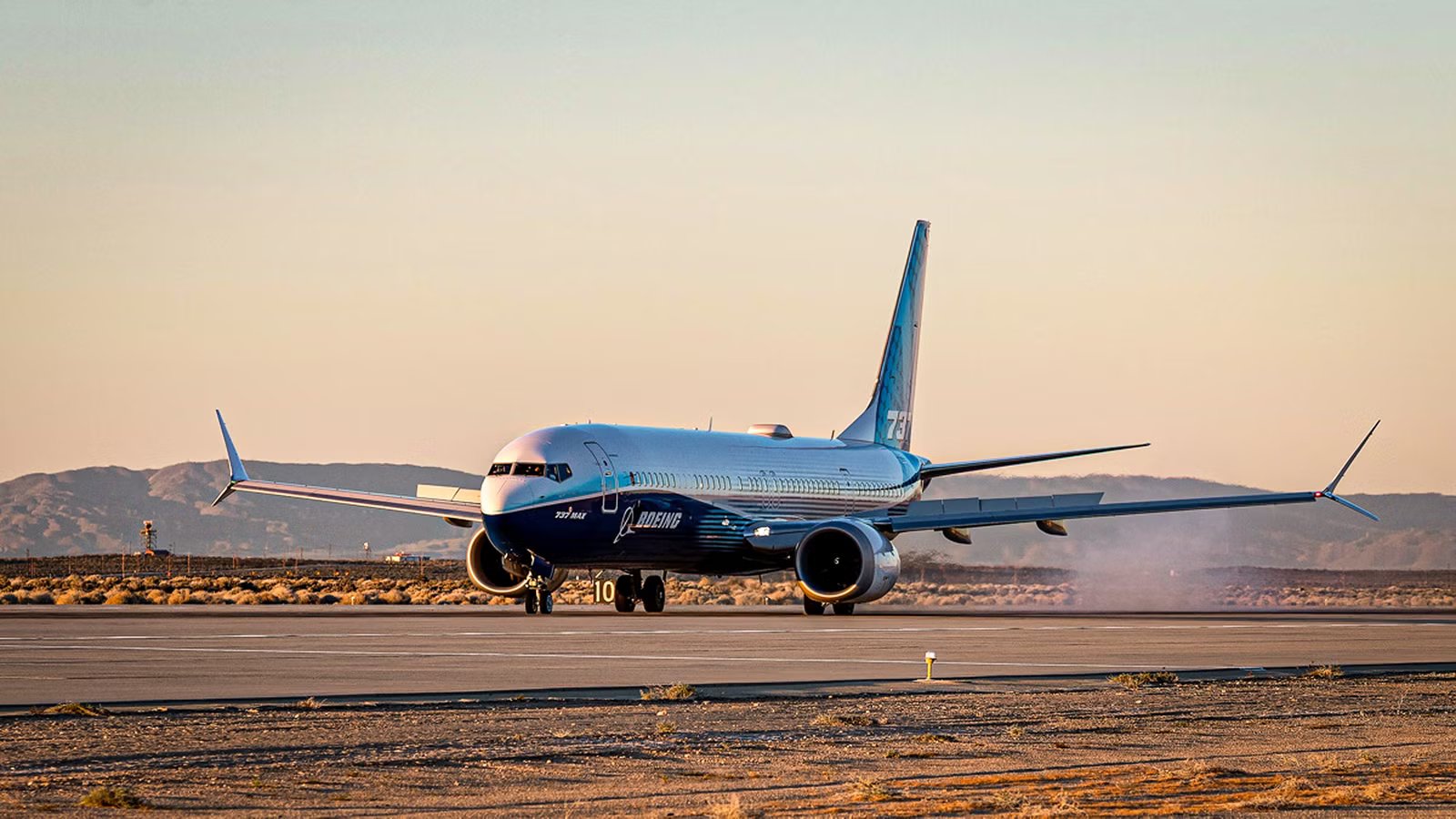
 Boeing currently has three aircraft models that have been stuck in certification hell for years: the 737 MAX 7, the MAX 10, and the 777-9. All three of these were supposed to be certified between 2019 and 2020 when initially launched, but over six years later, Boeing has not delivered a single example to an airline. Certification and entry-into-service for all three have been continuously delayed, but earlier in 2026, Boeing provided a more concise timeline. The 737 MAX 7 and MAX 10 will be certified by the end of the 2026 summer season, while the 777-9 will come in 2027.
The 737 MAX 7 has only been ordered by a handful of airlines (as well as an undisclosed number of BBJ customers), but the 737 MAX 10 and 777-9 have been fairly popular. They’re tremendously important products to Boeing, while their customers have built fleet plans around planes that are years delayed. It is noteworthy that Boeing and the FAA are prioritizing the 737 variants over the 777-9, given that the 737 line is already working at full steam while the 777 line is slowly turning out 777Fs until the 777-9 enters service, but there’s a reason for it.
The Certification Timeline For Boeing’s New Jets

Boeing is currently working on getting the 737 MAX 7, MAX 10, and 777-9 certified for service. Currently, the 737 MAX 7 is expected to be ready first, with FAA certification imminent, while certification of the 737 MAX 10 is expected in early fall 2026. Certification flights for both models were completed as of July 28. Boeing commenced 737 MAX 7 flight testing in 2018 and anticipated first deliveries in 2019, whereas the 737 MAX 10 was originally meant to enter service in 2020 but began testing in 2021 for an initial 2023 entry into service.
Boeing and the FAA have prioritized the 737 variants, but are now shifting their resources to the 777X program as certification of the narrowbodies begins to wrap up. The 777-9 is the primary variant in question, which was originally supposed to enter service in 2020, and this aircraft has faced significant delays. Currently, Boeing is anticipating the first 777-9 to be delivered in 2027, with the most recent delay partially attributed to the current focus on the 737 MAX by the FAA and Boeing.
Boeing is also developing the 777-8F, but this aircraft is still in development, and certification has not yet started. While the 737 MAX 7, MAX 10, and 777-9 have all been delayed multiple times, their current certification projections appear to be firmer than before as they progress through the process. It’s increasingly unlikely that the 737 MAX variants will see further delays given how close they are to being certified, and the chances of further delays to the 777-9 are also shrinking.
Certifying The 737 MAX 7 And MAX 10

The FAA hasn’t forced Boeing to certify the 737 MAX variants before the 777-9, but it is the natural course of action for the two parties given the differences between the programs. For all intents and purposes, the 737 MAX is already certified, as the MAX 8 and MAX 9 variants have been in service for years. However, the MAX was grounded from 2019 to late 2020, and the FAA significantly increased oversight of Boeing following the grounding order. This only increased further after the January 2024 grounding of the MAX 9.
In general, the FAA is being slower, more rigorous, and cautious on certifying new airliners after the issues with the 737 MAX. Meanwhile, the other major roadblock with the 737 MAX 7 and MAX 10 is the anti-ice system. In 2023, it was found that the engine anti-ice system could damage the engine nacelle when used for prolonged periods of time in dry conditions. This required extensive hardware and software redesigns, and while Boeing attempted to seek a temporary safety waiver from the FAA, this was later withdrawn.
The FAA wouldn’t certify the MAX 7 and MAX 10 without a new engine anti-ice system, which was completed by Boeing in November 2025. Upon the certification of the new planes, Boeing will then roll out a retrofit plan for MAX 8s and MAX 9s currently in service. In addition, the newest MAX variants were required to include an updated crew alerting system, which will also later be rolled out on in-service 737 MAXs. As a whole, however, the 737 MAX 7 and MAX 10 are derivatives of a type already in service, making certification less complex.
Certifying The Boeing 777-9

Unlike the 737 MAX 7 and 737 MAX 8, the 777-9 is the first member of the 777X family being certified. While it’s still a derivative of the older 777, it features significant differences, such as a new wing, folding wingtips, the General Electric GE9X, a stretched fuselage, a brand-new cockpit, and a brand-new cabin design. There are several new design changes that lengthen the certification timeline, and this is especially true when considering the FAA’s heightened scrutiny of Boeing in the wake of the 737 MAX groundings.
In addition to the general increased oversight, the Boeing 777X program has also experienced some technical hurdles. A cargo door blew out on a 777-9 early in the program, while in 2022, a 777-9 suffered an in-flight engine shutdown. In 2024, a thrust link severed on one of the test aircraft (a component designed by Boeing, not General Electric). Issues like these required extensive redesigns and further delayed certification.
The aircraft has been moving through certification, and there have been no subsequent delays since the recent push to 2027. It’s increasingly looking likely that the 777-9 will come in 2027, especially as Boeing begins to shift its resources to the program and away from the nearly-done 737 MAX. Still, the 2027 timeline, if it holds, would mean that Boeing would have been working on the 777X for roughly 14 years since it was launched in 2013, or nearly the same amount of time as Concorde (14 years from the formal Anglo-French treaty to entry-into-service).
The Importance Of The 737 MAX 7 And 10

The 737 MAX 7 has only been ordered by a few airlines (Southwest is the biggest customer) as well as an undisclosed number of BBJ customers. With around 300 orders, it’s a low-volume product with essentially no widespread market appeal that was designed primarily for Southwest Airlines. The 737 MAX 7 is ultimately less economical than competing small narrowbodies like the Airbus A220-300, and it’s also sold for a lower price than the other MAX variants, meaning that it earns Boeing less money.
Instead, it’s the 737 MAX 10 that’s arguably the most important new Boeing of the decade. The 737 MAX 8 is an extremely compelling aircraft, and the MAX 7 has sold more units than the competing Airbus A319neo, but the 737 MAX 9 is more or less a dud. The plane is meant to compete against the Airbus A321neo, but it’s been entirely ineffective at winning Boeing market share in the large narrowbody market, while Airbus has sold over 7,700 A321neos, making it the most successful commercial aircraft variant of all time.
Boeing 737 MAX Variants | Sales | Airbus A320neo Variants | Sales |
|---|---|---|---|
737 MAX 7 | Roughly 300 | A319neo | 57 |
737 MAX 8 | Over 4,800 | A320neo | 4,278 |
737 MAX 9 | Over 500 | A321neo | 7,769 |
737 MAX 10 | Over 1,400 | Total | 12,104 |
Total | 7,206 |
The 737 MAX 10 is larger than the MAX 9 and promises competitive economics against the A321neo. It’s already earned over 1,400 orders, and several airlines have centered their narrowbody fleet around the type. United Airlines is one of the most notable examples, as it held 277 orders for the type at one point. The delays to the program have been problematic for customers given how important the 737 MAX 10 is, and in the case of United, have led the carrier to convert 110 orders to the MAX 9 while ordering more A321neos.
The Importance Of The 777-9

The Boeing 777 is the most successful widebody airliner of all time, and the 777-9 is Boeing’s replacement for the most popular variant of the family: the 777-300ER. While the 787 is as appealing as ever and will surely overtake the 777 in total orders, even the 787-10 is too small to serve as an effective replacement for the 777-300ER. In addition, the 777-9’s added size over the 777-300ER means it has more floor space for large premium seats, which aligns well with current market trends that show an increased demand for business and premium economy seats.
The 777-9’s customer list is relatively small, but some customers have ordered substantial quantities of the plane.  Emirates holds 235 orders for the 777-9, in addition to 35 orders for the 777-8, and it originally planned to have received over 100 777-9s by 2026. The delays to the 777-9 program have also led Emirates to scrap its original business class seats on the 777-9 because they became outdated before entering service.
Boeing 777-9 Customers | |
|---|---|
Air India | Ethiopian Airlines |
All Nippon Airways | Etihad Airways |
British Airways | Korean Air |
Cathay Pacific | Lufthansa |
China Airlines | Qatar Airways |
Emirates | Singapore Airlines |
While the 777-9 hasn’t sold in huge numbers, it taps into a growing market for large widebodies, and its added size over the Airbus A350-1000 gives it an advantage in this space. Airbus is now reportedly looking at stretching the A350-1000 to better compete in this segment, and it’s clear that the market wants planes with more floor space than either the A350-1000 or 777-300ER. As such, getting the 777-9 in service is tremendously important for Boeing.