dailynewsnblog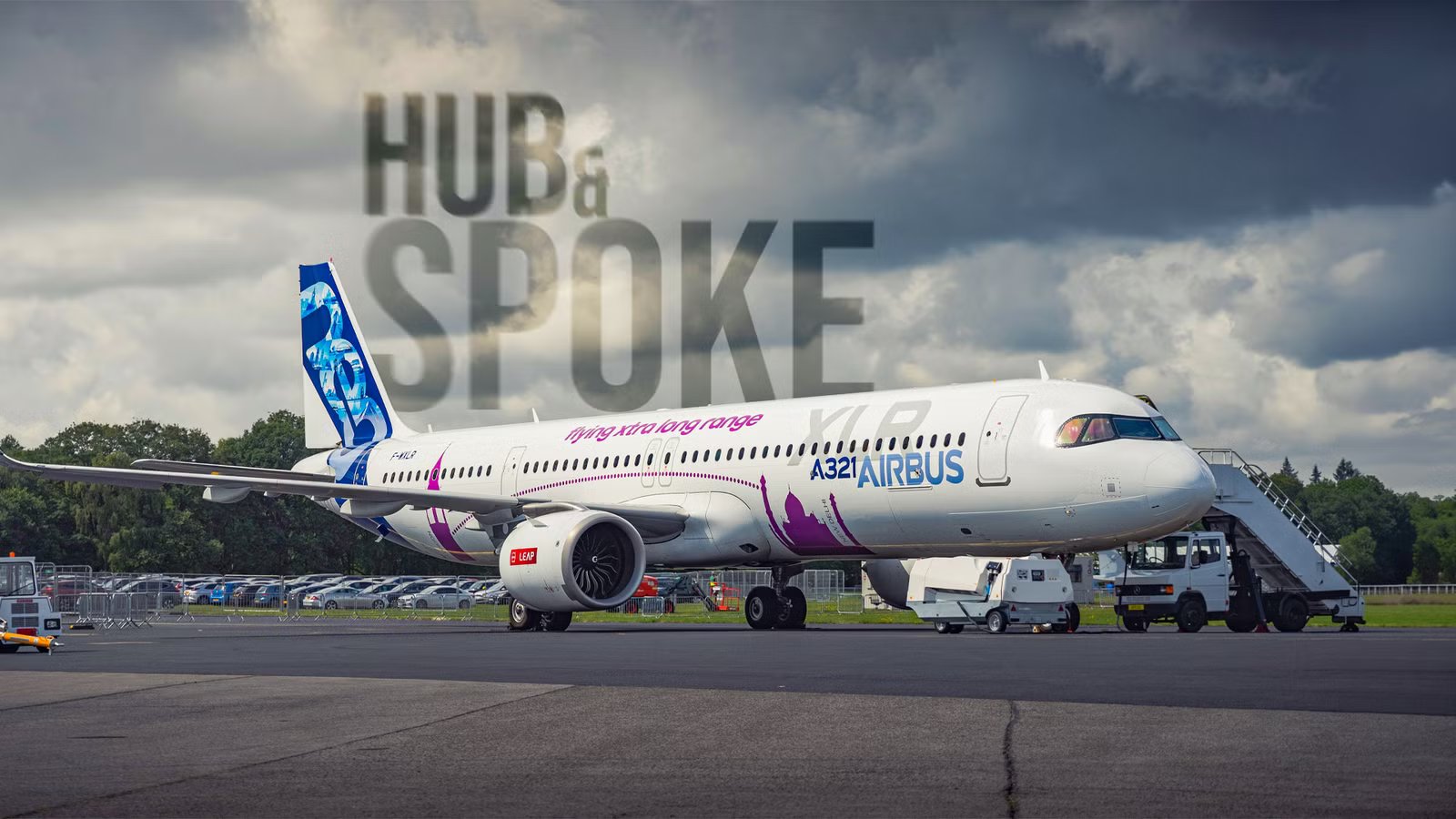
Long-haul international travel has, for many of the largest airlines of the modern age, operated using a simple economic formula. The goal is to gather passengers from regional spoke airports, funnel them through mega-hubs like  London Heathrow,
  Frankfurt, or
  Atlanta, and consolidate them onto twin-engine or four-engine widebody jets. Connecting traffic was the only way airlines could consistently guarantee high load factors on 250-to-300-seat aircraft when crossing oceans. However, the arrival of the Airbus A321XLR has changed this thinking by introducing a single-aisle jet capable of flying 4,700 nautical miles (8,704 km).
Airbus is pushing narrowbody endurance to 11 hours, a whole unknown territory for opening up direct long-distance routes that were previously unviable for twin-aisle jets. Rather than replacing mega-hubs overnight, the A321XLR is eroding hub dominance from the edges, one bit at a time. The manufacturer is telling airlines that they no longer require massive connecting passenger flows to make long-haul flights profitable, and to forget the traditional gateways to link secondary markets directly.
No More Stopovers?

Hub-and-spoke networks were created out of economic necessity rather than passenger preference. Travelers naturally prefer direct flights, but legacy airlines historically relied on hub connections to fill large widebodies like the Boeing 777 or Airbus A330. Gathering passengers from dozens of origin points onto a single long-haul leg was the only way to offset the steep operating costs and high fuel burn of twin-aisle aircraft.
The A321XLR removes that barrier by lowering the passenger volume required to break even on long routes. Operating a 300-seat widebody generally demands an average daily demand of 200 to 250 passengers per direction to achieve profitability. In contrast, the lower trip costs of the A321XLR allow airlines to run viable transatlantic and inter-American flights with much fewer daily passengers. This dramatic shift in break-even thresholds turns thin markets into sustainable nonstop operations.
Airbus’ latest addition to the A320 family removes the reliance on feeder traffic, allowing carriers to establish point-to-point routes between secondary cities that were previously forced to send travelers through congested coastal gateways. Passengers gain shorter travel times through the removal of multi-hour layovers, while airlines reduce their exposure to weather delays and slot bottlenecks at major hubs. Mega-hubs are guaranteed to remain essential for heavy cargo and dense trunk routes, but the growth of long-haul aviation is rapidly shifting toward direct, narrowbody point-to-point networks now that the industry is beginning to demand such capabilities.
Seasonality Is Old News

The technical foundation enabling the long-range capabilities of the A321XLR lies in its fuel system design. Previous long-range narrowbodies relied on removable additional center tanks (ACTs) installed inside the lower cargo hold, which traded away baggage capacity to gain extra flying distance. Airbus bypassed this limitation by engineering a permanent rear center tank (RCT) directly into the lower fuselage structure behind the main landing gear. Holding 3,408 gallons (12,900 liters) of fuel without encroaching on cargo volume, the RCT raises the maximum takeoff weight (MTOW) of the aircraft to 223,000 lb (101,151 kg) and extends maximum range to 4,700 nm (8,704 km).
From an airline financial perspective, the jet reshapes how network planners evaluate route viability by changing the balance between trip cost and seat-mile cost. Twin-aisle jets achieve a lower cost per seat-mile when completely full, but their overall trip cost remains exceptionally high due to elevated fuel burn, heavier maximum takeoff weights, and higher airport landing fees. The A321XLR delivers approximately 45% lower total operating trip costs than a modern widebody. On long-haul city pairs generating moderate demand, lower trip costs allow an airline to turn a profit with 100 to 180 passengers, whereas a 300-seat widebody on the same route would operate at a severe loss.
Airlines operating the A321XLR can maintain year-round schedule consistency on routes that previously suffered from extreme seasonal demand fluctuations. Transatlantic secondary routes that once required carriers to suspend widebody operations during winter months can now remain active eight to nine months longer or operate continuously across all four seasons. Seasonal routes, therefore, can become a thing of the past and open up the possibility for passengers to travel whenever they want, not just when the market allows them to.
Unrestricted Growth Opportunity

Slot-constrained mega-hubs have long capped growth for network carriers, mainly because if the airports cannot grow, then there is only so much capacity an airport can take. Acquiring slot pairs at these gateways, therefore, has led to the need for massive capital investments, restricting airline expansion. The A321XLR provides an escape valve by allowing network planners to establish long-haul routes between secondary cities, entirely removing the need to be positioned at overcrowded hubs while offering passengers direct point-to-point itineraries.
Industry data highlights the rapid scale of this point-to-point expansion, with Airbus projecting that the A321XLR will give way to approximately 350 new city pairs globally by 2030. In 2026 alone, airlines launched nearly 40 new transatlantic routes, driven largely by narrowbody long-haul deployments. Carriers like  American Airlines,
  Air Canada,
  Aer Lingus, and
  Iberia are deploying the type to connect secondary markets such as
  New York to Edinburgh, Montréal to Toulouse or Nantes, and
  Dublin to Nashville or Raleigh-Durham, city pairs that historically could not support a 250-to-300-seat widebody jet.
Airlines will be highly interested in the new variant because of its very clear earning potential, as direct flights command a premium. Business travelers and corporate logistics directors consistently favor nonstop itineraries over multi-leg journeys, even when point-to-point fares carry higher ticket prices. Removing connecting hubs eliminates the risk of missed connections, baggage loss, and customs re-check delays, enabling carriers to capture high-yield traffic on thin routes without relying on discounted transfer fares.
The Original Trailblazer

The transition toward route fragmentation is not entirely new, and is actually the continuation of a structural trend initiated by the Boeing 787 in the late 2000s.  Boeing engineered the 787 specifically to remove the reliance on traditional mega-hubs by offering twin-aisle range with superior fuel efficiency. The Dreamliner successfully opened hundreds of point-to-point routes and gave the industry hard proof that passengers preferred flying direct between non-hub destinations rather than connecting on double-decker aircraft like the Airbus A380.
The A321XLR pushes this fragmentation strategy down to a significantly smaller, lower-risk airframe. It brings with it a capital cost advantage that allows airlines to test new long-haul markets with substantially less financial risk. If a secondary route exceeds demand expectations, carriers can upscale the service to a 787 or A330; if demand remains moderate, the A321XLR maintains profitable daily operations.
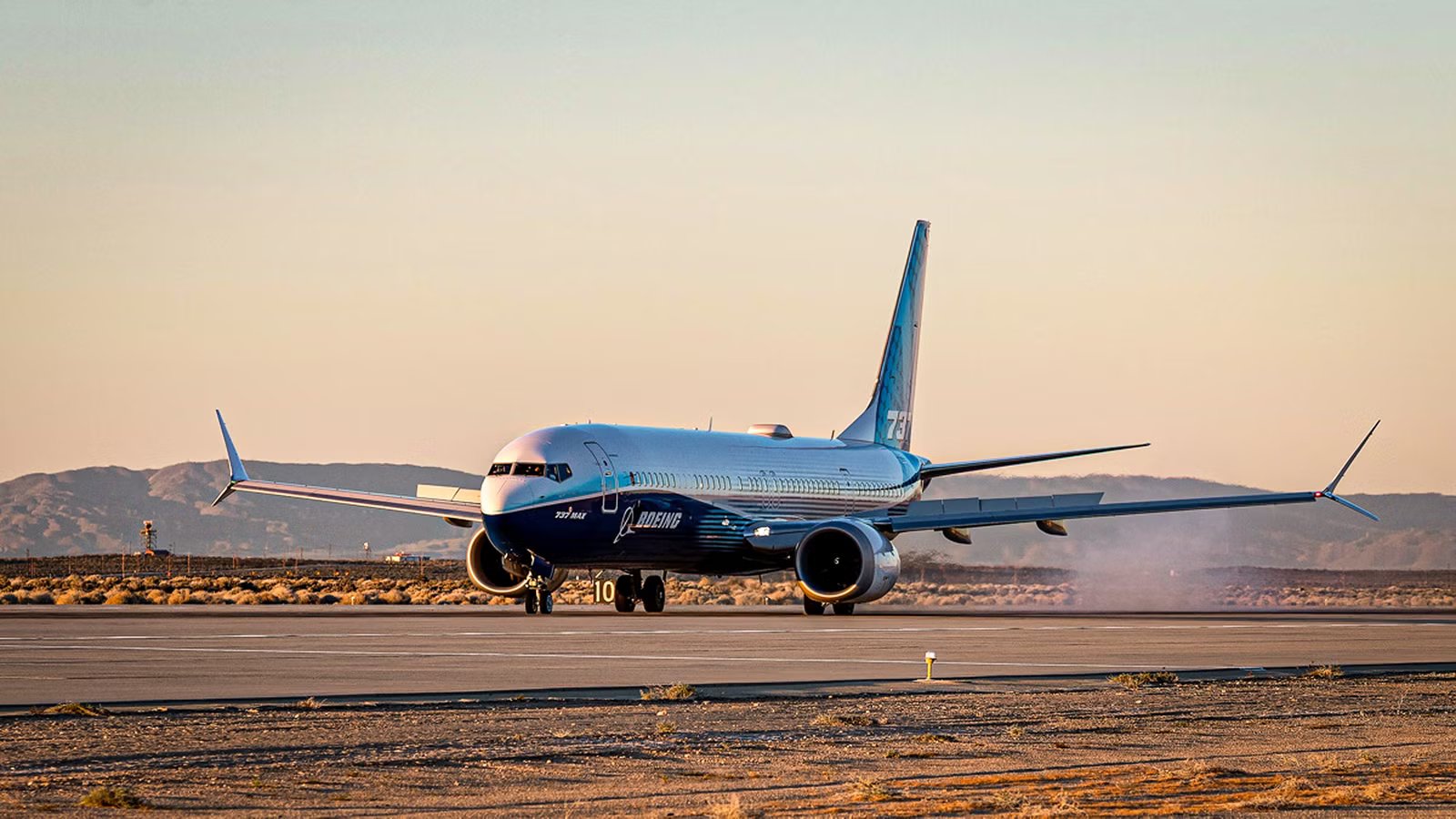
Ultimately, it leaves Boeing in a challenging position within the middle-of-the-market segment. Having shelved plans for the New Midsize Airplane (NMA) to replace aging Boeing 757 and Boeing 767 fleets, Boeing currently lacks a single-aisle aircraft capable of matching the 4,700 nm (8,704 km) reach of the A321XLR. Consequently, Boeing operators seeking to defend thin long-haul routes will need to either deploy larger, more expensive widebodies or transition their narrowbody long-haul orders to Airbus, the worst-case scenario for Boeing.
The New Dual Network Strategy

Despite the rapid growth of narrowbody long-haul routes, claims regarding the immediate demise of the hub-and-spoke model are rather exaggerated. The A321XLR is chipping away at hub dominance more quietly rather than abruptly, especially as mega-hubs remain indispensable components of global aviation infrastructure, serving as primary consolidation points for connection-heavy international flows, high-volume corporate markets, and massive belly cargo operations. The A321XLR is not an aircraft that works for every airline, and some major airlines, like  Emirates, have developed solely around the concept of a mega-hub.
High-density trunk routes between global mega-cities, such as London Heathrow to New York JFK or Dubai to Singapore, require the massive seat capacity and cargo volume of widebody aircraft. A single 180-seat narrowbody cannot replace the economics of multiple 300-plus-seat twin-aisles on routes where daily passenger volume exceeds thousands of travelers per day. Furthermore, belly cargo revenue is a vital financial component on long-haul routes, an area where widebodies retain a clear advantage over narrowbodies.
What is emerging instead is a hybrid network model. Legacy airlines are maintaining their core hubs to capture heavy transfer flows and cargo volumes while layering on a growing web of point-to-point narrowbody routes. This dual strategy allows network carriers to defend their hub ecosystems while aggressively expanding into secondary long-haul markets that were previously out of reach.
The Next Evolution Of Commercial Aviation

Over the next decade, the addition of new potential long-range narrowbodies will inevitably alter air traffic distribution. Secondary spoke cities that once subsidized hub operations by generating expensive connecting traffic are increasingly gaining direct international connectivity. This naturally places economic pressure on legacy widebody operators that rely heavily on funneling passengers through traditional gateways to sustain thin long-haul routes.
The future long-haul fleet mix will see a clearer division of labor between aircraft categories. Widebodies will increasingly concentrate on high-density trunk routes, slot-constrained mega-hubs, and cargo-intensive corridors. Meanwhile, long-range narrowbodies like the A321XLR will dominate thin long-haul routes, seasonal point-to-point expansions, and new market entry across oceans. Currently, some widebodies are being deployed on shorter routes due to passenger and cargo demand, but the future outlook most definitely favors these new narrowbodies in these kinds of roles.
The arrival of 4,700 nm (8,704 km) narrowbody capability is really the next evolution in airline strategy. Enabling profitable long-haul operations with just 100 to 180 passengers, the A321XLR gives carriers the tools to bypass congested hubs and redefine long-distance travel, solidifying point-to-point flying as a core pillar of modern global aviation.

![IndiGo Unexpectedly Unveils New 11-Hour Nonstop Airbus A321XLR Flights [Map]](https://dailynewsnblog.com/wp-content/uploads/2026/08/untitled-design-36.jpg)