dailynewsnblog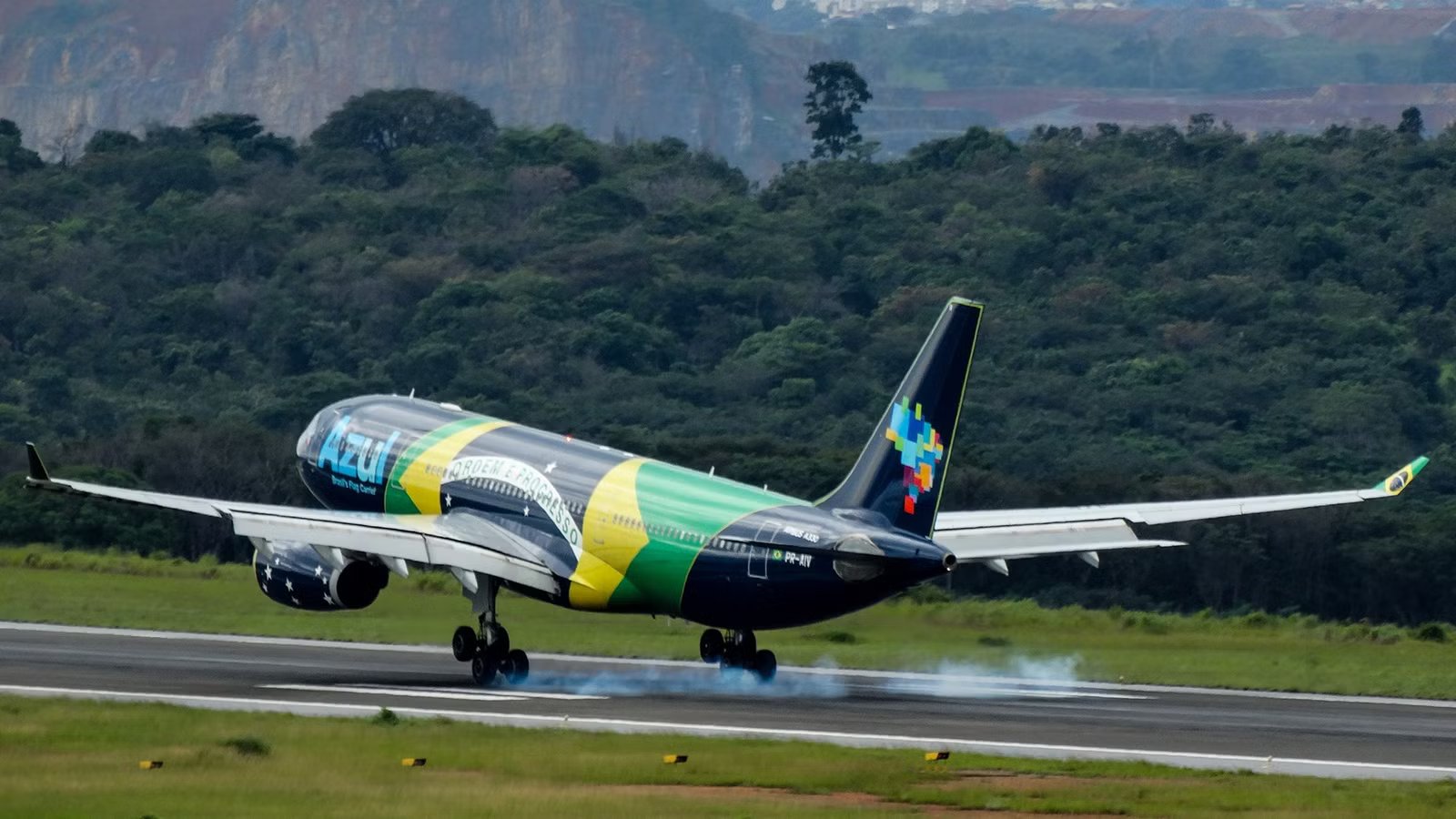
Brazil’s Administration Council for Economic Defense (also known as CADE) has cleared Fort Worth-based  American Airlines to invest up to $100 million in Azul Linhas Aéreas. This investment comes as the US carrier looks to take a minority stake in the Brazilian airline amid its restructuring.
CADE approved American’s investment in Azul after concluding that the investment was unlikely to harm competition in the Brazilian aviation market. For American, the investment is without any imposed conditions. This will see American acquire a total of 8.66% in equity stake in Azul.
8.66% Equity Stake From American Airlines Into Azul

For Azul, the investment is part of an ongoing financial restructuring the airline is facing through Chapter 11 proceedings in the United States, and the investment by American will see the right to appoint one member to the Brazilian carrier’s board of directors, and an additional representative to Azul’s strategic committees.
As analyzed by Aerotime, CADE assesses that the commercial cooperation which is planned following the investment will see an expansion to codeshare flights, access to airport lounges and reciprocal frequent flyer benefits. There remain several overlapping routes, primarily between São Paulo/Guarulhos–Governor André Franco Montoro International Airport (GRU) and Rio de Janeiro/Galeão–Antonio Carlos Jobim International Airport (GIG), to both  Miami International Airport (MIA) and
  Orlando International Airport (MCO), which CADE believes the airlines did not compete closely enough to raise antitrust concerns.
CADE’s decision can be appealed or referred for additional review; however, if there are no further concerns, the approval will become final, seeing the oneworld carrier become a minority shareholder in one of South America’s most recognizable airlines.
Objections From The Abra Group

The parent company of both Brazilian low-cost carrier GOL Linhas Aéreas and Colombian flag carrier Avianca (the Abra Group) has argued that the investment from American would weaken competition with traffic flows in Brazil, a claim which CADE determined that Azul’s network complements that overlaps with GOL, meaning that the transaction should not affect the existing commercial relationship with the carrier.
Azul has been focusing on restructuring, which has seen the US court approve plans to reduce more than $2 billion in existing debt. This has attracted interest from several major carriers, including American’s direct competitor on home soil,  United Airlines. For United, it has already committed $100 million in investment for Azul, as it raised its ownership from 2% to over 8%.
Serving more than 150 destinations, Azul is the fourth largest airline in South America, after LATAM, Avianca and Gol. Azul operates more than 170 aircraft, which include the Airbus A320neo, A321neo, A330-200, A330-900, ATR 72-500, Embraer E195 and E195E2. Its cargo fleet is made up of two A321-200P2F.
Taking into consideration wider Latin America, below is a snapshot of the largest airlines in the region by seat capacity as reported by OAG:
Airline | Seat Capacity in August 2026 |
|---|---|
LATAM | 9.28 million |
Gol | 3.94 million |
Avianca | 3.79 million |
Azul | 3.29 million |
A Force To Be Reckoned With In Brazil

Since Azul’s founding back in 2008, the airline has followed a business model that stimulates demand by providing affordable air service to underserved markets in Brazil. The airline was established by David Neeleman, who was also the founder of Morris Air, WestJet, and JetBlue.
In May 2025, Azul filed for Chapter 11 bankruptcy as the airline faced high debt levels, rising fuel costs, supply chain challenges that affected aircraft availability, and currency volatility. This saw the carrier look to shed around $2 billion in debt. $1.6 billion is to be financed through the procedure, with another $950 million upon exiting bankruptcy. This is where American and United have both shown interest in supporting the airline’s restructuring. It is expected that Azul should exit bankruptcy at some point in 2026.
American’s investment in Azul will be through long-term security warrants, and will see the appointment of an airline representative onto the Azul board of directors and strategic committee. It is expected to see a deeper collaboration between the two airlines for travel between the US and South America.