dailynewsnblog
If you want the best view, you’ll need to travel to Spain or Iceland.
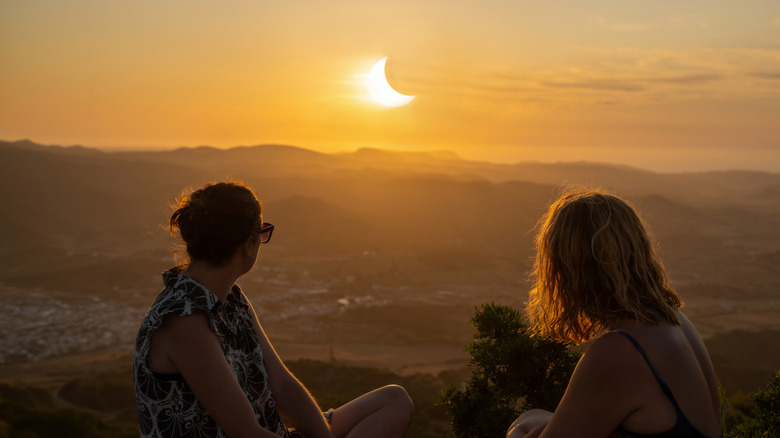
The 2026 solar eclipse on August 12 is a big day for astronomy fans: not only does it mark the first total solar eclipse since 2024, it also coincides with the annual Perseid meteor shower. This eclipse also stands out by being longer than usual due to it coinciding with lunar perigee, which is when the moon appears larger because it’s at the closest point in its orbit to Earth. Though not everywhere in the world will be able to experience the eclipse, many locales will get at least partial sun coverage.
While the 2024 solar eclipse centered on North America, this time around viewers in Spain and Iceland will have the best view. However, that doesn’t mean other places won’t get any glimpse of the event. Those in some parts of Canada, the United States and Europe can still see it, they just won’t be in the path of totality, which is when the moon is directly positioned over the sun, fully blocking it.
Where is the best place to view the 2026 solar eclipse?
The best place to be for the 2026 solar eclipse is western Iceland or northern Spain. The full eclipse will last longest in Látrabjargi, Iceland, and is also visible from Reykjavík, Isafjordur and all other cities on the western coast. However, Spain is arguably the best location if you’re looking for prime eclipse viewing. The eclipse’s path crosses much more land in Spain than it does in Iceland, meaning more likelihood of a good viewing spot, and Spain’s weather tends to be 20 to 30 degrees warmer than Iceland in August.
In Spain, Bilbao, Burgos, Palma, Santander, Valencia, Valladolid and Zaragoza will have a full view of the eclipse A small sliver of Portugal at the northeast border, specifically Montesinho Natural Park in Bragança, will also be in the line of totality. There are a few other spots across Russia and Greenland that will experience a total eclipse, but they’re quite remote and difficult to get to without a specialized expedition.
For those in North America, the partial eclipse will mostly be visible in northern parts of the United States and the eastern part of Canada, and the amount of coverage over the moon vastly varies. Some locales like New York City will only see 9 percent coverage, while others like St. John’s in Newfoundland will have 53%. Below you can find a list of locations, their peak eclipse viewing time, and the amount of coverage. If you’d like to know a time even more specialized to your location, Time and Date has a complete collection of cities.
Location | Peak Eclipse Time | Obscuration |
León, Spain | 8:33 PM CEST | 100% |
Valencia, Spain | 8:32 PM CEST | 100% |
Reykjavík, Iceland | 5:48 PM GMT | 100% |
Anchorage, AK | 8:21 AM AKDT | 28% |
Boston, MA | 1:55 PM EDT | 16% |
Chicago, IL | 12:28 PM CDT | 0.1% |
New York City, NY | 1:54 PM EDT | 9% |
Philadelphia, PA | 1:53 PM EDT | 7% |
Portland, ME | 1:53 PM EDT | 19% |
Washington, D.C. | 1:53 PM EDT | 4% |
Edmonton, Canada | 10:38 AM MDT | 6.5% |
Montreal, Canada | 1:45 PM EDT | 18% |
St. John’s, Canada | 3:35 PM NDT | 53% |
Toronto, Canada | 1:40 PM EST | 8% |
Winnipeg, Canada | 12:02 PM CDT | 5% |
Dublin, Ireland | 7:10 PM IST | 94% |
London, England | 7:13 PM BST | 91% |
Madrid, Spain | 8:32 PM CEST | 99% |
Paris, France | 8:17 PM CEST | 92% |
How to be safe during an eclipse
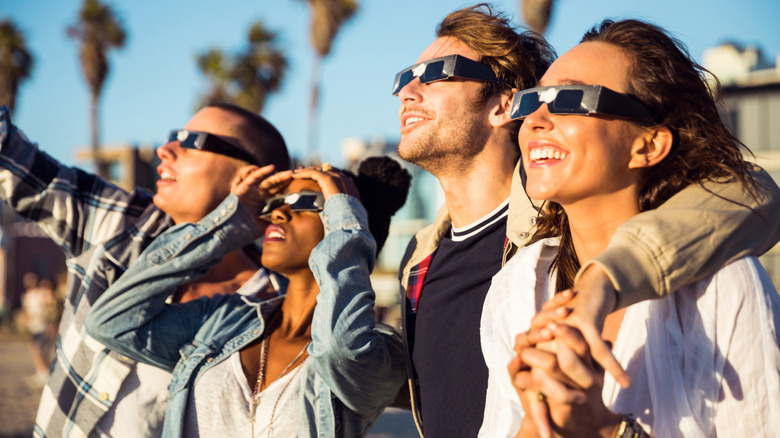
It’s only ever safe to look directly at a solar eclipse during the brief period of totality; doing so at any other time can cause severe, irreversible eye damage. Since there won’t be a full eclipse anywhere in the US, everyone in the country who wants to watch will need to wear eye protection the entire time. Utilizing things like sunglasses or binoculars will not work for eye protection — even the smartest of sunglasses won’t save your eyes.. Instead, those aiming to look directly at the eclipse will need to utilize specialized eclipse glasses or solar viewers. If you want to take pictures of the eclipse, you’ll also need to protect your lens with a special cover. The American Astronomical Society offers a handy list of all approved products, so you can be sure you’re getting adequate eye protection.
Alternatively, it’s very easy to create indirect viewers. The most common is a pinhole projector, a simple device with crafting directions offered on the official NASA website. Alternatively, you can use any household objects with small holes — a colander is a popular choice — or even your own hands in a criss cross pattern to view the eclipse. With your back to the sun, let the light pass though the holes and onto another surface like a wall or the ground, and you’ll see an outline of the eclipse.