dailynewsnblog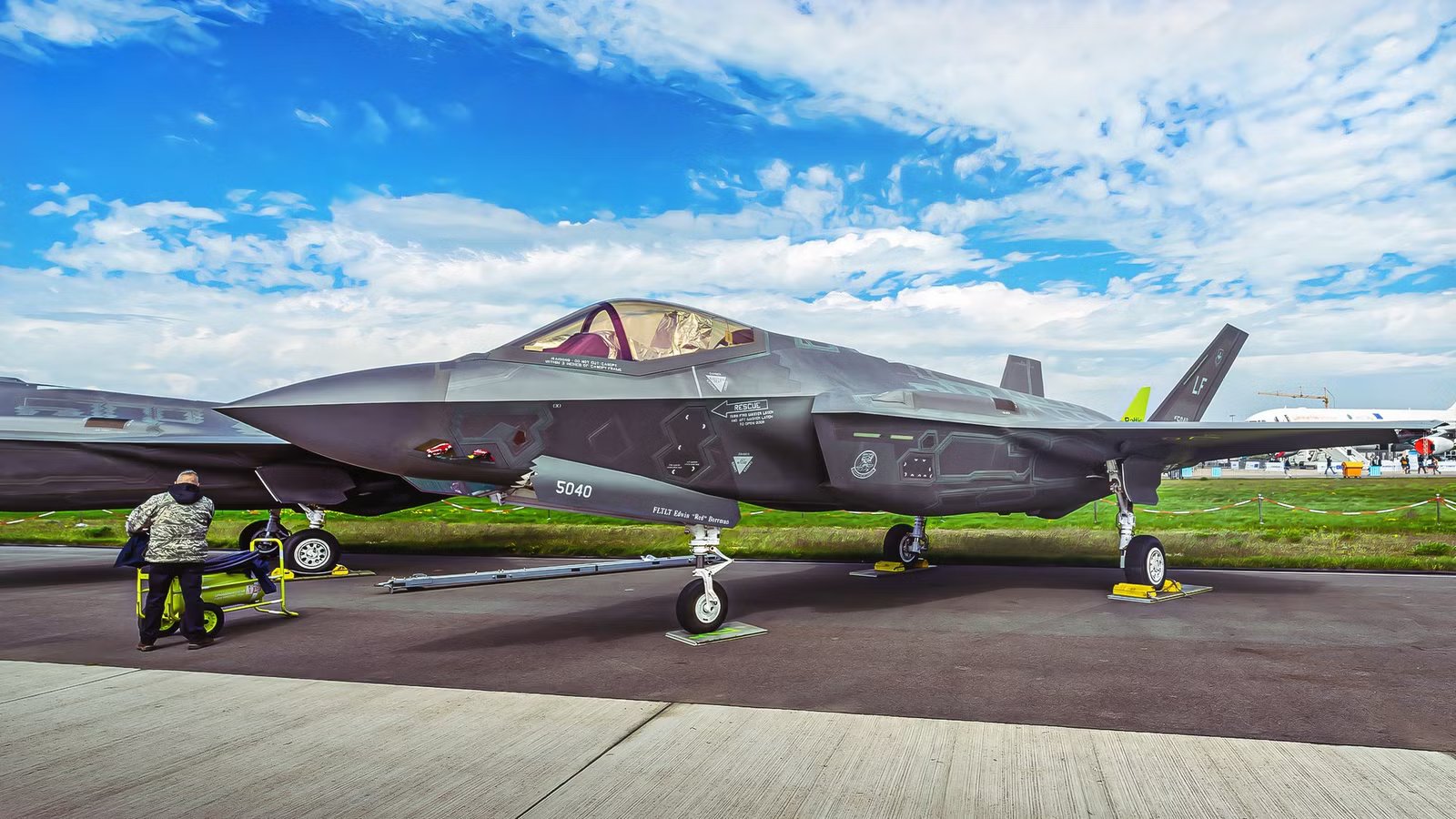
The decision by Berlin to enter the Lockheed Martin F-35 Lightning II program was borne out of an immediate need for an aircraft that could fulfill its obligations to the nuclear-sharing arrangement within NATO. The fleet of German Panavia Tornados is nearing its retirement date, and the Lightning was the best available option, with the possibility of expanding this future fleet apparently on the table.
In light of the collapse of the fighter component of the Future Combat Air System (FCAS), Germany is left with some stark choices. While it certainly possesses an experienced and highly proficient aeronautics industry, as well as extensive experience in the production of advanced aircraft, starting a sixth-generation project from scratch would leave it years behind. Another possible, albeit seemingly difficult, path would be to attempt to enter the Global Combat Air Program (GCAP). While this path forward does not appear to be easy, a window of opportunity could exist.
Germany And The F-35

Germany began its journey toward becoming an F-35 operator in 2022, driven in large part by its continued commitment to NATO’s nuclear-sharing arrangement and the need to replace its aging Tornado fleet. The subsequent collapse of the joint Franco-German sixth-generation fighter effort has added further uncertainty to Berlin’s long-term combat aviation plans, making the F-35 an increasingly important component of the German Air Force’s (Luftwaffe) future fighter fleet. The fighter is capable of fulfilling Germany’s nuclear-sharing commitment, including the delivery of the B61-12 nuclear gravity bomb.
Presently, the Luftwaffe operates 68 multirole Tornados, with a portion of the fleet assigned to NATO’s nuclear-sharing mission. While these aircraft are highly capable in such areas as electronic warfare, strike missions, and low-level penetration, the Tornado’s survivability has come under scrutiny. If a nuclear strike against Russia were deemed necessary, the Luftwaffe’s Tornados would be required to fly into and operate within one of the world’s most advanced integrated air defense networks.
Further, the Luftwaffe’s plan to retire its fleet of Tornados by 2030 has added a layer of urgency to its quest to acquire an aircraft capable of carrying the B61-12 nuclear bomb. While the Eurofighter Typhoon is capable of handling the bomb, it would have taken years for Washington to certify it for nuclear carriage. Thus, the most expedient option for Berlin was the purchase of conventional F-35As, which are already certified to carry the bomb, making them the quickest replacement for the Tornados. Additionally, the Lightning possesses low-observable shaping, radar-absorbent materials, internal weapons bays, and enhanced electronic warfare capabilities, making it an ideal replacement for the Tornado in contested environments.
The Bundestag approved the purchase of 35 F-35A Lightning IIs in 2022, in a deal valued at approximately $10.9 billion (€10bn at the time), which covers 35 conventional takeoff and landing F-35A variants. Further, the package includes Pratt & Whitney F135 engines, mission systems, training devices, spare parts, logistical support, and infrastructure modernization at Büchel Air Base, the aircraft’s future home.
The first F-35s are planned for delivery to Germany in 2027, with initial operating capability slated for 2028. Meanwhile, construction of the first German F-35, designated MG-01, began on December 6, 2024, at Lockheed Martin’s Fort Worth facility. Planned improvements to Büchel in preparation for the aircraft include hardened shelters, enhanced communications systems, and nuclear security infrastructure upgrades, with the work expected to cost around $2.7 billion (€2.5bn).
Berlin’s Mixed Signals

While the clouds of doubt had begun to roll in earlier this year regarding the troubled Future Combat Air System (FCAS), which was intended to replace the Eurofighter Typhoon and Dassault Rafale jets by 2040, Berlin had been quietly making other plans. It was well known that the nation’s policymakers had already inked a contract in 2022, marking its official entrance into the F-35 program.
A lesser-known detail was the ongoing doubts swirling around Germany’s commitment to the FCAS project, even as Berlin was making attempts to remedy the worsening situation. The primary fracture point within the troubled effort was an escalating dispute over industrial workshare and the leadership of the venture. According to The Aviationist, Dassault Aviation sought an 80% share of the program’s work, rather than an equal division of work with its partners Airbus and Indra Group. The disagreement was compounded by diverging French and German operational requirements and broader disputes over leadership and intellectual property.
F-35As, which would come with a price tag of roughly $2.9 billion (£2.15bn). The source stated that a confidential submission had been presented to the Bundestag’s budget committee regarding the additional aircraft. In response to the report, the Ministry of Defense denied any plans for a follow-on order.
If the reported additional purchase of Lightnings proves to be valid, it could be financed from the remaining funds in Germany’s $117 billion (€100bn) special defense package. The latter is essentially a temporary, debt-financed fund created in 2022 to rapidly modernize the nation’s armed forces following Russia’s invasion of Ukraine.
Further, the move to increase its F-35 fleet would fit in with the Zeitenwende policy, launched in February 2022 by Chancellor Olaf Scholz. The policy, which literally translates to “turning point” or “watershed moment,” represents a significant departure from Germany’s post-Cold War approach to defense, which was characterized by relatively low defense spending and a greater reliance on diplomacy and economic ties with Russia.
Sixth-Generation Possibilities And Seeming Complications For German Industry

With the collapse of the fighter component of the FCAS initiative, there has been some discussion regarding Germany’s participation in, and possibly other nations in, GCAP, headed by the United Kingdom, Italy, and Japan. The venture would be of interest to Berlin, given that GCAP, like the now-defunct fighter component of the FCAS project, is designed to eventually replace the Typhoon. Additionally, GCAP, as envisioned, will possess advanced stealth characteristics, sensor fusion, internal weapons carriage, and the capability to direct drones in order to further support strike, intelligence, surveillance, and reconnaissance missions.
Entrance into the program presents an ideal opportunity to participate in a well-established effort and a move that would push the Luftwaffe toward sixth-generation air dominance. This past June, the possibility of German participation was greeted with optimism, as Italian Defence Minister Guido Crosetto stated that if “…Germany or other countries, or Saudi Arabia, were to come in, we would be completely willing, because the more there are, the greater the chances of creating something and bringing down costs…”
Additional support came from former Royal Air Force pilot, Air Marshal (Ret.) Sir Christopher Harper. The former senior officer declared an “…additional partner could bring greater resilience and a more capable end product, while reinforcing the programme’s relevance to European security and enhancing interoperability…”
Despite initial optimism, there appears to be some doubt whether adding another partner to the project would be feasible or expedient. To this point, Leonardo chief executive Lorenzo Mariani—speaking from the sidelines of the Farnborough Airshow (southwest of London)—noted that German participation in GCAP “is not an option” at the moment; however, from an industrial perspective, it would be “beneficial.” Leonardo maintains a 33.3% stake in Edgewing, the GCAP industrial joint venture.
While the official denial was brusque, Mariani went on to stress that while he had not personally been approached by German officials regarding possible entry to join the GCAP program, “…informal talks among industries are always present…” Positively, he noted the “strong competence of the German industry, debt funding capability from the German state and joint experience within the community” on previous fighter jet projects. This open denial paired with complimentary declarations regarding the German industrial base and finance seemingly leave the door open to future development possibilities.
Germany Has Its F-35s, But It Needs To Salvage Its Sixth Generation Future

Presently, the F-35A is providing a stopgap solution for the Luftwaffe to fulfill its obligations in NATO’s nuclear deterrence mission. While this remains valid, one of the central tenets of the FCAS program was to develop an advanced fighter that would replace the Typhoon and compete in and dominate the future battlespace.
The real possibility exists for Germany entering the GCAP project. However, this would create complications due to the workshare already being established among existing partner nations. Yet, German participation would bring industrial expertise and financial resources that could benefit the effort. Given the early optimism and likely discussions between Berlin and the established GCAP participants, a deal could be in the making.
Regardless of whether the nation ultimately joins GCAP, the F-35A provides the Luftwaffe with a capable aircraft for the coming decades, but it does not resolve the country’s long-term need for a sixth-generation fighter. Germany will eventually have to determine whether to remain committed to a European solution, join GCAP, or pursue another path entirely. The F-35 may have secured the Luftwaffe’s immediate future, but Berlin still faces the challenge of salvaging its long-term sixth-generation ambitions.