dailynewsnblog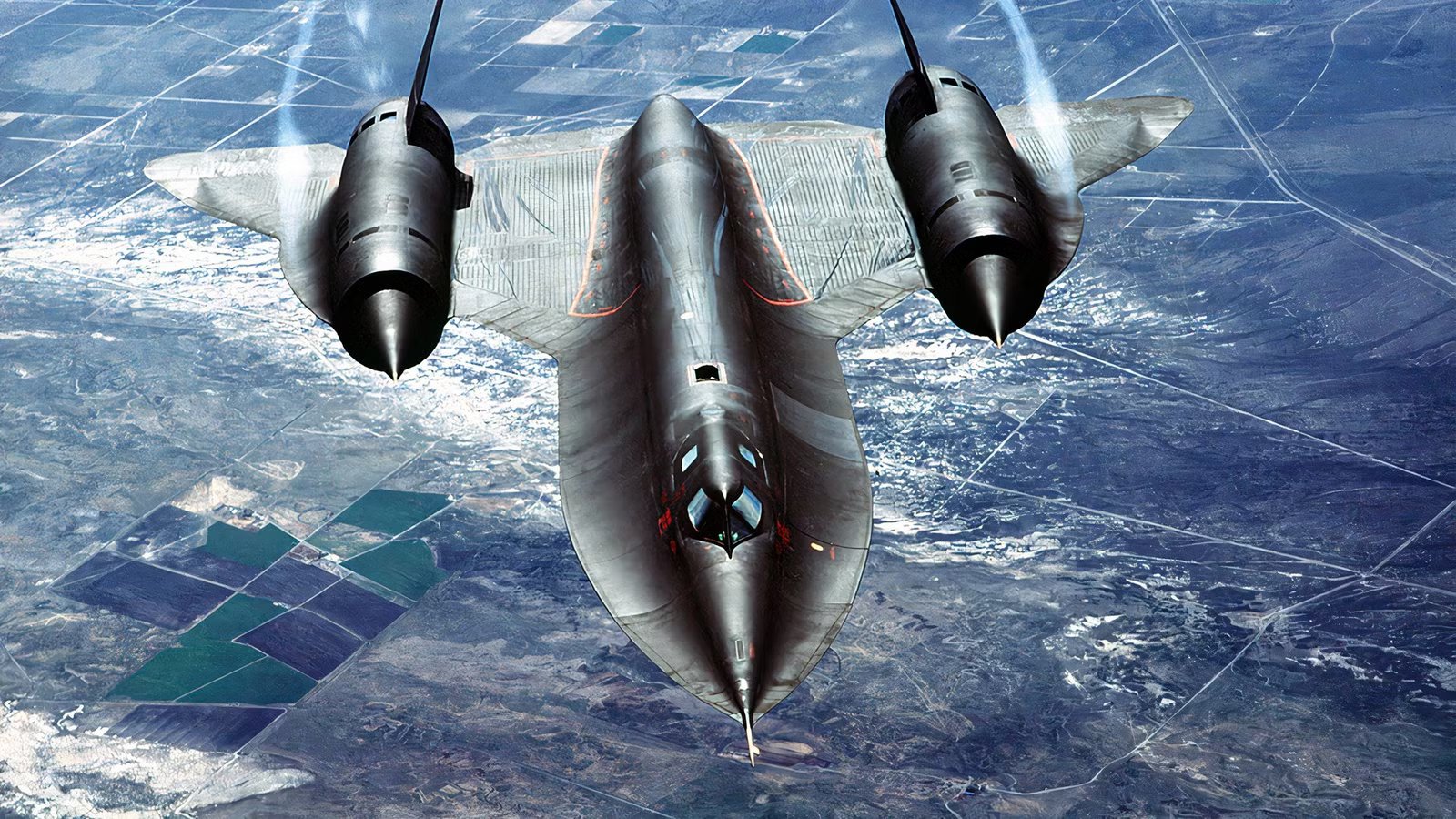
The Lockheed SR-71 Blackbird’s final flight was not a Cold War swan song but a NASA science mission, and the Blackbird spent its last decade as a Mach 3 flying wind tunnel that shaped programs like the X-33 aerospike and modern sonic boom research. The Lockheed SR-71 Blackbird was an incredible intelligence collector and became one of the prominent symbols of the Cold War.
The spy plane was designed to operate at incredible altitudes and speeds in order to mitigate the possibility of being hit by anti-aircraft missiles. In doing so, Lockheed manufactured one of the most unique aircraft ever built, one that provided policymakers and Military planners with timely information regarding the activities of the Soviet Union and the Warsaw Pact.
Even after the aircraft was retired from active duty, it was utilized by NASA as a test plane due to its ability to operate at immense heights and speeds. While the SR-71 made its final flight at the close of the twentieth century, it not only retains its record-setting performance, but also maintains a special place in the hearts of aviation enthusiasts.
The Blackbird’s Powerful Engines Ensured Its Survival And Speed Record Remained Intact

The SR-71 was purpose-designed to operate at immense altitudes and speeds, driven by advances in Soviet radar and surface-to-air missile (SAM) technology. The latter became apparent within five years of the Lockheed Martin U-2 Spy Plane entering operational service in 1956. The primary threat to the U-2 was the SA-2, which was propelled by a liquid-fuel rocket and launched from a reusable launcher capable of accommodating six missiles and rotating 360 degrees. The missile had a ceiling of approximately 60,000 feet (18,288 meters), a maximum speed of Mach 3.5, and a 288 lb (130.6 kg) blast-fragmentation warhead.
According to NASA, the Blackbird design program originated in secrecy during the late 1950s, and the SR-71 completed its first flight on December 22, 1964. The aircraft officially entered service in 1966 with the 4200th (later 9th) Strategic Reconnaissance Wing at Beale Air Force Base, California.
In order to keep the aircraft out of range of hostile SAM batteries, the SR-71 was powered by two Pratt & Whitney J58 axial-flow turbojet engines with afterburners, each producing 32,500 lb (14,742 kg) of thrust. At high cruising speeds, the engine’s inlet system and adjustable centerbody spike played a critical role in generating additional thrust. The design redirected much of the incoming airflow around the turbojet core and toward the afterburner and ejector nozzle, allowing the propulsion system to function in a manner similar to a ramjet. While no Blackbird came close to being hit by a SAM, its ability to outrun them consumed an enormous amount of fuel. During a typical 90-minute flight, the aircraft would consume roughly 12,000 gallons (45,425 liters) of specialized JP-7 fuel.
These powerful engines allowed the SR-71 to cruise at Mach 3 continuously for more than one hour at a time, with its highest recorded speed reaching Mach 3.32 (2,193 mph/3,529 km/h) on July 17, 1976. In order to withstand the immense heat (600°F/316°C) generated while operating at such speeds and at altitudes of 80,000 to 85,000 feet (24,384–25,908 meters), the SR-71 airframes were constructed almost entirely of titanium and other exotic alloys.
A Typical Cold War Mission: Maintaining An Ever-Present Eye On Soviet Activities

Given that the prime nemesis of the US during the Cold War was the USSR, American policymakers and military planners required a constant flow of reliable and actionable intelligence regarding Soviet intentions and activities, both in Eastern Europe and globally. One of numerous operations designed to glean information regarding Soviet military activities was called Giant Reach. These operations were global in scope and involved numerous intelligence-gathering aircraft. Each Giant Reach was scheduled by the National Reconnaissance Office.
While Asia had three SR-71s permanently stationed at Kadena Air Base in Japan, there was no such deployment to Europe. Rather, two or three times per year—at the direction of the Joint Chiefs of Staff—Strategic Air Command (SAC) dispatched one Blackbird to RAF Mildenhall to conduct short-duration deployments, usually lasting no longer than three weeks. According to SAC, an SR-71 was deployed to Mildenhall twice in 1978 and three times in both 1979 and 1980 to conduct supersonic electronic intelligence and imagery-collection missions.
Across six of eight Giant Reach deployments during the 36-month period, the assigned SR-71, alongside other national and theater reconnaissance platforms, closely monitored Soviet and Warsaw Pact spring and autumn troop rotations. The December 1980 deployment was of particular interest, as US intelligence feared Warsaw Pact forces might invade Poland to support the country’s Communist government and intimidate the independent Polish trade union Solidarity, which had formed in August 1980.
The above-mentioned rotations occurred twice annually and involved the movement of Soviet conscript soldiers, primarily by air, from the USSR’s three western military districts into East Germany, Czechoslovakia, Poland, and Hungary. A University of Richmond report estimates that each rotation involved approximately 125,000 troops—roughly 25 percent of the 600,000 Soviet troops stationed in Eastern Europe and three times the size of NATO’s largest reinforcement exercises—with each rotation lasting about one month.
The scale of these movements raised concerns that routine rotations or exercises could potentially provide cover for a sudden invasion. Intelligence analysts therefore needed to determine whether forces were moving toward potential disembarkation points, while monitoring for unusual preparations such as ammunition and fuel stockpiling or the forward deployment of command elements. The SR-71 was particularly valuable for this mission, capable of surveying approximately 100,000 square miles (259,000 km²) of Earth’s surface per hour while operating at 80,000 feet (24,384 meters).
Final Flight Of The SR-71

The SR-71 Blackbird made its final flight on October 9, 1999, bringing to an end an extraordinary and unprecedented chapter in aviation history. The aircraft (tail number: 61-7980 (NASA 844), operated by NASA for high-altitude and high-speed research during the final years of its career, took off from Edwards Air Force Base, California, during an air show and open house.
Piloted by Rogers Smith with flight engineer Robert Meyer, the Blackbird climbed to 80,100 feet (24,414 meters) and reached Mach 3.21, or approximately 2,463 mph (3,964 km/h). After accelerating to its remarkable cruising speed and altitude, the SR-71 returned for three passes over the onlooking crowd, providing aviation enthusiasts with a final opportunity to witness the world’s fastest crewed air-breathing jet in flight.
SR-71 Blackbird General Specifications | Related Data |
|---|---|
Armament | None |
Engines | Two Pratt & Whitney J58s of 32,500 lb. thrust each with afterburner |
Crew | Two |
Maximum speed | Mach 3+ (three times the speed of sound) or over 2,000 mph (3,219 km/h) |
Range | More than 2,900 statute miles (4,667 kilometers) |
Ceiling | Over 85,000 ft (25,908 meters) |
Wingspan | 55 feet, 7 inches (16.94 meters) |
Length | 107 feet, 5 inches (32.74 meters) |
Height | 18 feet, 6 inches (5.64 meters) |
Weight | 140,000 lb (63,503 kg) loaded |
While the flight was not originally intended to be the SR-71’s final farewell, NASA had initially planned another flight for the following day, with Ed Schneider and Marta Bohn-Meyer scheduled to crew the aircraft. Unfortunately, a fuel leak forced the cancellation of that flight, making the October 9 sortie the unplanned final flight of the renowned reconnaissance plane. This final mission was particularly appropriate, given the plane’s unique capabilities. Even after its retirement from military service, NASA continued to utilize the SR-71 as a research platform given that few other aircraft could replicate its ability to operate at its extreme speeds and altitudes. Its final flight demonstrated that, more than three decades after the Blackbird first entered service, its extraordinary performance remained unmatched by conventional air-breathing aircraft.
After landing at Edwards Air Force Base, the SR-71’s flying career was finally and unfortunately over. The Blackbird, which had spent decades outrunning hundreds, perhaps thousands, of SAMs and collecting intelligence at the edge of the atmosphere, would never again surveil the Earth or engage in aeronautic tests. Its final flight was more than a ceremonial farewell; it marked the end of an era in which speed, altitude, and technological ingenuity allowed a manned aircraft to perform missions that seemed impossible if not outlandish when the program began in the 1950s.
The Blackbird’s Lasting Legacy

During the Cold War, the SR-71 proved itself to be an indispensable tool for collecting highly important and sensitive intelligence. Its ability to scan wide swaths of the Earth provided US officials with valuable information needed to inform decisions regarding the security of NATO alliance members. At the same time, its powerful engines ensured that the aircraft had the speed necessary to remain untouched in the skies in which it operated, much to the chagrin of the Soviets and other Cold War adversaries. Following its retirement from active service, the SR-71’s extraordinary career continued with NASA, where the aircraft was used as a high-speed research platform to conduct scientific experiments and advance aerospace knowledge.
Following its retirement from official service, three Blackbirds entered service with NASA, allowing the agency to gain important knowledge in areas such as aerodynamics, propulsion, thermal protection materials, high-speed and high-temperature instrumentation, atmospheric studies, sonic boom characterization, and airframe structures under extreme flight conditions. These valuable tests contributed to the broader technological foundation for future generations of high-performance military aircraft.