dailynewsnblog
The government of Saskatchewan is calling on Ottawa to invest in three major event centre projects across the province, citing economic opportunities and the potential for community development.

The province says Premier Scott Moe penned a letter to Housing Minister Gregor Robertson formally endorsing the projects in Saskatoon, Prince Albert and North Battleford and asking for funding to support them from the Build Communities Strong Fund.
The fund was formally announced by the federal government in April, aiming to provide $51 billion over the next decade to support new and renewed public infrastructure projects to address infrastructure gaps across the country.
Saskatchewan is seeking support from the fund’s $6-billion “direct delivery” stream, which is specifically for significant regional projects, climate adaptation and community infrastructure.
The province says it is ready to match federal contributions up to one-third of total project costs, should the event centres receive funding approval.
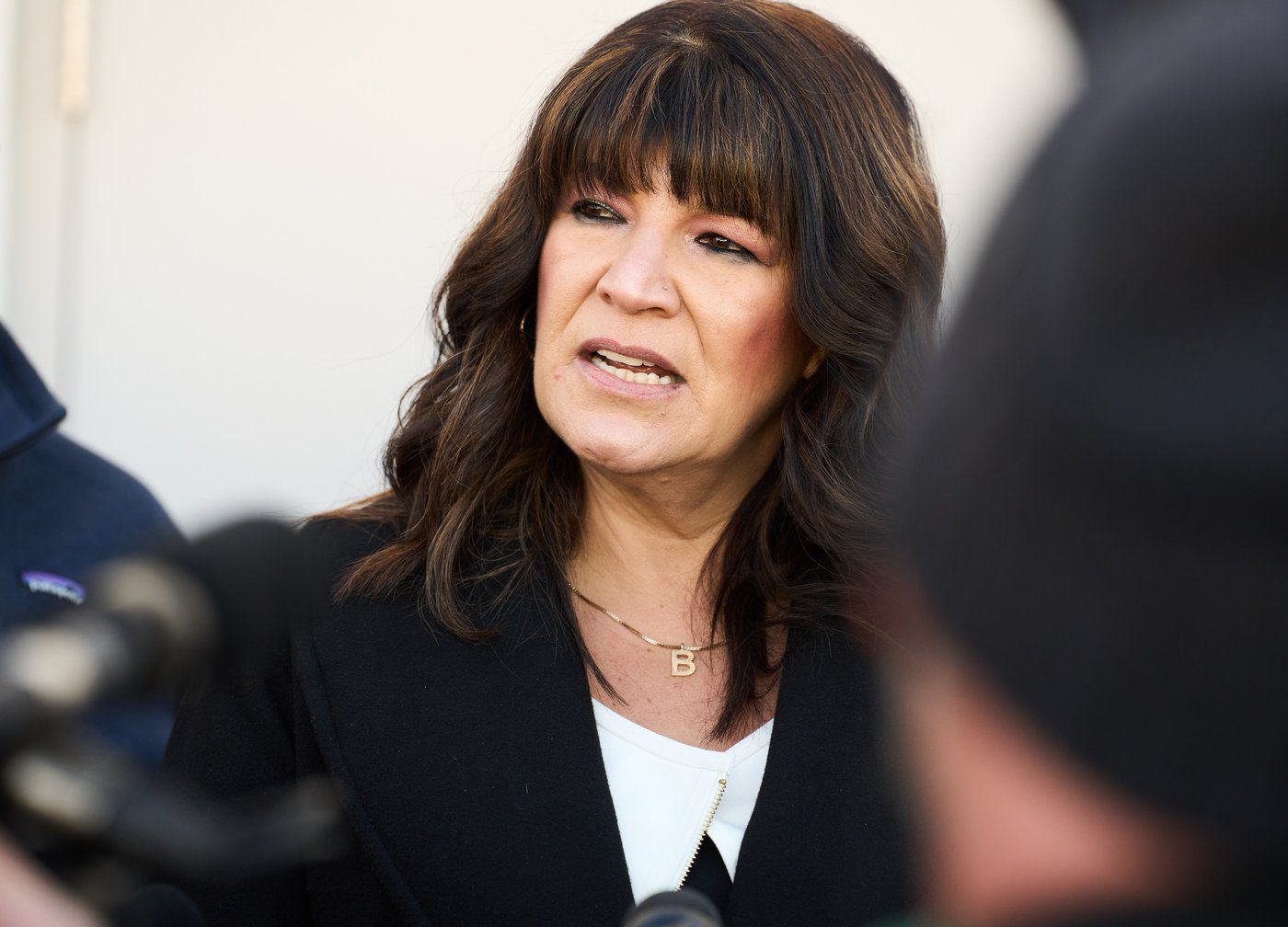
“To have a commitment like this from the provincial government is huge and I’m very grateful for their support,” Saskatoon Mayor Cynthia Block said Monday at the third of three press conferences on Saskatchewan’s funding ask.
Saskatoon is looking for funding partners for its proposed Downtown Event and Entertainment District, better known as DEED. It’s intended to transform a section of the city’s downtown core into a centre focused on commerce, tourism, entertainment and nightlife, according to the project’s website.
Saskatoon estimates the DEED project will cost around $1.2 billion, a figure arrived at last year. If the federal government agrees to fund its maximum share, it could have Ottawa and Regina doling out around $400 million apiece.

Get daily National news
Get daily Canada news delivered to your inbox so you’ll never miss the day’s top stories.
The costs of the project are “substantial and it’s formidable,” said Saskatchewan MLA Ken Cheveldayoff, who represented the province at Monday’s Saskatoon news conference alongside Block.
But for Cheveldayoff, who chaired the committee that helped build Regina’s Mosaic Stadium, the costs are not going down any time soon, making now the best opportunity to continue advancing collaborations.
“I congratulate the mayor on saying exactly that she’s going to work hard to provide other, more direct funds instead of putting it on property taxes, and I think I agree with her. There is a way to do it, and it’s by taking advantage of these long-term programs,” he said.
Currently, the direct delivery stream of the Build Communities Strong Fund is accepting applications for shovel-ready projects that are “sufficiently developed,” with the deadline for general applications passing earlier this month, on July 15. Applications remain open for Indigenous and territorial applicants until mid-August, according to the fund’s website.
Potential projects that are not yet shovel-ready can also submit an expression of interest to Ottawa for consideration at a future date.
Both Prince Albert and North Battleford consider their proposed event centres shovel-ready and say they have both submitted funding applications.
Prince Albert’s mayor, Bill Powalinsky, tells Global News the final costs for his city’s event centre have yet to be finalized, but he estimates they are around $135 million, making Ottawa’s contribution around $45 million.
Earlier this year, Prince Albert received a $15-million investment for the project from the federal government through its Green and Inclusive Community Buildings Program. This means the city would be left with $30 million to raise on its own, Powalinksy said.
For Powalinksy, receiving additional federal funding is critical to the project going ahead.
“If we can’t obtain federal funding, I’ll be honest, we’ll have to put things on hold,” he said in an interview with Global News.
For North Battleford, the event centre is projected to cost $96 million, with the city seeking $30 million in federal funding.
Meanwhile, Block says DEED is not shovel-ready, adding that the current funding stream the province and city are exploring remains “open to interpretation.”
“There are many ways that we can figure out a funding formula and tweak it, but having those dollars coming from both the federal and the provincial government [is] absolutely critical if we’re going to move forward,” Block said.
Being shovel-ready means the city would need a detailed design, Block said, adding that it is “very expensive” and would take around 18 months to two years. The city would want to secure funding before entering the process.
Buckley Belanger, secretary of state for rural development, says that while these three event centre projects are being pushed by the province, Ottawa has also received applications from other Saskatchewan projects and now has to decide which gets the green light, calling them “great projects.”
“We’re not saying they’re bad projects, but there are other projects that are also under consideration and it was a bit worrisome that we were not aware that this announcement was forthcoming until yesterday,” Belanger told Global News in an interview.
When asked, Cheveldayoff would not indicate whether the province would contribute funding to the three projects if Ottawa were not to support them, adding that he thinks the projects are in the federal government’s “best interest.”
“We’re not hearing ‘no way’ from the federal government,” Cheveldayoff said.
“We’re hearing, ‘Put your best ideas forward, work with the city and come to us with your ideas,’ and respectfully, that is what we’re doing today.”