dailynewsnblog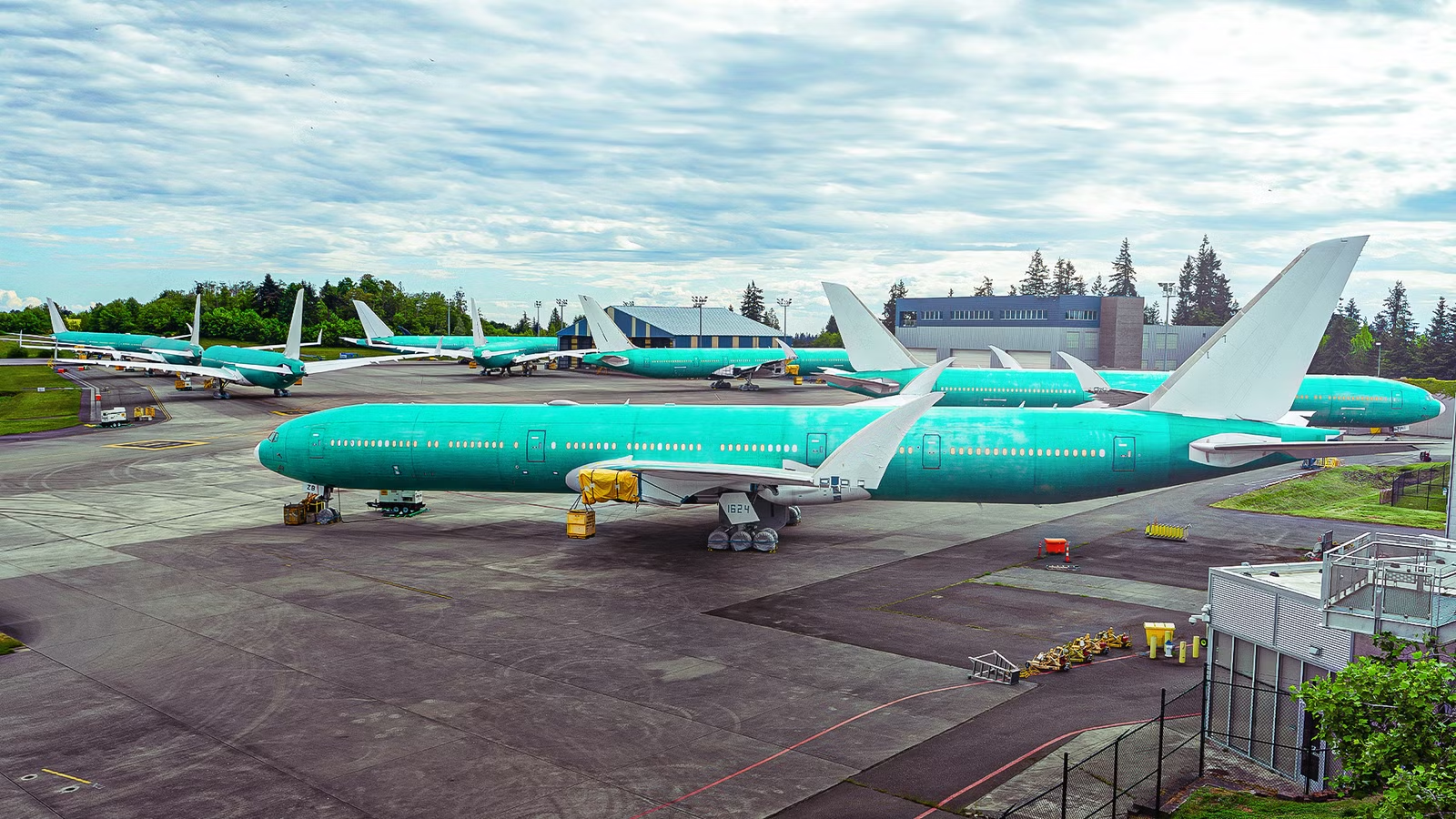
The Boeing 777X is the long-awaited update to the ubiquitous 777 line, which is famous for essentially being the world’s default long-range aircraft. With excellent fuel efficiency and a long range, the 777 dominated long-haul flying for much of the 21st century. Even today, the 777 is widely used, but it’s also starting to get old, as the Airbus A350 and Boeing 787 are far more fuel-efficient. This is why Boeing is introducing the 777X, which features modern engines, updated technology, and a new carbon-composite wing.
To improve cruise performance at heavy weights, Boeing has designed a wing much larger than those on the A350 or 787, and it’ll have a wingspan of 235 feet, 5 inches (71.8 meters), wider than any other Boeing in history. Given that gates sized for the current 777 max out at roughly 213 feet (65 meters), Boeing has designed folding wingtips so that the 777X can use existing gates. Curiously, however, this is the second time that the company has considered folding wingtips for the 777.
How Airport Gates Are Designed

ICAO outlines six categories for airport gate sizes depending on wingspan. Most widebodies are designed to be compliant with Code E, including the legacy 777, the 787, the A330, the A350, and older variants of the 747. Code E maxes out at roughly 213 feet (65 meters), which is why the A380 and 747-8 cannot use these gates. Instead, these aircraft have to use Code F gates, which max out at 80 meters (262 feet). In addition, some earlier widebodies could use Code D gates, maxing out at roughly 171 feet (52 meters).
Not all airports design their gates in strict accordance with ICAO guidelines, and the exact terminology varies by jurisdiction, but this is the general rule commonly followed around the world. This presents a problem for the 777X, because older 777 variants could comfortably fit within Code E gates, which are abundant at major international airports. With its increased wingspan, however, the 777X is firmly a Code F aircraft, which greatly restricts its usability at airports, since Code F gates are comparatively rare.
Simple Flying Quiz
Think you really know Boeing?
Answer 10 questions and put your knowledge to the test
Think you really know Boeing?
Answer 10 questions and put your knowledge to the test
Easy (15s)Medium (10s)Hard (5s)
One of the factors behind the Airbus A380’s failure is that it could only use Code F gates. Airports therefore had to invest massive sums of money into redesigning parking areas and taxiways to accommodate the quadjet. Taxi restrictions are common, while many airfields simply opted out, greatly restricting the versatility of the aircraft. Airports also had to redesign aprons and parking areas for the Boeing 747, but this was an easier, cheaper process in the 1960s/1970s, and the 747 was a far more compelling aircraft in its time.
Folding Wingtips On The 777X

At 235 feet five inches (71.8 meters), the 777X’s wing is wider than even that of the 747-8. The wing is wide and has a massive wing area to improve fuel efficiency during cruise, which was a noticeable drawback with the 777-300ER (the most popular variant of the first two 777 generations). The new wing is critical to ensuring that the 777X is competitive on fuel burn with the A350, an aircraft that has been successfully positioned as a replacement for older 777s, yet the wingspan also threatens to restrict the aircraft’s versatility.
The solution was to design hinges so that the final 11 feet, 4 inches of each wing is hinged, allowing it to pivot upwards. When folded, the 777X’s wingspan is only 212 feet, 9 inches (64.8 meters), allowing it to use the same Code E gates as older 777s while not facing taxi restrictions. While the larger 777-9 variant is still immensely long, at 251 feet, 9 inches (76.7 meters), length is generally much less of a concern for airport operations than wingspan, and would simply require careful attention from the pilots during taxiing.
777 Variant | Fuselage Length | 777 Generation | Wingspan | Engines |
|---|---|---|---|---|
777-200/200LR/777F | 209 feet 1 inch (63.73 meters) | 777-200/200ER/300 | 199 feet 11 inches (60.93 meters) | General Electric GE90 Pratt & Whitney PW4000 Rolls-Royce Trent 800 |
777-8/8F | 232 feet 6 inches (70.87 meters) | 777-200LR/300ER/777F | 212 feet 7 inches (64.8 meters) | General Electric GE90 |
777-300/300ER | 242 feet 4 inches (73.86 meters) | 777X | 235 feet 5 inches (71.8 meters) | General Electric GE9X |
777-9 | 251 feet 9 inches (76.73 meters) |
The wingtips can be controlled by a switch in the flight deck, and automatically retract after landing once the aircraft has slowed down past 50 knots. The mechanism uses a hydraulic actuator to pivot them into place, while locking pins prevent the wingtips from folding mid-flight. Because they’re essentially the ‘raked wingtip’ part of the wing, there are no control systems that run through the mechanism, making it a relatively straightforward design that is neither costly nor all that heavy.
Folding Wingtips On The Original 777

Boeing offered airlines the option to order their 777s with folding wingtips back in the 1990s when the aircraft was first being developed. These would have been a massive 21 feet (six meters) each, and early 777 models were even built with provisions for the mechanism. However, no airline ever selected this option, and the provisions were removed from later examples. To understand why this was offered requires an explanation of what the 777’s original mission role was meant to be.
The 777 program was launched in 1990, and leading up to its launch, the Boeing 747 (a Code E aircraft) was the predominant widebody for long-haul flying. The other widebodies in service at the time were the Airbus A300, A310, Boeing 767, McDonnell Douglas DC-10, and the Lockheed L-1011 TriStar. The A300, A310, 767, DC-10, and L-1011 were all primarily designed for short-to-medium haul routes while also featuring variants offering enough range for transatlantic routes, and they were all Code D aircraft.
Widebody Aircraft | Entry Into Service | Wingspan |
|---|---|---|
Boeing 747 Classic | 1970 | 195 feet, 8 inches (59.6 meters) |
McDonnell Douglas DC-10-10 | 1971 | 155 feet, 4 inches (47.35 meters) |
McDonnell Douglas DC-10-30/40 | 1972/1973 | 165 feet,4 inches (50.39 meters) |
Lockheed L-1011 TriStar | 1972 | 155 feet, 4 inches (47.35 meters) |
Airbus A300 | 1974 | 147 feet, 2 inches (44.84 meters) |
Lockheed L-1011-500 | 1979 | 164 feet, 4 inches (50.1 meters) |
Boeing 767 | 1982 | 156 feet, 1 inch (47.57 meters) |
Airbus A310 | 1983 | 144 feet, 1 inch (43.9 meters) |
Boeing 747-400 | 1989 | 211 feet, 5 inches (64.44 meters) |
 Boeing originally developed one fuselage length for the 777, offering the aircraft as the 777-200 and the extended-range 777-200 IGW (now known as the 777-200ER). The initial 777-200 was positioned as a replacement for the DC-10 and L-1011 specifically (which were larger than the A300, A310, or 767), yet its wingspan of 199 feet 11 inches (60.9 meters) meant that it couldn’t use the same gates. The folding wingtips would have solved this, enabling the 777 to use Code D gates.
Why No Airline Selected Folding Wingtips On The Original 777

The 777-200 was primarily intended to operate short, high-demand routes, as a sort of ‘people mover’. For the most part, however, airlines didn’t use the 777 in this way. Instead, the 777-200ER was by far the most popular variant of the first 777 generation, receiving 422 orders compared to the 777-200’s 88 orders. The 777 was primarily used for long-haul routes alongside Boeing 747s, and the plane’s wingspan was no issue considering the abundance of Code E gates that were being used by 747s.
In addition, whereas the 777X’s folding mechanism is relatively straightforward, the design for the original Boeing 777 was anything but. The folding section was nearly twice the size of those on the 777X, and it would also have included the aircraft’s ailerons. This would have required the ailerons’ controls to be rerouted in order to accommodate the folding mechanism. As such, the folding mechanism was far more complex and heavy than the design on the 777X, hampering aircraft performance.
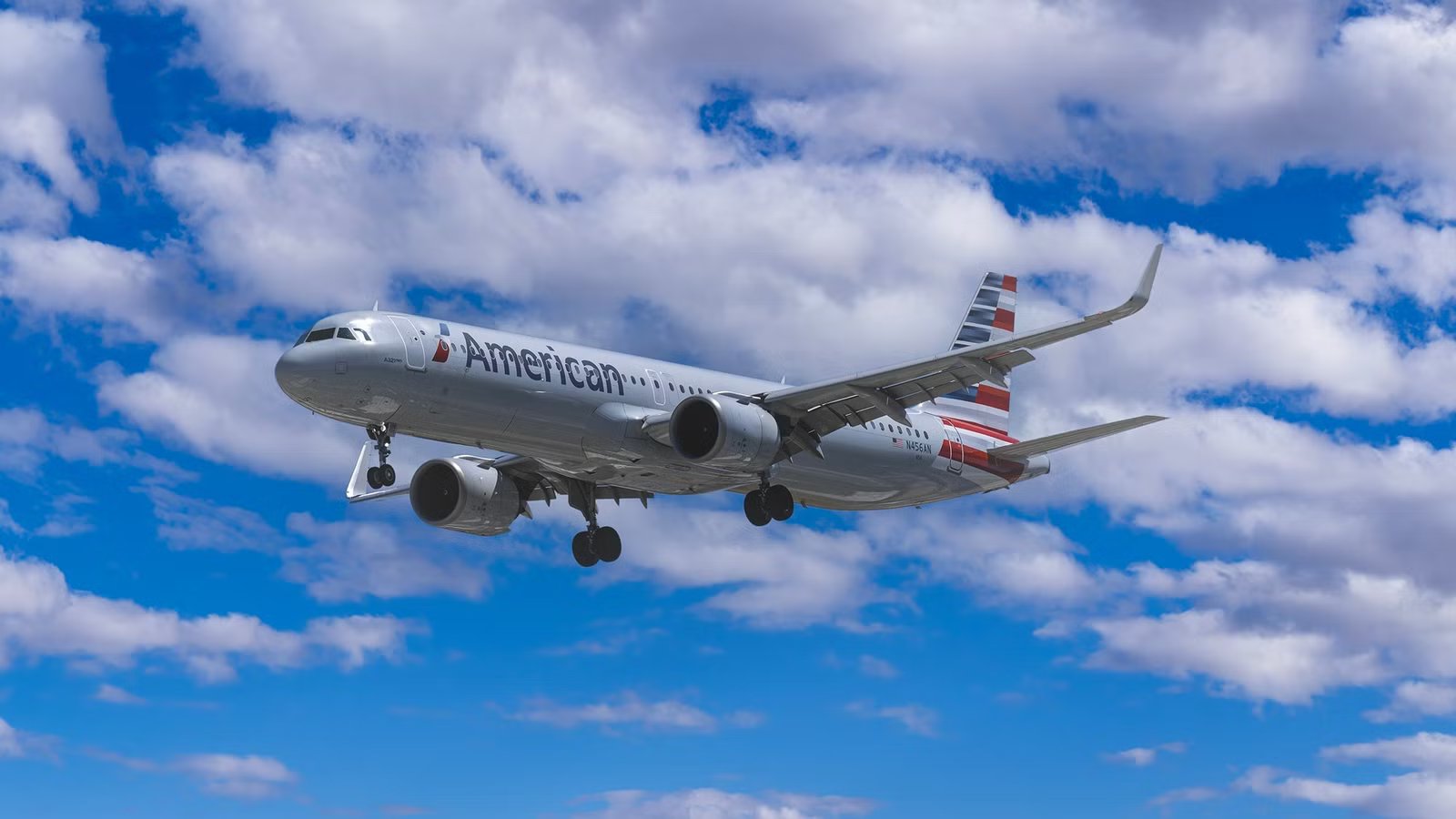
Some issues were unique to specific airlines; American Airlines was interested in the 777-200 with folding wingtips at one point, and specifically desired to use the aircraft out of LaGuardia Airport. However, the Port Authority of New York/New Jersey did not permit American Airlines to operate an aircraft as heavy as the 777 out of LaGuardia. Meanwhile, airlines generally moved away from operating widebodies on shorter routes in favor of narrowbodies, and the heavy, complex folding wingtips served no purpose for long-range 777s operating out of Code E gates.
Folding Wingtips In The Future

The 777X is the first commercial airliner with folding wingtips, but it will hardly be the last. In 2023, Airbus filed a patent for its own folding wingtip mechanism, and it’s widely believed that its upcoming NGSA (next-generation single-aisle) aircraft will feature folding wingtips. This aircraft, which will replace the A321neo and will likely be named the A360, will be a clean-sheet design with an innovative new wing to take advantage of modern advances in aerodynamics.
Airbus’s preliminary renderings, based on years of research from projects like the ‘Wing of Tomorrow’, show that a long, thin wing is the ideal shape for the NGSA’s/A360’s mission role. With narrowbodies increasingly being used on longer routes, this aircraft will have a much greater wingspan than the A321neo, likely exceeding ICAO Code C standards, which are set at roughly 118 feet (36 meters). The folding wingtips will enable the NGSA/A360 to use the same gates as the A321neo while delivering much better performance in the air.
Boeing is also reported to be planning development of a new narrowbody the same size as the A321neo or Boeing 757. While few details have been revealed as to what it may look like, a folding wing is almost certain if Boeing also opts for a long, thin wing that would be wider than the 737. While the 777X is the first widespread implementation of the technology in commercial aviation, folding wingtips appear to be the future.