dailynewsnblog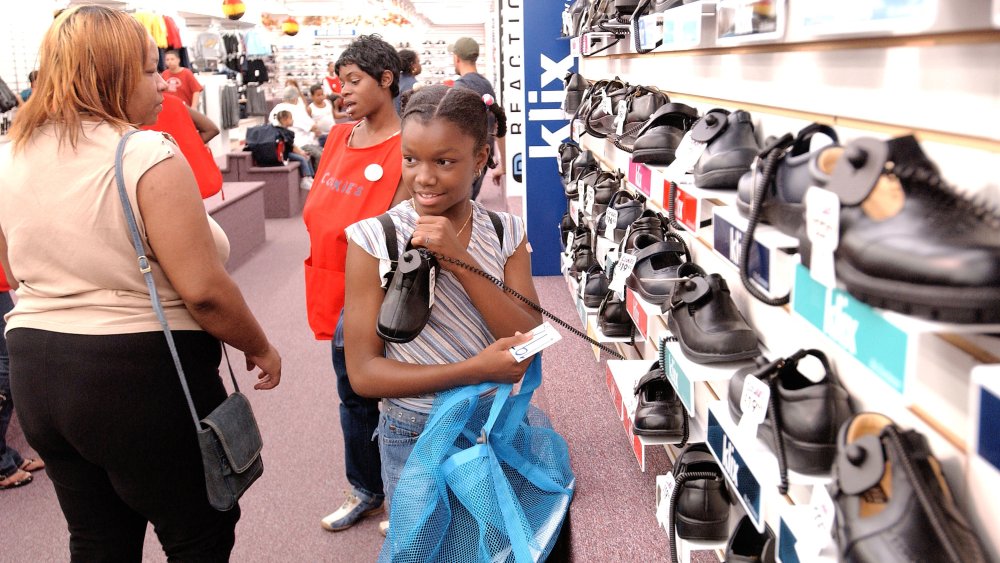
The financial squeeze impacting both parents and shoe executives alike is real.
A survey from AlixPartners in partnership with the Distributors and Retailers of America (FDRA) found that consumer demand for back-to-school footwear remains strong.
Parents are shopping for bts earlier this year, and quality and brand name outpaces quantity, the survey shows. AlixPartners surveyed 1,000 U.S. consumers in June on their shoe-shopping plans for bts.
Inflation and higher shoe prices are putting pressure on the size and share of the wallet earmarked for footwear. “Consumers are responding by demanding quality and buying fewer pairs rather than lower-priced shoes,” said Bryan Eshelman, a partner and managing director at AlixPartners.
According to AlixPartners, athletic and athleisure shoes are the fastest-growing category, with net spending expected to rise 11 percent from last year. “The World Cup is definitely a tailwind for the big athletic footwear brands,” Eshelman said.
The Price-Value Equation
Thirty-nine percent of consumers said prices were noticeably higher for kids and teen shoes versus year-ago levels, while another 39 percent said prices felt slightly higher.
As for price perception versus value, 6 percent said they are paying “a lot more for the same or less,” Twenty percent said “prices are high but, quality hasn’t improved,” and 37 percent said they’re getting about the same value as last year.
Thirty-nine percent said they will cut pairs before switching to cheaper brands. Fifty-three percent said brand name is what drives purchases — although that is down from 71 percent in 2024 — but only if trusted brands deliver on quality and durability.
Forty-one percent said comfort drove premium shoe purchases, and 39 percent said quality and durability were equally important.
In addition, 50.3 percent said they would buy one all-purpose sneaker instead of separate specialized pairs, while 39 percent are prioritizing a shoe that can move from school to activities and 32 percent said they would replace a dedicated athletic shoe with a versatile casual or athleisure shoe.
As for how to cut costs, 33 percent they would shift to lower-price retailers, 30 percent said they planned to buy fewer pairs of shoes overall, and 25 percent said they would trade down to cheaper brands. As for where they are shopping, thirty-five percent said online, 34 percent cited in-store, and 64 percent plan to shop Amazon Prime Day type of sale events. Twenty-six percent they don’t use artificial intelligence shopping tools.
Affluent consumers at over $150,000 in household income planned to increase their bts spend by four percent, while lower-income consumers at under $25,000 in household income are trimming 10 percent from their shoe budgets. And those with incomes between $75,000 and $149,000 reported neglible differences on their spend this year versus year-ago-levels.
Closing the Gap
Footwear executives have a conundrum on their hands as costs rise and retail pricing power is restrained, they said.
Citing FDRA’s 2026 Second Quarter Shoe Executive Business Outlook Survey, 79 percent expect landed costs to rise sharply, while 63 percent said operating costs will rise higher than they were six months ago. The survey also concluded that footwear executives who see cost increases expect retail prices for shoes to rise as much as five percent this year.
Between tariffs and the crisis with Iran, input costs for shoe manufacturing have gone up. Moreover, many shoes are made with petroleum, particularly those in the athletic category. All those increases leave brand executives facing a real test on how to absorb the rising costs. And given the AlixPartners survey on what consumers want and how they are shopping for footwear, the executives need to make some key decisions on the cost factor while still delivering on the quality consumers expect and the durability they demand.
Footwear executives can’t cheapen their products to absorb costs because the result would be that shoe brands lose the value argument, as well as customer loyalty. What’s left is a need to fine-tune the sourcing strategy, which has effectively become an operational shift.
“A lot of people are interested to see what happens next with China. In 2025, China was at a 35-year low to the U.S. market from a value and volume perspective,” FDRA’s president and chief executive Matt Priest said. And with export volume so low, he explained that China has been “hyper-price competitive” to get production back into China.
According to Priest, “We’re hearing retailers are okay or more open to going back to China if it meets the needs of a more discerning consumer, which the [AlixPartners] survey shows we have, and politically we now have the process.”
Priest is referring to a Board of Trade proposal in connection to a deal U.S. President Donald Trump and China President Xi Jinping struck when they met in China in May to “review non-sensitive items within the trade relationship with the potential of lowering tariffs on those goods.”
FRDA filed comments on July 8 where “we asked for all Chapter 64 to be deemed non-sensitive,” Priest said. Chapter 64 covers all of footwear, and a non-sensitive designation would take all shoe lines out of the tariff structure that the U.S. is currently charging on Chinese goods.