dailynewsnblog
Meta’s glasses deliver the same functionality as its Ray-Ban models but don’t quite feel as premium.

RATING : 8 / 10
- Same features as Gen 2 Ray-Ban and Oakley models for a lot less
- More styles and color variations
- Slightly more adjustable fit
- A little chunkier and less polished than equivalent Ray-Ban frames
- The “Fury” style is heavy
- Rate-limited features require an AI subscription
When it comes to smart glasses, Meta’s best move was making the frames look and feel more like a pair of Ray-Ban (and later Oakley) glasses than a tech-forward accessory made by the company itself. Now, after five years in the smart glasses game, Meta is putting its own brand front and center. The company’s latest lineup of frames ditch the designer branding and officially take the name that’s already become shorthand for the product: Meta Glasses.
The change means that Meta can sell its own lineup for a bit less — the new frames start at $299 — with relatively few sacrifices. Compared with their Ray-ban and Oakley counterparts, Meta’s own glasses don’t skimp on features or functionality, though there are some details that make them feel a bit less premium.
New branding, new look
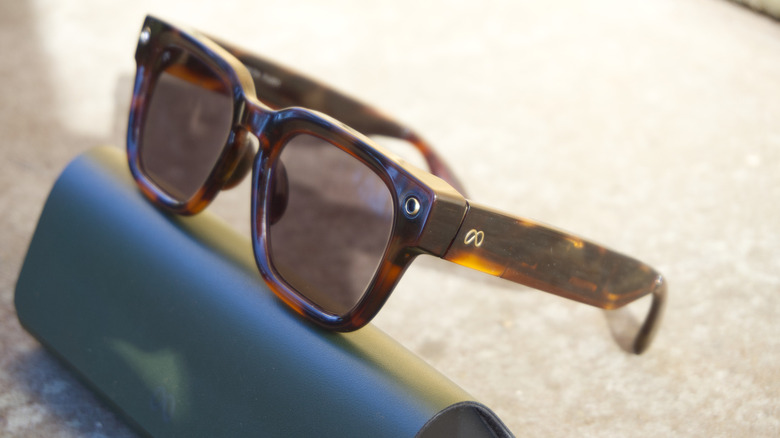
Another advantage with Meta’s new glasses line is that it can offer a lot more combinations of colors and frame styles. Right now, there are three frame styles: Adventurer, a Wayfarer-esque design; Starfire, the Kylie Jenner collab with a cat eye shape; and Fury, a chunkier, oversized square style. Each of these comes in several color and lens variations. It would be nice to see some more round frame styles, but I do appreciate having more colors to choose from.
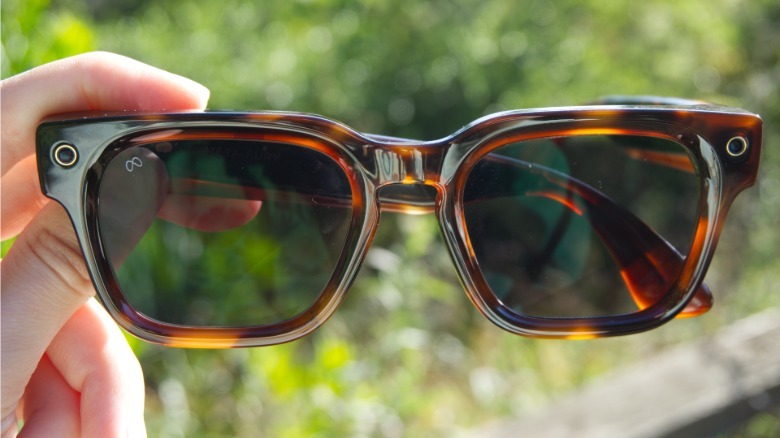
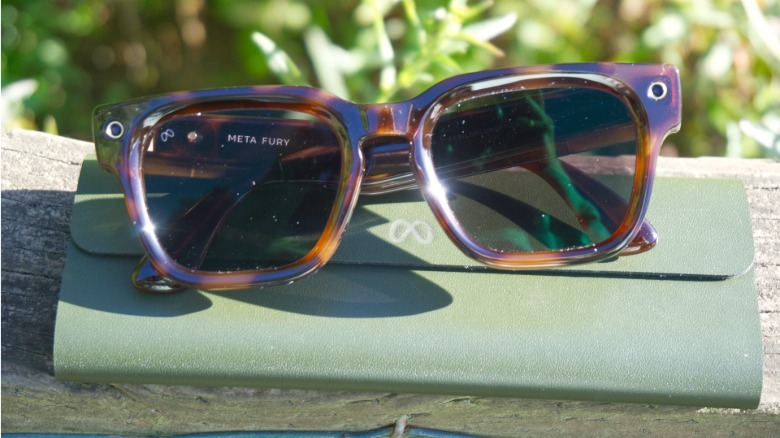
The pair I was provided for this review was a Fury model in tortoiseshell with transition lenses. At first glance, the frames are similar to Ray-Ban styles I’ve tried, though there are some differences when you look closely. Instead of the familiar Ray-Ban logo etched onto the lenses and side of the frames, there’s now a Meta ∞ logo.
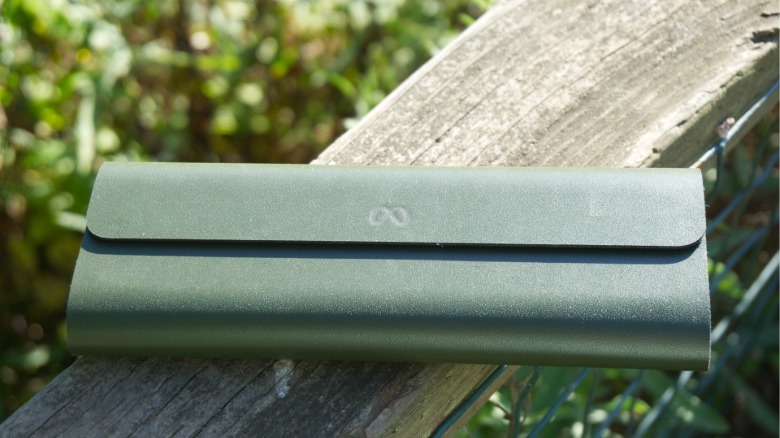
The charging case also has a different design; it folds flat similar to the case Meta uses with its display-enabled glasses. It’s not as elegant as the classic Ray-Ban case, but I think I prefer the collapsible design because it’s easier to slip into smaller purses and bags.
 Karissa Bell for Engadget
There are other, more subtle details that made me miss some of the Ray-Ban styling. The Fury frames in particular are thicker and bulkier than most other glasses I’ve tried from Meta. At 60 grams, they’re noticeably heavier than the Ray-Ban Optics frames with prescription lenses I recently reviewed.
Still, I was pleasantly surprised that the glasses didn’t slip much on my face despite the extra weight. Both the Fury and Adventurer frames come with adjustable nosepieces that are much easier to tweak than the removable ones that came with the Optics frames. The temple tips are also somewhat adjustable, though they’re more suited for minor tweaks than the type of custom fit you’d get from an optician.
But while the fit was good, the Fury frames aren’t especially comfortable. There’s a noticeable ridge that runs almost the entire length of each arm that creates uncomfortable pressure on the side of my head after a few hours. And the heavier frames dug into the sides of my nose and left pretty deep dents after extended wear.
 Karissa Bell for Engadget
Same features and Meta AI
In terms of functionality, there isn’t much of a difference between Meta’s newest glasses and the rest of its Gen 2 lineup. The latest glasses have the same 12-megapixel camera and microphone setup as other recent models. Meta says the glasses have “more than eight hours” of battery life, but it really depends on how intensely you’re using them. I tended to get closer to four and a half hours on a charge if I was listening to music pretty consistently.
The newest frames also have the same action button as the Ray-Ban Meta Optics glasses. This is a programmable button that you can set as a shortcut for a specific command to Meta’s assistant. I like to set mine to read my latest text messages, but you can also use it to quickly access almost any feature, including translation abilities or to capture different styles of video.
Speaking of the camera, Meta recently added a “dynamic capture” setting that’s kind of like Meta’s version of a live photo. When enabled, it allows the camera to capture a burst of several photos at once and then you can choose the frame you like best later, or you can view them with a bit of animation like you would a native live image. I don’t shoot a ton of photos with my glasses, but I could see how it can be useful for capturing moments with kids or pets when there might be a lot of motion in the frame.
 Karissa Bell for Engadget
Meta has also previewed a new pedestrian navigation feature that can help you get around with audio cues. Walking directions was a neat feature in Meta’s display glasses, so I’ve been curious to see how well it will work in an audio-only format. Unfortunately, the feature isn’t available yet so I haven’t been able to actually try it.
I’m often surprised when I chat with people who own a pair of Meta-branded glasses that they don’t use the AI features much, if at all. I think this is because those capabilities aren’t necessarily obvious with most day-to-day use, but also some of the more advanced features, like Live AI, can still feel like more of a novelty than something most people actually need. If you do want to use Meta AI on the glasses, it’s now powered by the company’s latest model, Muse Spark. I’ve found that the update has generally led to a smoother and more capable assistant.
It’s also worth considering that Meta seems to want to tie some of its glasses’ AI experiences to its new subscription offerings. So far, the only glasses-specific feature that’s been rate-limited is Conversation Focus, which can amp up the volume of someone speaking to make in-person conversations easier to hear in noisy environments. Anyone who wants to use the feature for more than three hours a month must pay for a $20/month Meta One plan. While that’s the only subscription-based feature for now, I fully expect to see more paywalled features from Meta by the end of the year.
The baggage
While I don’t think rate-limited features are inherently a dealbreaker, it does underscore some of the other implications surrounding Meta’s glasses. It’s impossible to ignore that there is a very real and growing backlash against smart glasses, especially those from Meta.
The company recently acknowledged some of those concerns when it announced that all of its glasses would be getting a mandatory firmware update meant to disable the devices’ cameras if the LED light is tampered with. That might address cases where people are intentionally drilling holes into their glasses so they can record stealthily, but it doesn’t really address the broader concerns people have about bystander privacy or Meta’s fascination with facial recognition.
 Karissa Bell for Engadget
While the most heated debate seems to be limited to online discourse rather than IRL interactions, we’re already starting to see some broader bans of Meta glasses in certain spaces like courtrooms. And there is a growing effort to stigmatize people who wear these glasses. I’ve said before, I don’t think it’s fair to label anyone who wears smart glasses a “creep” or “pervert,” but it’s hard not to think about it at times.
I was recently playing with my two-year-old nephew on a playground and used my glasses to record some very adorable POV videos as I followed him around the play structure. There were no other kids around at the time, but I did think about the army of online trolls who would readily accuse me of being a creepy weirdo for even wearing them on a playground. At the same time, the glasses allowed me to capture a sweet moment I wouldn’t have otherwise been able to record (pulling out a phone is kind of impractical when you’re crawling through a child-sized tunnel).
Right now, this debate isn’t really any different if you’re using “Meta Glasses” or a pair of Ray-Ban Meta or Oakley frames. But the prominent Meta branding does make the debate a bit harder to ignore.
Meta Glasses or Ray-Ban Meta?
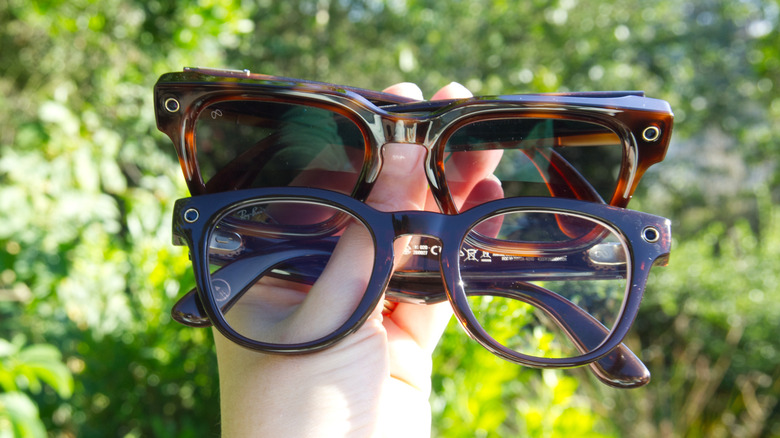
If you’ve made it this far, then you’re probably wondering whether you should get a pair of Meta Glasses or one of the other Ray-Ban or Oakley frames. A lot will depend on how you want to use them. If you want prescription lenses, then it’s hard to not recommend the Optics line, even though they’re pricier. Likewise, if you want sunglasses for athletic pursuits, either of the Oakley versions are probably a safe bet. But Meta’s own glasses are a great value.
Up to now, if you wanted a cheaper pair of Meta-branded smart glasses your best bet was to get a pair of Gen 1 Ray-Ban frames. Those glasses have still been getting consistent updates, but they’re almost three years old and have worse cameras and battery life than newer models. Now the Adventurer and Fury glasses fill that gap; you can get glasses with the latest specs and features for at least $80 less. There are some details that make them feel a little less polished than their counterparts, but it’s a tradeoff that will be worth it for most people.