dailynewsnblog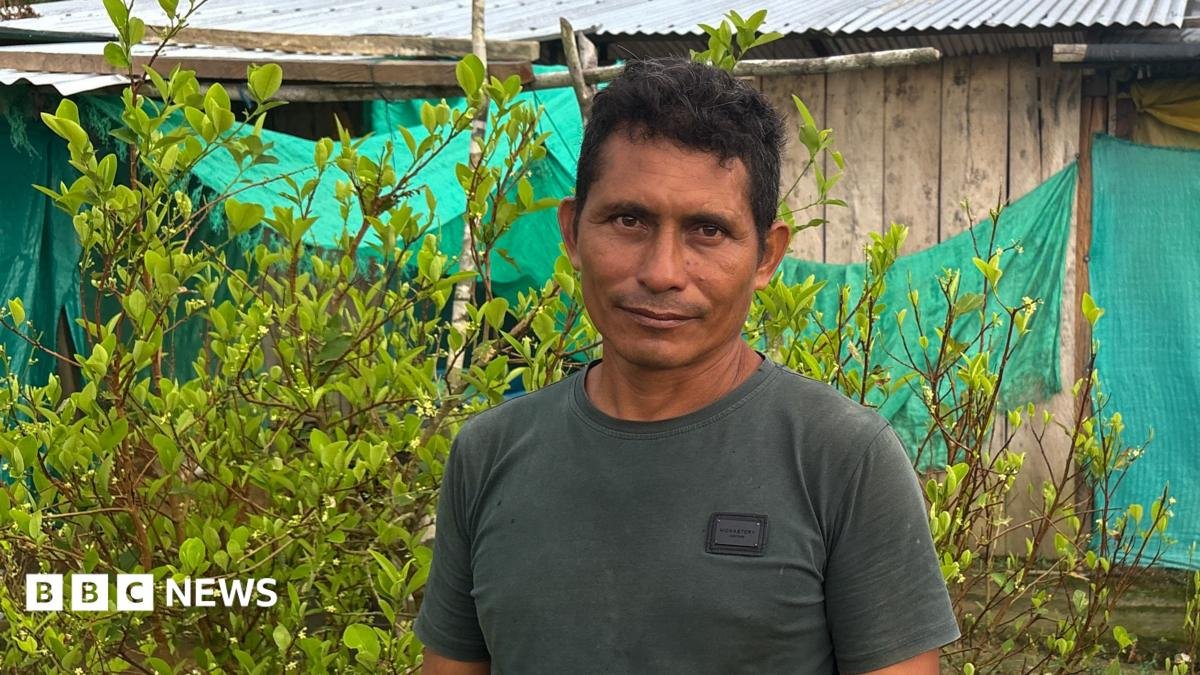
Elena Hernández moved to the coca-growing region of Guaviare during the boom of the 1990s, lured by better pay.
“There was more money back then – you could see it everywhere,” she says. “I managed to save and buy a small house.”
But the coca industry also brought violence and insecurity. Armed groups fought for control, while the government tried to curb production through manual eradication, aerial fumigation and arrests.
These efforts cut off families’ incomes but failed to stem cultivation.
So when a nationwide substitution programme was introduced by the then government in 2017, Hernández was eager to sign up, joining around 100,000 families who were promised financial support in return for moving away from coca.
Each household was due to get 36m Colombian pesos ($11,000; £8,000), spread over a two-year period.
“The way it was presented to us, it seemed very promising for the development of our territory,” says Hernández.
The programme, known as the National Comprehensive Programme for the Substitution of Illicit Crops (PNIS), was born out of the 2016 peace deal between the government and Colombia’s largest guerrilla group, Farc.
In exchange for uprooting their coca plants, farmers would also get technical support, including from agronomists, and advice on soil management.
While substitution programmes had existed before, they remained limited in scale. PNIS was the most ambitious attempt to date – and at first appeared to be working.
In parts of southern Meta and Guaviare, coca fields were replaced by lemon trees, banana crops and small livestock farms. Many farmers, like Hernández, stayed away from coca.
Yet that does not mean they consider it a success.
“The government wasn’t very committed to us farmers. We were treated badly,” explains Hernández, pointing to problems that emerged early on.
Payments were delayed, and technical support frequently failed to materialise. Weak state presence in rural areas and poor coordination between agencies meant support often did not reach communities.
Momentum behind the programme weakened as political priorities shifted. Iván Duque, who became Colombia’s president in 2018, refocused the government’s approach on eradication and security strategies.
By the time current President Gustavo Petro took office in 2022, PNIS was behind schedule and struggling to reach communities.
But some farmers did report improvements. For Doralba Bejarano, from Puerto Rico in southern Meta, her situation improved as stalled support began to arrive.
“Before the programme we were terrified,” she says. “We had to hide the coca paste because the police, the military, would put us in jail.” Coca paste is a more concentrated form of coca used to produce cocaine, allowing growers to earn more than selling raw leaves.
Now, she says, she has peace of mind: “I go wherever I want. I have no reason to hide.”
She says many in her community are now receiving government support to promote and sell their non-coca crops and other foodstuffs.