dailynewsnblog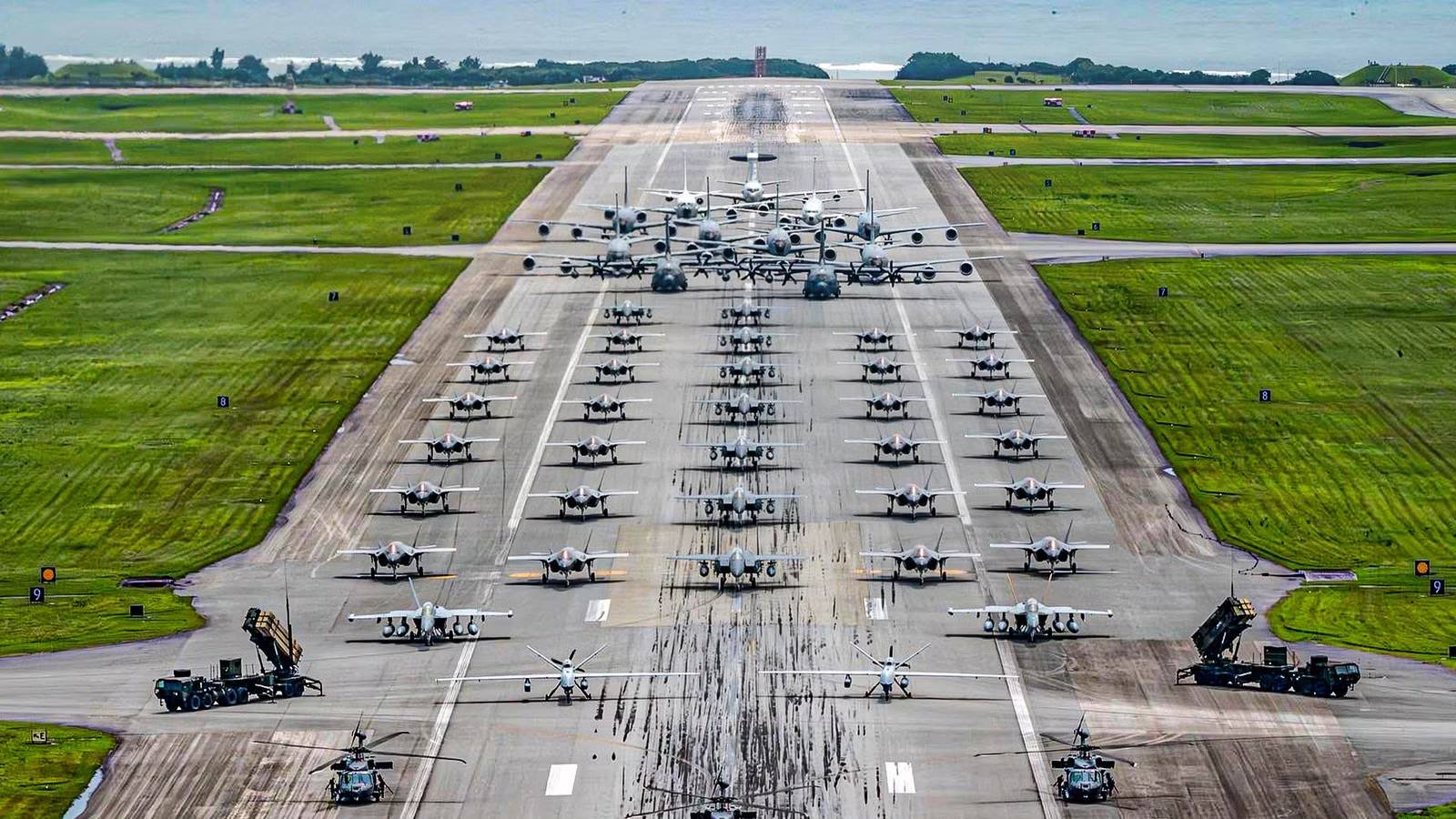
The United States military is one of the biggest purchasers of new aircraft. It’s by far the largest military in the world, and its contracts with major suppliers represent crucial business. Some companies rely almost entirely on US defense contracts, and while the aviation industry as a whole is generally unkind to smaller players, several companies compete against one another for contracts and also specialize in their own niches. This includes transport and support aircraft, as well as combat aircraft.
Military aviation is most closely associated with combat aircraft, which are specialized planes and helicopters designed to destroy enemy targets. This can take the form of air superiority fighters, bomber aircraft, and strike aircraft, as well as multi-role aircraft which can perform combat roles. These types of aircraft are flown by the US Air Force and Navy, as well as the US Army and US Marine Corps. Currently, there are six companies actively producing combat aircraft for the US armed forces.
Bell Textron
Producing Two Combat Helicopters And One Tiltrotor Aircraft

A subsidiary of Textron, Bell primarily produces military helicopters for the US. The company currently produces the UH-1Y Venom, one of the latest versions of the famed Huey rotorcraft family. The original UH-1 Iroquois/Huey entered service in 1959, while the UH-1Y Venom was introduced in 2008. Compared to prior Huey variants (of which there have been several), the UH-1Y features modernized technology and a longer cabin. The Venom can also be equipped with rockets, machine guns, and an electronic warfare pod.
In addition, Bell builds the AH-1Z Viper, yet another derivative of the Huey. Whereas the UH-1Y Venom is primarily a utility helicopter that can also serve in combat roles, the AH-1Z Viper is designed as an attack rotorcraft. It incorporates features like added weaponry and a narrower profile, while also featuring a different fuselage design for its mission role. The AH-1Z entered service in 2010, and although it looks dramatically different from the UH-1Y, the two helicopters have about 85% parts commonality.
Adding on to the Huey derivatives, Bell is working on the MV-75 Cheyenne II, a tiltrotor aircraft positioned as the replacement for aging UH-60 Black Hawks. It will feature two tilting rotors (similar to the V-22 Osprey), but it will be far more capable than a traditional helicopter. The MV-75 is primarily being designed as a troop transport, but it will also feature an optional cannon and missiles for greater defensive capability. It’s currently projected that the Cheyenne II will be ready for service by 2031.
The Boeing Company
Producing Two Fighters And Two Combat Helicopters

Boeing is a major US defense contractor, but two of its most prominent military aircraft programs are actually derivatives of McDonnell Douglas designs. The Boeing F-15EX Eagle II is an improved variant of the F-15 Eagle, one of the most successful air superiority fighters of all time, and only entered service in 2024. Meanwhile, Boeing also produces the F/A-18E/F Super Hornet, and it’s currently in the early stages of development on the F-47 sixth-generation fighter, which will replace the F-22 Raptor.
In addition,  Boeing is currently producing the AH-6, which is a light gunship based on the earlier MH-6 Little Bird. Notably, Boeing has tested an uncrewed version of the AH-6, which proved its ability to operate fully autonomously. Meanwhile, the AH-64 Apache is Boeing’s larger attack helicopter offering, originally developed by Hughes Helicopters and later built by McDonnell Douglas before the merger with Boeing. Currently, the Apache is being produced as the AH-64E.
The Boeing Company Divisions | Description |
|---|---|
Boeing Commercial Airplanes | Producing airliners, freighters, and airliner-derived business jets (737, 767, 777, 787) |
Boeing Defense, Space & Security | Producing military planes, helicopters, missiles, and space systems |
Boeing Global Services | Providing aftermarket support to Boeing customers |
Alongside the wide array of combat fighters and helicopters, Boeing offers a diverse selection of military aircraft serving other roles. For example, it currently offers two transport helicopters in its lineup (consisting of the H-47 Chinook and the MH-139 Grey Wolf), while also selling the KC-46 Pegasus aerial refueler. The manufacturer is actively delivering the P-8 Poseidon, and Boeing also produces the MQ-25 Stingray, a carrier-based drone capable of aerial refueling.
General Atomics Aeronautical Systems
Producing Two Drones

General Atomics Aeronautical Systems is well known for its lineup of military drones. The company primarily focuses on uncrewed aerial vehicles and radar systems and currently produces the MQ-1C 25M Gray Eagle, as well as the MQ-9B SkyGuardian/SeaGuardian. The Gray Eagle is a derivative of the General Atomics MQ-1 Predator, which entered service in 1995 and has since been retired by the USAF, while the MQ-1C is designed specifically for the US Army.
The MQ-9 Reaper is a significantly larger, faster, and more capable UAV than the MQ-1, incorporating a turboprop engine, which allows for much greater payloads. In addition, the MQ-9 can be controlled by the same ground systems as the MQ-1. Currently, General Atomics is producing the aircraft as the MQ-9B SkyGuardian and SeaGuardian. The SkyGuardian features advanced systems and performance improvements for operations in civilian airspace, whereas the SeaGuardian is designed for naval aviation.
General Atomics is currently developing the MQ-20 Avenger, the next evolution of its UAV line. Unlike its predecessors, the Avenger will be powered by a turbofan engine, while also incorporating stealth features. The UAV is designed to carry other uncrewed systems to achieve stand-off survivability and penetrating capability, and can still use the same ground systems as the MQ-1 and MQ-9 families.
Lockheed Martin Corporation
Producing Two Fighters

Lockheed Martin is one of the most iconic aerospace manufacturers in history. The company is most famous for the SR-71 Blackbird, as well as aircraft like the C-130 Hercules, C-141 Starlifter, C-5 Galaxy, F-117 Nighthawk, and the relatively new F-22 Raptor. Today, Lockheed Martin produces two fighter jets, with its F-35 Lightning II quickly becoming the backbone of the US armed forces’ fighter jet fleet.
The F-35 is the second-most common fighter used by the US, as well as the most common stealth fighter in the world. Lockheed Martin also currently produces the F-16V Viper. The F-16 was originally developed by General Dynamics in the 1970s, and Lockheed acquired the F-16 program in 1993 (it later merged with Martin Marietta to become Lockheed Martin in 1995). The upgraded F-16V Viper debuted in 2021, and it features a new radar, updated avionics, more advanced cockpit screens, and electronic warfare suites.
In addition to the two fighters currently in production, Lockheed Martin is actively developing ‘Vectis’, a new uncrewed combat drone. Unlike prior UAVs like the MQ-9, Vectis will be AI-powered rather than being remotely piloted, and it’s intended to serve as a ‘loyal wingman’ to assist crews piloting fifth-generation/sixth-generation fighters. It will be similar in size to a fighter jet and will feature a stealth design, while its weapons arsenal will make it a highly versatile tool once it enters service.
Northrop Grumman Corporation
Producing One Bomber

Northrop Grumman is famous for building a wide variety of aircraft, with the relatively recent B-2 Spirit flying wing bomber being one of the company’s most successful designs. But the B-2 Spirit entered service in 1997, and its stealth technology is no longer cutting edge, while production of the Spirit (which was produced in limited numbers) ended 26 years ago. It’s an expensive aircraft to fly and maintain, which is why the USAF awarded a contract to Northrop Grumman for a replacement.
The Northrop Grumman B-21 Raider retains the same flying wing design as the B-2 Spirit, but it’s smaller and lighter than its predecessor. It features more advanced stealth technology, and crucially, it will be cheaper to produce than the B-2 Spirit. As the USAF plans to operate over 100 examples, the B-21 will be less expensive to acquire per unit, while maintenance costs will be lower as well. It will carry slightly less payload, but will be more survivable and feature a modular open systems architecture.
USAF Bomber Fleet | Number In Service | Introduction Year | Retirement Year |
|---|---|---|---|
Boeing B-52H Stratofortress | 75 | 1961 | 2050s (as B-52J) |
Rockwell B-1B Lancer | 45 | 1986 | 2037 |
Northrop B-2A Spirit | 19 | 1997 | 2037 |
Northrop Grumman B-21 Raider | 100 on order | 2027 planned |
In addition to the B-21 Raider, Northrop Grumman is currently producing the E-2 Hawkeye and developing the YFQ-48 Talon Blue. Similar to the Lockheed Martin Vectis, this is an uncrewed combat aerial vehicle that will be powered by AI systems to assist pilots operating fighter jets. The first flight for this loyal wingman aircraft is currently projected for late 2026, and it will be one of multiple loyal wingman designs that will be an integral part of the USAF fleet.
Sikorsky Aircraft
Producing Two Combat Helicopters

Sikorsky Aircraft, currently owned by Lockheed Martin, has been mass-producing helicopters for over 80 years. It produces rotorcraft for the civilian and military markets, with the S-70 line being its primary model. The type is most prominently produced as the UH-60 Black Hawk, a utility/transport helicopter used extensively by the US military, but Sikorsky also manufactures combat variants of the S-70 line.
The MH-60 Sea Hawk is a variant for the US Navy, which is capable of performing anti-submarine warfare, anti-surface warfare, naval special warfare, search & rescue, combat search & rescue, vertical replenishment, and medevac roles. The HH-60 Pave Hawk, meanwhile, is primarily used by the USAF for special operations insertions and recoveries, as well as combat search & rescue.
Catch what other trackers miss
Emergency squawks, holds, NOTAMs — live signals, no signup.
Open tracker
Catch what other trackers miss
Emergency squawks, holds, NOTAMs — live signals, no signup.
Open tracker