dailynewsnblog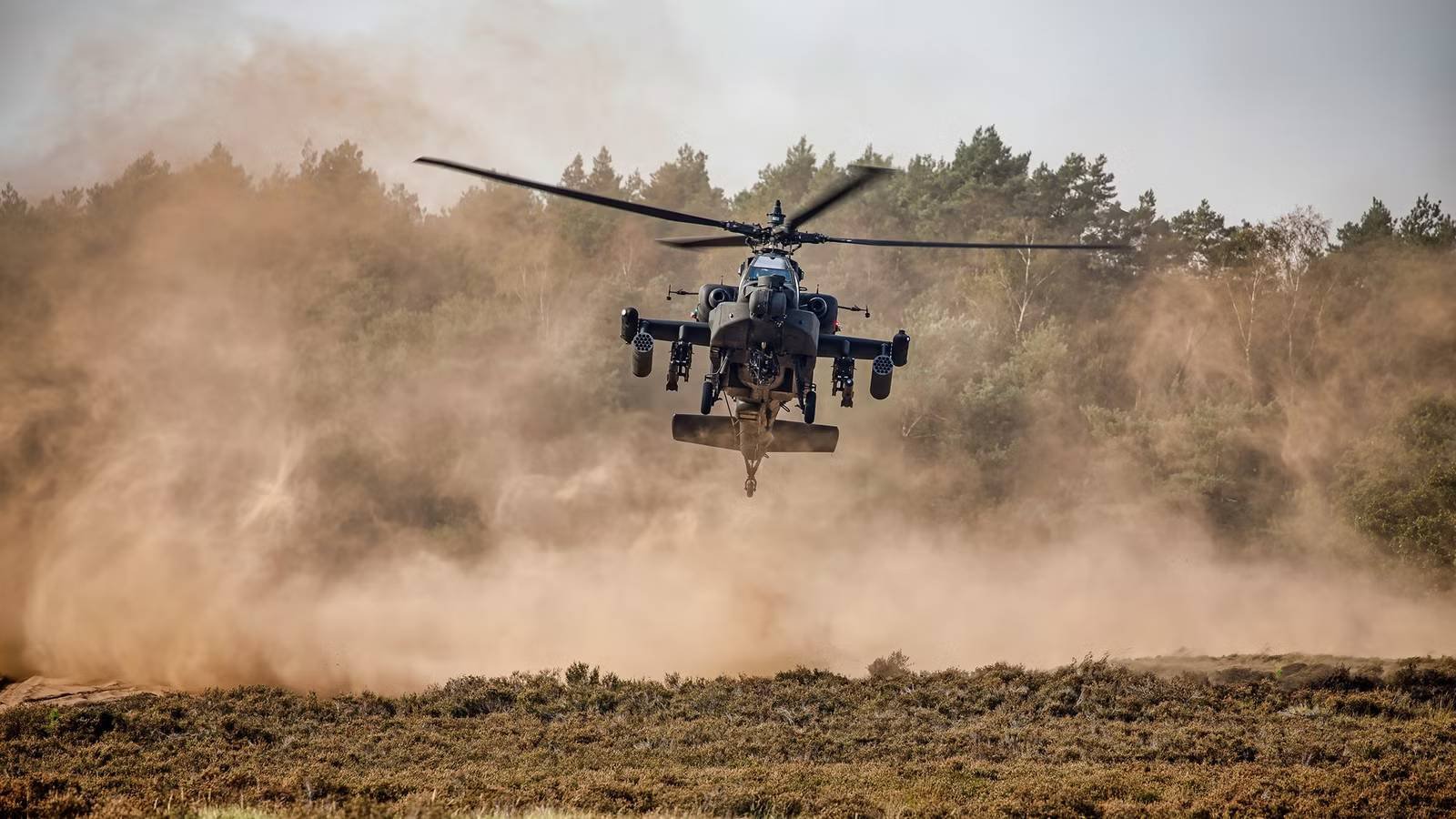
In the armed forces of the United States of America, there are many different jobs and ranks assigned to aviation missions. In fact, all four service branches have their own pilot corps, including the Army and the Coast Guard. While the US Air Force, Navy, and Marines are better known for their fixed-wing tactical aviation, including many fighter jets, the Army has an enormous number of helicopters.
As a core component of the US Army’s modern strategy, its thousands of rotary-wing platforms are flown by both non-commissioned and commissioned officers. The fact that Warrant Officers can be pilots in the Army is very different from the other three service branches that engage in conventional military operations. These pilots are promoted from the enlisted ranks after extensive training and field experience.

The pay difference between a US Army Warrant Officer pilot and a Commissioned Officer pilot stems from how each rank structures its career tracks and defines leadership roles. An Army Warrant Officer’s primary duty is to fly, maintain tactical proficiency, and master a specific aircraft, such as an Apache or Black Hawk helicopter, leaving the high-level desk work and politics to others. Commissioned Officers in the US Army are eventually destined to hold positions of authority over thousands of troops and millions, if not billions, of dollars’ worth of assets.
The pay difference between these two tracks is baked right into the military pay tables. A Commissioned Officer pilot starts at O-1 and typically plateaus at O-6. A Warrant Officer starts at WO1 and tops out at CW5. Because the O-grade pay scale sits higher than the W-grade pay scale, the Commissioned pilot makes more money at 2 years, 10 years, and 20 years of service, even though both are flying the same aircraft.
Because Commissioned Officer ranks are inherently higher on the military ladder than Warrant Officer ranks, Commissioned pilots earn more money at every single stage of their careers. A military paycheck consists of base pay, tax-free allowances for housing and food, and monthly incentive flight pay.
Flight pay is the only thing that is identical between the ranks because it is set by Congress based solely on years of aviation service. It starts at $150 a month, goes up to $700 a month after 6 years, and tops out at $1,000 a month after 14 years. In fact, an Army Officer who stops flying in order to perform a more senior desk job will stop receiving flight pay, but Warrant Officers are typically never promoted out of a flight deck job and therefore can continue to receive AvIP until retirement.
By The Numbers: Salary

A freshly commissioned officer, also known as a ‘butter bar,’ may actually earn less than a non-commissioned officer with years of service already under their belt. Depending on the career path of a Warrant Officer prior to aviation training, they can have a slight advantage in base pay over the officer corps for some time. The disparity grows after factoring in allowances and accounting for the higher pay ceiling that officers can attain after several years of duty. After a decade or more in uniform, the ‘top brass’ will earn a substantially higher annual income as well as set up a larger investment fund for their eventual retirement from active duty.
Rank Comparison (Warrant / Commissioned Name) | Warrant Officer Income | Commissioned Officer Income |
|---|---|---|
Chief Warrant Officer 2 / O-1 Second Lieutenant | $48,000 – 82,000 | $49,000 – 62,000 |
Chief Warrant Officer 3 / O-2 First Lieutenant | $54,000 – 95,000 | $57,000 – 79,000 |
Chief Warrant Officer 4 / O-3 Captain | $61,000 – 112,000 | $66,000 – 107,000 |
Chief Warrant Officer 5 / O-4 Major | $67,000 – 130,000 | $75,000 – 125,000 |
— / O-5 Lieutenant Colonel | — | $87,000 – 144,000 |
— / O-6 Colonel | — | $105,000 – 180,000 |
The peak of a pilot’s career highlights the fundamental difference between the technical track of the Army and the ‘top brass’ pipeline. In the Army, senior aviators climb to Chief Warrant Officer 4 (CW4) and Chief Warrant Officer 5 (CW5). This milestone represents pure flight master status. A CW5 is a highly respected technical advisor who serves as a subject-matter expert for senior commanders. They do not run bases or manage large units of personnel, and they are rarely pulled out of the cockpit for desk jobs.
Catch what other flight trackers miss
Emergency squawks, holds, NOTAMs — live signals, no signup.
Open tracker
Catch what other flight trackers miss
Emergency squawks, holds, NOTAMs — live signals, no signup.
Open tracker
Overview Of Salary Allowances

By mid-career, around year 8, an Army pilot is a CW3 focusing entirely on technical flight duties and earning $100,000 to $130,000. The Air Force pilot at year 8 is usually a Captain or Major running a squadron’s daily operations, pulling in $115,000 to $150,000. There is a major difference in Basic Allowance for Housing, but notably, there is zero difference between a Warrant Officer and a Commissioned Officer for food allowances, or BAS.
An Army Major (O-4) gets a much larger tax-free housing check than a Chief Warrant Officer 3 (CW3), even if they live in the same neighborhood. BAH is entirely dependent on rank, location, and family status. Commissioned Officers receive significantly higher housing payouts compared to Warrant Officers of similar seniority, allowing them to rent or buy larger homes off-base.
Army Pilots can also be given a cost-of-living allowance when they are stationed in an area with a high cost of living, domestically or overseas. COLA is calculated using a complex formula based on base pay, rank, and family size. Because Commissioned Officers have a higher base pay grade, their calculated COLA multiplier generates higher monthly payouts.
Both Warrant and Commissioned Officers receive a flat increase in their BAH when they have dependents. BAS is strictly intended to feed the individual pilot, not their family. Gaining dependents changes housing pay, but it leaves food pay exactly the same. However, when deployed or sent on temporary duty away from their families for more than 30 consecutive days, both Warrant and Commissioned pilots receive the Family Separation Allowance.
Airline Transition and Aviation Retention Bonuses

Transitioning to a major commercial airline is a primary goal for many military aviators, but the ease of this transition depends heavily on the type of aircraft flown. Army Warrant Officers essentially only fly rotary-wing platforms like helicopters. To work for a major airline, helicopter pilots must utilize specialized ‘Rotor-to-Airline’ transition programs to build necessary fixed-wing hours on their own or through regional partnerships.
In commercial aviation, your pay, schedule, base location, and aircraft assignments are dictated entirely by your date of hire. A pilot who leaves the military after 10 years of service starts building airline seniority much earlier than a pilot who stays for a full 20-year military retirement. That airline system means that staying in the military for senior ranks or spending more time on post-service transition training can actually cost a pilot millions in long-term lifetime earnings.
The retention bonus structures illustrate how aggressively each branch fights to compete with civilian airlines. The Army utilizes an auction-style bidding system for senior Warrant Officer retention bonuses. Rather than receiving a standard payout, Warrant Officers must submit confidential bids. The Army then reviews these bids, accepting the lowest ones to save budget while letting pilots who bid too high lose out entirely, with the maximum at no more than $25,000 per year.
Unlike Warrant Officers in the Army and pilots in the other service branches, US Army Officers are not usually offered an aviation bonus. The captains and majors who would typically be eligible in another department of the Armed Forces, like the Air Force or Navy, are excluded from the Army. The reasoning is simple, most Commissioned Officers still serving in a front-line job that puts them in the cockpit are locked into their initial ten years of service after completing Flight School.
There are some exceptions, such as a Captain with less than six years in grade who has already served longer than the initial 10-year commitment. Similarly, a major could also be offered a bonus anywhere from $25,000 to $35,000. That AVB is only offered for these senior Officers who are still performing flying duties as a part of their operational role.
The Retirement System

All Army Pilots are subject to the same retirement framework. The High-Three system is the legacy program that some senior pilots are grandfathered into, but most fall under the Blended Retirement System. For anyone serving 20 active years, the pension is calculated as a fixed percentage of final base pay. Because the base pay charts favor the Commissioned Officer ranks over Warrant Officer ranks, the payout gap is substantial.
Under BRS, reaching 20 years yields a lifelong pension equal to 40% of the average of your highest 36 months of base pay. A Lieutenant Colonel (O-5) retiring with 20 years of service will draw a monthly pension based on a much higher salary cap than a CW4 or CW5 retiring at that same 20-year mark. Over a lifetime, that gap adds up to hundreds of thousands of dollars in retirement pay, even though both retirees spent 20 years operating advanced military aircraft.
Right out of the gate on day one of retirement, the former Commissioned pilot makes $960 more per month, which is more than $11,000 every single year, just for having held a commissioned rank instead of a Warrant Officer rank. Military pensions are also updated annually for inflation as a cost-of-living adjustment.
The average retirement gap between the two most common ranks held by retirees will be roughly $350,000. That figure is based on the projection that a retired CW4 will be paid out approximately $1.26 million in lifetime pension funds compared to about $1.61 million in retirement payments to an O-5.