dailynewsnblog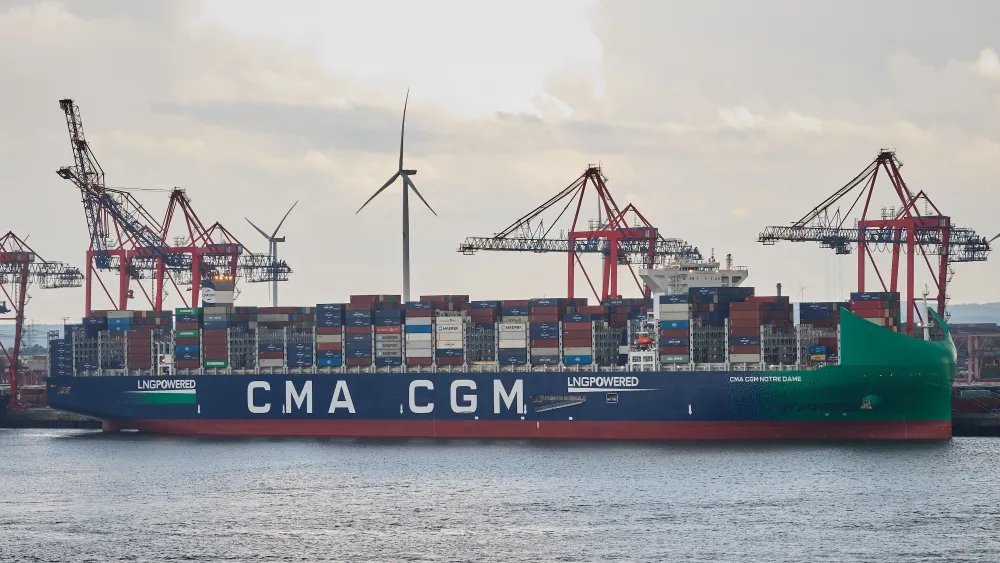
A large U.S. retailer moving roughly 4,000 twenty-foot equivalent units (TEUs) from Asia identified more than $2.4 million in potential fuel surcharge savings after benchmarking carrier-imposed charges against independently modeled voyage costs, highlighting growing scrutiny over ocean carriers‘ bunker-related fees.
The findings come as importers contend with elevated bunker fuel costs and emergency fuel surcharges following the Iran conflict and concerns over shipping through the Strait of Hormuz. As carriers pass those costs on to customers, procurement teams are increasingly questioning whether fuel surcharges accurately reflect the underlying cost of moving cargo, according to an analysis by freight intelligence platform VesselBot.
The retailer has since used the findings in discussions with its ocean carriers to secure immediate cost reductions, and agreed to incorporate the benchmark into future transportation tenders and contract negotiations, the company said.
The anonymized data shared with Sourcing Journal examined a subset of shipments moving from ports in China and Vietnam to both U.S. coasts. The data included 15 voyages, with eight sailing on CMA CGM ships and seven on Cosco Shipping vessels.
More than $1.35 million in potential fuel surcharge savings were identified for a voyage from the Port of Zhongshan to the Port of New York & New Jersey, representing more than half of the total figure.
According to the findings, per-lane gaps between VesselBot’s Fuel Surcharge Benchmarking Indices and carrier-invoiced rates ranged from roughly $420 to $870 per TEU.
Constantine Komodromos, founder and CEO of VesselBot, says shippers often find themselves negotiating without the operational data needed to validate fuel surcharge calculations.
“We talk to BCOs through our sustainability lens, and in many of those discussions we’ve been told they had a difficult time managing that exposure of fuel charges, either on the spot market or in their contracts,” said Komodromos. “There was no factual way for carriers and shippers to discuss these topics.”
VesselBot’s platform models fuel consumption for individual vessel voyages by combining vessel specifications, AIS tracking data, weather conditions, sailing speeds, routing and bunker prices at hundreds of ports worldwide. The company says the methodology mirrors the way carriers calculate fuel costs but provides shippers with an independent benchmark against which they can evaluate bunker-related surcharges.
Many larger importers structure contracts around a published bunker fuel index, such as the Port of Singapore’s Very Low Sulfur Fuel Oil (VLSFO) price, multiplied by a carrier-set “trade factor.”
The trade factor is intended to reflect a carrier’s fuel cost per container on a given route. But unlike the bunker index, it isn’t published or independently verifiable, leaving shippers to take the number largely on faith.
“The market has no visibility, and there’s a lot of opacity around the data,” Komodromos told Sourcing Journal. “You don’t know the speed that the vessel is moving, you don’t know the fuel consumption and you don’t know how many containers the carrier is carrying on a per-voyage basis…One side has 100 percent visibility. The other has almost zero.”
While negotiating contracts with that approach helps shippers hedge swings in fuel prices, Komodromos argues it leaves another variable largely unchecked.
“They hedge the bunker price, but the trade factor risk remains unhedged,” he said. “They cannot manage it because they don’t have the data.”
VesselBot says that visibility gap has become more consequential following this year’s war-driven fuel price volatility.
The company’s analysis of Maersk and CMA CGM bunker-related surcharges on the Far East Asia-to-West Coast North America trade lane found published Bunker Adjustment Factor (BAF) and Emergency Fuel Surcharge (EFS) charges were materially higher than VesselBot’s modeled fuel cost-per-TEU during April and May.
The firm’s benchmarking suggested savings opportunities ranging from $310 to $475 per TEU, depending on the carrier and month, compared with published surcharges.
As emergency fuel surcharges begin flowing into regular quarterly BAF calculations, shippers may effectively pay twice for the same fuel price increase, Komodromos said.
“Emergency fuel surcharges have been charged as soon as the price of bunker increased in the past few months,” he said. “Now they will be charging it again through normal BAF. So there might be some double counting there because EFS was already charged, and now the BAF…is also being applied.”
VesselBot has seen growing interest from beneficial cargo owners (BCOs) seeking to better understand their exposure before entering annual carrier tenders, particularly around the trade factor component of fuel surcharge formulas.
“The majority of the exposure comes from the trade factor,” Komodromos said. “Apart from the bunker price risk that the carriers and shippers are hedging and managing, they should be paying attention to the trade factor risk.”
For shippers, he argues, the goal isn’t necessarily to eliminate fuel surcharges but to bring greater transparency to how they’re calculated.
“We try to provide the whole bundle of data you need to understand for yourself,” he said. “This becomes the way that they can now discuss with their carrier…that the cost should have been lower than what you are charging us.”