dailynewsnblog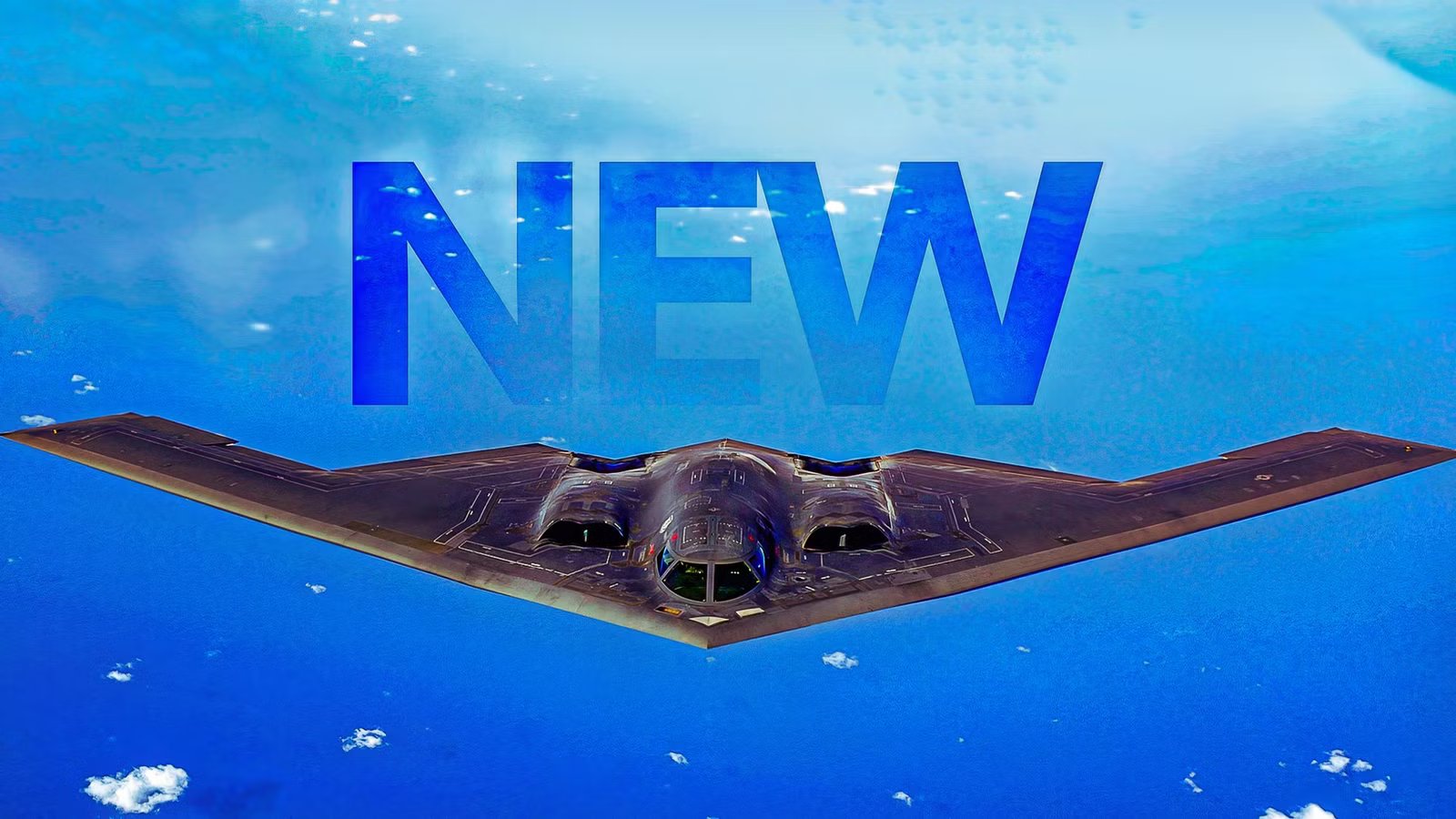
The Indo-Pacific is possibly the most consequential area of operations for the United States (US) Military at the present time. This region, which had, since the conclusion of the Vietnam War, drifted ever farther from the US strategic focus, has recently witnessed a resurgence of strategic interest.
This is due to the continued growth of not only the Chinese military, but also its capabilities, as well as open statements by Beijing that Taiwan will eventually be brought under mainland China’s control, whether by force or political unification. Therefore, the defense of the island is seen by many analysts as a key component of US influence in the region, as many regional states view the US position on Taiwan as a bellwether of its commitment to defending its traditional partners in the region.
To strengthen interoperability with security partners in East and Southeast Asia, the US military conducts joint exercises that increasingly focus on responding to and countering China’s growing naval capabilities. This was highlighted during the annual RIMPAC exercise; of particular interest was the deployment of an anti-ship cruise missile from a platform that had never before publicly employed such ordnance.
How The Northrop Grumman B-2 Spirit Just Complicated China’s Naval Ambitions

In a move that took many military analysts by surprise and likely complicated the calculations of Chinese military planners, the United States Pacific Air Forces demonstrated the employment of the AGM-158C Long Range Anti-Ship Missile (LRASM) from a B-2 Spirit north of the Mariana Islands. The missile went on to strike the decommissioned amphibious transport dock USS Juneau during the exercise. What makes this development particularly noteworthy is that, prior to this event, the only publicly known bomber certified to carry the LRASM was the Rockwell International B-1B Lancer.
With this new capability, US Air Force (USAF) planners now have another means of rapidly responding to maritime threats posed by the Chinese Navy (PLAN). The latter has grown dramatically in both size and capability in recent years. As such, PLAN now fields more than 400 warships, and US defense projections estimate its navy could grow to around 435 battle force ships by 2030. At issue is the Chinese navy’s ability to project power and threaten Taiwan through an amphibious assault supported by a growing fleet of amphibious assault ships, such as the Type 075 and emerging Type 076 classes, as well as increasingly capable aircraft carriers.
While the  Boeing F/A-18 Super Hornet can be equipped with the LRASM and the Lockheed Martin F-35 Lightning II has successfully completed integration testing of the weapon, employing these aircraft against targets near China would require operations within a highly contested environment. Aircraft carriers operating in the region would also face an increased threat posed by China’s anti-access/area-denial (A2/AD) capabilities.
However, the combination of the B-2 and the LRASM provides US military planners with another strike vector in the event of a Taiwan contingency. Capable of launching from the continental United States and extending its range through aerial refueling, the Spirit could operate much closer to the battlespace because of its advanced stealth characteristics. This would enable the aircraft to launch long-range precision assaults against a Chinese amphibious task force, adding another layer of complexity to any invasion plan. With this in mind, what makes the LRASM such an asset?
The Deadly Capabilities Of The LRASM

Unlike many legacy anti-ship missiles, the AGM-158C was designed to operate in highly contested environments with minimal external support. The missile can autonomously locate, identify, and engage enemy naval assets utilizing a combination of passive radio-frequency sensors, an imaging infrared seeker, electronic support measures, and artificial intelligence-assisted target recognition. This enables the LRASM to engage moving targets without relying on continuous GPS navigation, external data links, or precise pre-programmed target coordinates.
Based on the AGM-158B Joint Air-to-Surface Standoff Missile-Extended Range (JASSM-ER), the LRASM incorporates a new seeker, upgraded power system, altimeter, and a secure data link. While it can receive targeting updates from its launch platform, it is also capable of independently searching for and identifying its intended target. To improve survivability, the missile employs a low-observable airframe, flies a low-altitude sea-skimming terminal approach, and is equipped with advanced countermeasures specifically designed to defeat modern naval air defenses.
The LRASM has a publicly listed range of more than 200 nautical miles (370.4 km), although many analysts believe its true operational range is much greater. To enhance a strike mission, a salvo of these cruise missiles are capable of sharing target information mid-flight, allowing them to coordinate attacks while discriminating between intended targets and neutral shipping in congested maritime environments.
This is of particular importance in a Taiwan contingency where commercial shipping would likely remain present, but it is believed that China would plausibly utilize decoy or auxiliary vessels to draw valuable ordnance away from its invasion fleet. The weapon paired with the B-2 will therefore play a crucial role in any confrontation with the PLAN.
The B-2 Will Hold The Line In The Pacific Until The Raider Fleet Has Significant Numbers

The Northrop Grumman B-21 Raider is expected to enter operational service in 2027. While the aircraft will considerably enhance the USAF’s long-range strike capability, it is unlikely to be fielded in significant numbers until the early to mid-2030s. Until that point, in order to maintain a credible and effective long-range strike option, the USAF is currently investing $1.35 billion (£1.02 billion) in its fleet of 19 B-2 Spirits. A further $342 million (£258 million) will be allocated to modernizing its 44 supersonic B-1B Lancers.
Until the Raider enters service in larger numbers, the B-2 will remain one of the USAF’s most important long-range maritime attack assets. Supported by aerial refueling, a B-2 Spirit launching from Whiteman Air Force Base (SZL) could reach stand-off launch range of a Chinese amphibious task force near Taiwan in roughly 14 to 16 hours.
B-2 Specifications | Related Data |
|---|---|
Power plant | 4x General Electric F118-GE-100 engines |
Thrust | 17,300 lb (7,847 kg) per engine |
Wingspan | 172 feet (52.12 meters) |
Length | 69 feet (20.9 meters) |
Height | 17 feet (5.1 meters) |
Weight | 160,000 lb (72,575 kg) |
Fuel capacity | 167,000 lb (75,750 kg) |
Payload | 60,000 lb (27,216 kg) |
Range | Intercontinental |
Ceiling | 50,000 feet (15,240 meters) |
Armament | Conventional or nuclear weapons |
Crew | Two pilots |
Inventory | Active force: 20 (1 test); ANG: 0; Reserve: 0 |
Furthermore, because the LRASM shares the same basic dimensions as the JASSM cruise missile, the B-2 is believed to be capable of carrying up to 16 LRASMs. If all 19 operational B-2s were available for a single mission, they could theoretically launch as many as 304 stealth anti-ship cruise missiles in an opening salvo.
Such an attack would complement other long-range anti-ship capabilities already available to US forces in the Indo-Pacific, including the Naval Strike Missile, Maritime Tomahawk, and land-based precision fires. A coordinated attack of this scale would present a significant challenge to the PLAN’s air and missile defenses and could substantially complicate any large-scale amphibious operation against Taiwan.
Bridging The Gap Until The B-21 Arrives

The deployment of the LRASM from the B-2 represents an important development for US strategy in the Indo-Pacific. By combining a penetrating stealth bomber with a long-range autonomous anti-ship missile, the USAF has introduced another unpredictable strike vector that Chinese military planners must now account for in any Taiwan contingency. Rather than relying solely on carrier-based aviation, the United States can increasingly threaten hostile naval forces from long stand-off range using stealth aircraft capable of approaching the battlespace undetected.
Whether this capability can be sustained will depend largely on the transition from the B-2 and B-1B to the Northrop Grumman B-21 Raider. Continued investment in the Spirit and Lancer remains essential until the Raider enters service in larger numbers, something that is unlikely to occur before the early to mid-2030s. Although the Air Force’s current program of record calls for a minimum of 100 B-21s, many senior military leaders and analysts believe the eventual fleet could grow to around 145–150 aircraft. How quickly that force is fielded may ultimately determine the scale of the USAF’s long-range maritime strike capability in the Indo-Pacific.
Once deployed in significant numbers, the B-21 will inherit the maritime attack mission while benefiting from three decades of advances in stealth design, manufacturing techniques, and low-observable materials. Combined with the LRASM and future generations of precision-guided weapons, the Raider is expected to provide the United States with an increasingly survivable means of holding hostile naval forces at risk inside heavily defended airspace. As the aircraft enters operational service over the coming decade, its production rate and eventual weapons integration will be among the most closely watched indicators of the future balance of power in the Western Pacific.