dailynewsnblog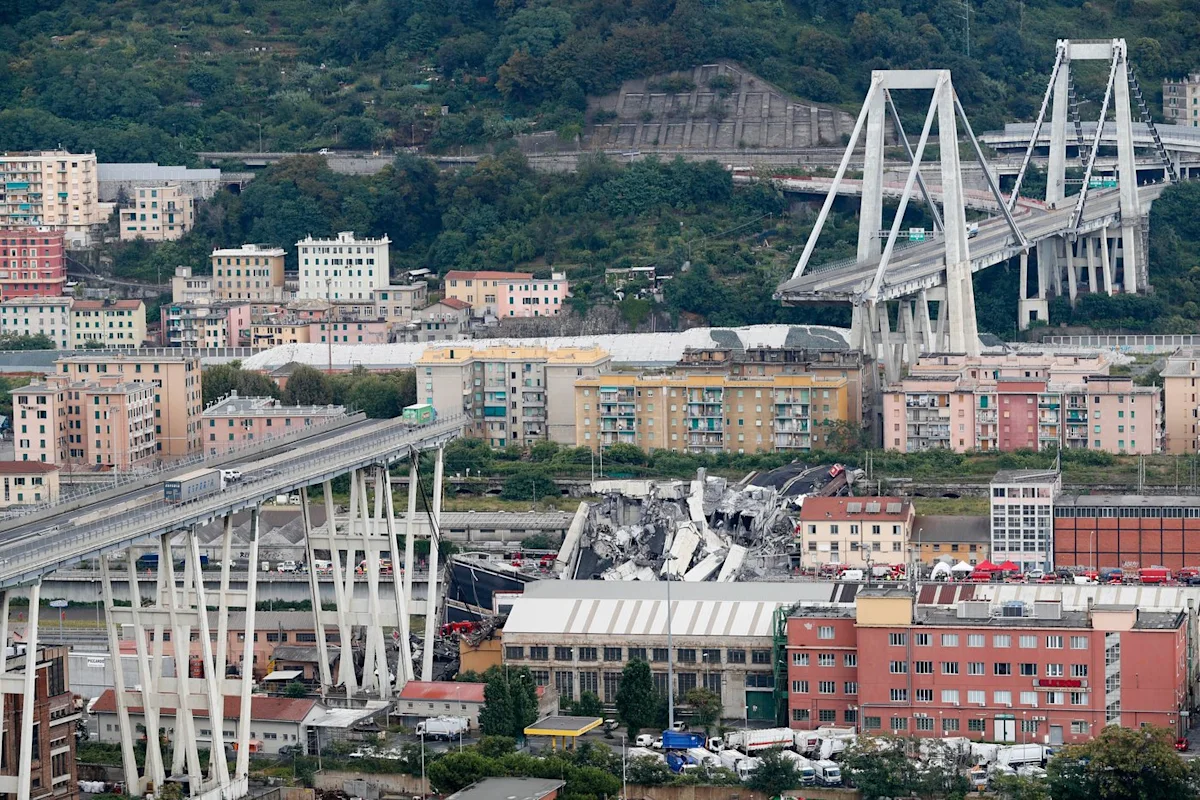
GENOA, Italy (AP) — Family members of the 43 people killed when Genoa’s Morandi highway bridge collapsed nearly eight years ago gathered at a courthouse Thursday, where verdicts were handed down in the trial of 57 defendants charged in a disaster that exposed deep failures in the maintenance of Italy’s infrastructure.
The defendants include former executives of highway operator Autostrade per L’Italia, experts from its engineering company SPEA and former officials from Italy’s Infrastructure and Transport Ministry.
Most face charges, including negligent disaster and multiple counts of manslaughter stemming from alleged failures to maintain the bridge, which was part of a main route linking northern Italy with the French Riviera.
Prosecutors argued that years of maintenance neglect led to the collapse, and demanded combined sentences totaling nearly 400 years for all of the defendants. The defendants deny wrongdoing and say the fault was caused by a construction defect.
“I think it is important that responsibility extends beyond those at the top. Autostrade, SPEA and the Transport Ministry all had roles to play. I hope the state’s responsibility also emerges clearly,” Egle Possetti, who heads a committee to preserve the memory of the bridge victims, told reporters outside the courthouse.
“I lost my sister, her two children, my brother-in-law and even their little dog. That’s where my determination comes from — to make sure they receive justice and that their deaths were not in vain,” she said.
On the morning of Aug. 14, 2018, a 200-meter (650-foot) section of the bridge gave way during a rainstorm, sending dozens of vehicles plunging to the ground.
Images of the collapsed bridge were seen around the world and shocked Italians on one of Italy’s busiest travel days, as millions headed out for the traditional Aug. 15 Ferragosto holiday that marks the peak summer vacation season.
Prosecutors have argued that years of maintenance neglect led to the collapse, and demanded combined sentences totaling nearly 400 years for all of the defendants. The defendants deny wrongdoing and say the fault was caused by a construction defect.
The verdicts and sentencing will cap a trial that spanned more than 280 hearings over four years.
“Our expectation is to feel our pain recognized … and to have it acknowledged that this did not happen by chance, but because of serious failures in maintenance,” said Raffaele Caruso, one of the lawyers representing victims.
Considered an engineering marvel when it opened in 1967, the Morandi featured three A-shaped concrete pylons and concrete-encased stay cables.