dailynewsnblog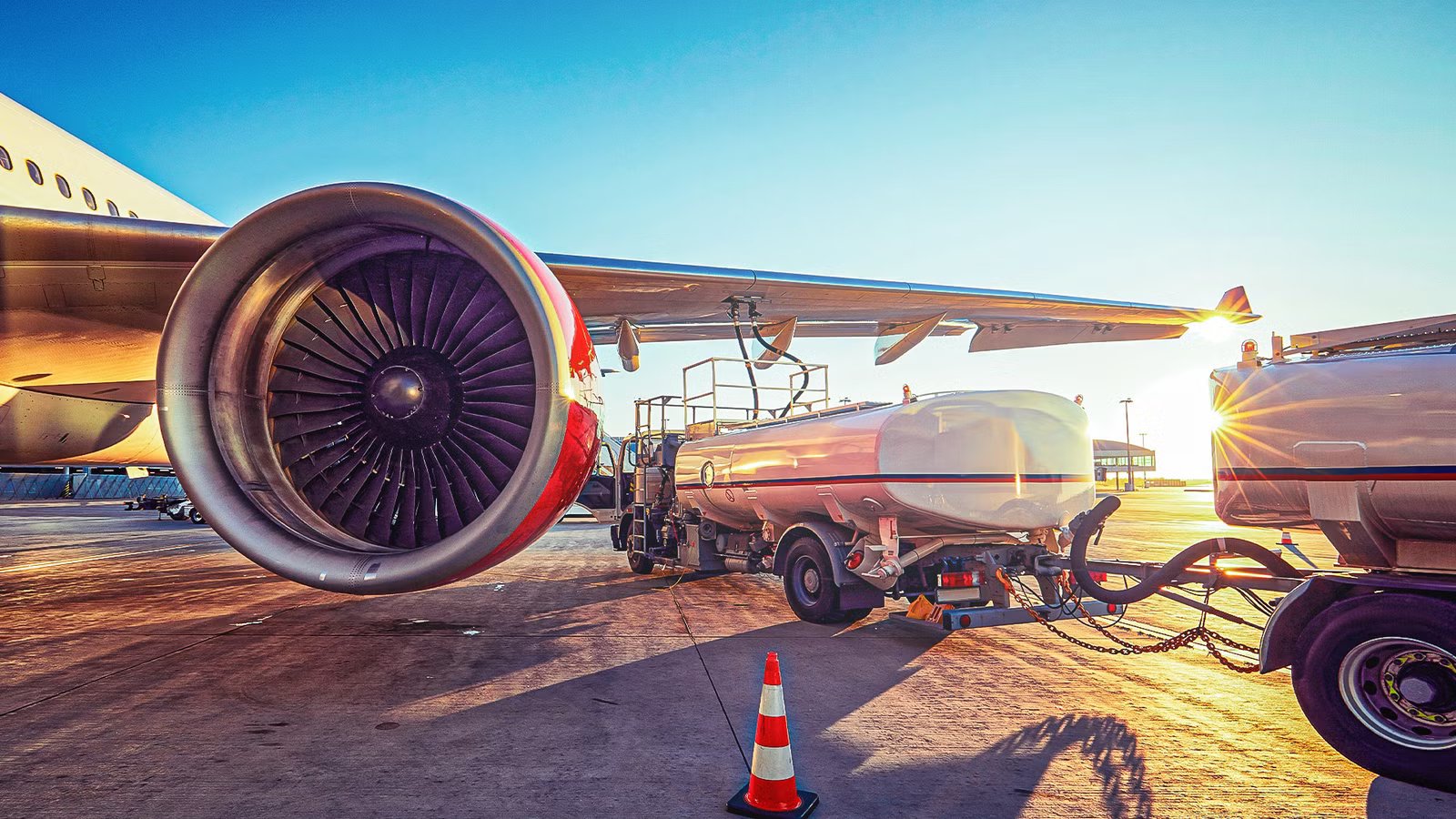
Deciding how much fuel to put into an airliner is one of the most important planning factors that goes into every flight for both safety and the bottom line. Licensed dispatchers provide a recommendation to the captain before every departure, but a pilot has final say on the exact amount of fuel based on the assessment of the itinerary. Fuel is ultimately the responsibility of the pilot in command, per Part 121 of the Code of Federal Regulations. There are a number of factors that pilots consider beyond the standard calculations based on distance and time from point A to B.
Firstly, the weather is a factor for every flight, as fuel consumption increases with more adverse conditions. That consideration applies to both the primary destination and the list of alternate airports in case of diversion. Bad weather is one of the most common reasons why a captain may request to pump extra gas onto the plane before takeoff. Other reasons include the possibility of being turned away due to noise curfews and single runway aerodromes where an incident on the ground could result in long holding times or diversion.
These contingency factors are all considered by the air crew to ensure that the recommendation from the flight dispatcher covers every possible scenario. As Captain Steve explains, once the captain has finished calculating the precise amount required, they can call dispatch back and request extra fuel. Although the airline wants to save as much money as possible on gas, the safety of the flight is ultimately the most important factor, and the captain’s judgment is virtually never questioned if they deem the dispatcher’s estimate too low.
Finding The Jet Stream

The largest meteorological factor in making fuel calculations is the wind speeds found in weather reports. Global weather models are used by flight planning computers around the world to update forecasts on fixed schedules, with the regular update averaging every 6 hours. These models use three-dimensional wind vector grids to calculate headwind or tailwind components, which are then used to find the exact fuel burn for any given flight.
This information is the baseline estimate for the captain of an airliner to begin their own evaluation of fuel requirements before taking off. Experienced captains do not just accept the dispatcher’s wind numbers; they treat them as a baseline and apply specialized operational knowledge to bridge the gap between computer models and reality. The captain looks at the age of the weather data used in that flight plan.
If the weather model is six hours old and a fast-moving jet stream has shifted 50 miles south, the planned altitudes might now place the aircraft directly into a punishing 120-knot headwind instead of a 40-knot vector. If the captain suspects the jet stream has migrated or intensified beyond what the computer calculated, they will add discretionary fuel to offset the accelerated burn rate.
Accounting For Turbulence

Another factor when considering the gradient of how a wind vector changes over the distance and over which it is projected is finding the boundary. Clear air turbulence typically occurs at the boundary zones of jet stream cores, and the captain will do everything they can to avoid a rough ride when possible. In many cases, that means descending into the lower and denser air to avoid flying through layers of turbulent, high-speed jet stream wind. At the lower altitude, the aircraft will burn more fuel due to the higher density of the air itself.
The possibility of other forms of turbulence also dictates that pilots need to plan for higher fuel burn. Major geographic features like mountains have an impact on the behavior of wind in the area, which can create standing waves of powerful wind vectors. In some cases, these can reach cruising altitude and force the aircraft to rapidly adjust power settings in order to compensate when it passes through the turbulent stream.
Although the plane may not need to deviate from course or altitude, the fluctuating engine performance will have a negative impact on fuel consumption. Experienced long-haul captains look at the height of the tropopause relative to their wind vectors, knowing exactly when to request an unplanned altitude change from ATC to catch a better wind vector or escape a headwind. So either way, extra fuel will be necessary to compensate for the greater burn rate if such turbulence is encountered.
The Headwind Underestimation Bias

Statistically, global weather models tend to err on the side of optimism. They are more likely to slightly underestimate the strength of a headwind than to overestimate it. On ultra-long-haul flights, a ten-knot error in a headwind vector over a 14-hour flight adds up to a massive deficit in remaining fuel. This is another aspect of fuel calculation and weather forecasting that can be refined from experience over time.
Captains who routinely fly the same route on ultra-long-haul legs can track the difference between actual weather encountered and forecast projections over time to find the average error. If a veteran captain has flown JFK to London ten times in a month and noticed that the actual headwind vector is consistently 15 knots stronger than the dispatch estimate, they will mentally override the computer’s optimism and order extra discretionary fuel to cover the historical margin.
And after flying all that distance, headwinds also factor into fuel calculations, considering the conditions at arrival over the destination airport. Airplanes must land into the wind to minimize their ground speed and stopping distance. Because of this, surface wind direction dictates the airport’s runway configuration. Many airports around the world have asymmetric airfield layouts with one high-capacity runway and a smaller backup. If the wind conditions change before the jet arrives, there will be delays.
Air Traffic Control will need to reconfigure approaches while the lower-capacity runway slows down arrival rates. All of which means that the jetliner will be in a low-altitude holding pattern until permitted to touch down. During that time, the jet will need to burn extra fuel to account not only for the added time but also for the higher consumption rate while flying through denser air closer to the ground.
Alternate Airport Factors

Every airline that takes off needs to plan for an alternate airport in the event that unexpected conditions prevent it from landing at its scheduled destination. Domestic flying policy written by authorities like the Federal Aviation Administration and the European Aviation Safety Agency states very clear guidance, simplified as the ‘1-2-3 rule.’ An alternate is legally required unless, for at least 1 hour before to 1 hour after the estimated time of arrival, the weather at the destination is forecast to have a ceiling of at least 2,000 feet and visibility of at least 3 statute miles (4.8 km).
If the weather slips even slightly below these thresholds in the forecast, the dispatcher must add an alternate. More strict regulations apply to long-haul aircraft performing transoceanic flights, especially if the destination only has one usable runway or eliminated precision approach equipment. Even if the destination meets the criteria to permit takeoff without planning to fly to an alternate airport, the captain may carry extra fuel if the airline has a stricter policy or based on their personal experience.
When calculating the fuel required to reach an alternate airport, there are several steps that go into determining the final figure. A flight planning computer will consider the fuel burned during a missed approach, climb up to altitude, transit at cruise to the alternate, the descent, and the approach. One caveat is that these numbers will be calculated based on standard conditions. This is where, once again, the captain may request extra fuel based on adverse conditions or other factors.
ETOPS And Other Caveats

The physical location of the alternate changes how the captain manages a diversion. If the alternate is very close, the flight planning computer will likely estimate a very low number. Once again, the pilot will evaluate the weather and the air density at the altitude at which they will make the transit. If the backup airfield is very nearby, climbing up to altitude may not be necessary or recommended, and, therefore, the engines will burn more fuel flying low to the ground.
On the other hand, if the alternate airport is 200 miles (322 km) away, then calculations will need to be made for a high-altitude cruise. Additionally, when flying over oceans or remote regions, like the Sahara or the Pacific, standard alternate rules break down because there are no airports nearby. For twin-engine jets flying legs that take them hours away from any airfields, dispatchers must list ETOPS en-route alternates, as Foreflight explains.
That means planning for the extreme scenario of flying at 10,000 feet (3,048 meters) all the way to a remote airfield in the event of an engine failure or cabin depressurization. If flying to a remote island, like Hawaii or Easter Island, where no physical alternate airport exists within a reasonable distance, the dispatcher uses ‘No-Alternate’ or ‘Island Isolation’ rules. Instead of planning a route to a backup airport, policy forces the aircraft to carry a massive, mandatory block of extra holding fuel, which is often two hours of extra flight time.