dailynewsnblog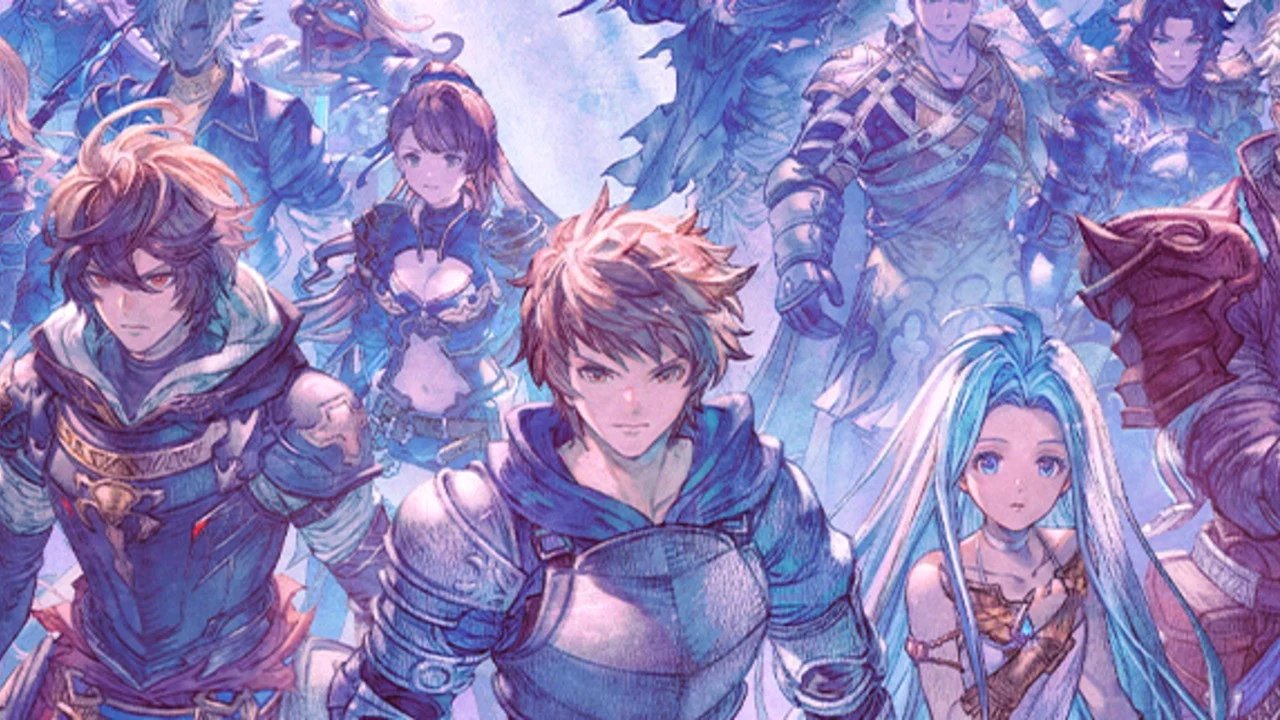

Though Cygames has always been a mobile game developer, the company has historically been pretty good about supporting its games with some excellent console-focused spinoffs. Shadowverse got Shadowverse: Champion’s Battle, Battle Champs got Little Noah: Scion of Paradise, and Dragalia Lost got… oh.
Though the company’s popular Granblue Fantasy mobile RPG is still going strong over ten years after its debut, it got its own spinoff in 2024 with Granblue Fantasy: Relink. Now that it’s been reinvigorated with the launch of a shiny new expansion, Cygames has ported it to the Switch 2 as Granblue Fantasy: Relink – Endless Ragnarok. I’m pleased to report that it fits perfectly with the portable hardware, combining thrilling action, tons of replayability, and beautiful graphics to make for an RPG adventure that I’d suggest picking up at your earliest convenience.

The story takes place in the Skylands, a collection of floating islands drifting among an endless sea of clouds, and places you in the role of a self-insert main character referred to as “The Captain”. The Captain formed a spiritual bond called a life link with a girl named Lyria who has the powerful magical ability to capture and summon godlike creatures, and the two of you have formed a sizeable party of adventurers, nobles, and mercenaries who travel the skies in an airship called the Grandcypher.
You and your party are ultimately looking for a mythical place at the end of the skies called Estalucia, but you’re quickly deterred by a religious group called the Pilgrims of Avia who are after the same goal for their own nefarious reasons. In pursuit of this, they quickly capture Lyria to gain access to her powers, kicking off a fifteen-hour campaign in which your party pursues the pilgrims to free their friend and stop the pilgrims.
Admittedly, the narrative is the weakest part of the total package here, but that’s not to say that it’s bad. Part of the problem is that this narrative is canon with and set well after the events of the mobile game, and while there is some supplementary flashback and journal content that helps to explain everything that happened up till this point, it ultimately gives a newcomer the same feeling they’d get if they started watching Game of Thrones in its fifth season. There’s just lots of backstory and subplots here that don’t get focused on very much, which can feel a little disorienting.

Beyond this, the story itself is simply okay. This is the sort of game that loves to lean on many well-worn anime tropes, such as a loud-mouthed, cute, and silly side character who tags along with the party on their journey or overcoming the selfish big bad at the end with the power of friendship.
Such tropes aren’t necessarily executed poorly, but after the initial credits roll, it doesn’t feel like a story that amounted to more than the sum of its parts. All the same, it’s a brilliantly well-paced journey, with the highlights being the many big set-piece boss fights that swing for the fences with tremendous spectacle.
Many have compared the gameplay loop of this release to Capcom’s famed Monster Hunter franchise and not without reason. While the story mode is largely oriented around a linear set of large and explorable levels, the postgame (and the real meat of it all) is built around a quest counter where you select missions from a menu and then dispatch to various arenas and small locales to kill bosses and enemy hordes for drops and rewards.

Though you’re always playing as a lead character, you dispatch in a party of four, with the other three either being piloted by surprisingly competent AI or filled in by other players you can connect with online or in local wireless.
Combat feels a bit like a cross between Kingdom Hearts and Dynasty Warriors, focusing on hack ‘n’ slash gameplay that mixes in skills and combos in a way that adds a subtle element of shallow strategy. Every character has a base kit of light and heavy attacks that can be mixed together for different combo effects, while a quick menu of cooldown-limited skills allow for the usage of more powerful attacks, buffs, and other abilities.
Every now and then, you can also execute a Link Attack or Chain Burst to really bring the pain, working with your whole party to eradicate enemies with big screen nukes. With this set up, it’s easy enough for newcomers to get the gist of enemy encounters and to be able to pick up new character with relative ease, but that’s only scratching the surface.

Part of the brilliance of the combat system is found in how each character has a distinctive playstyle that completely alters the way you approach the combos. If you’re playing as Eustace, you fight from a distance using a reloadable rifle that builds up a meter with each successful shot—once it fills up, you get access to a limited clip of special ammo that does a ton of damage.
When playing as Yodarha, a dual-wielding swordsman, you can chain together combos much faster than other characters while also acquiring ‘marks’ for each combo finisher he executes. These marks can then be spent to amplify skills with much more powerful effects and damage outputs.
There are a few dozen characters to unlock, each just as unique as the last, which leads to tons of mechanical depth to discover as you experiment with different four-member team compositions for taking down missions and bosses efficiently. This goes a long way in bolstering the overall replayability; given that this is the kind of game where you’ll be repeatedly grinding different bosses and combat encounters for drops and loot, it could be easy for limited playstyles to make the fiftieth run of Quakadile feel a bit dull.

But not only do the extra characters make the combat itself more interesting by varying your approach to encounters, but they also act as an ongoing incentive for the combat rewards as you work to build your party to the maximum potential.
Character building is a huge part of the gameplay loop, and Cygames has done a great job here of giving you a variety of ways for powering up characters without making things too overly confusing or abstract. Beyond simple leveling, the main way you’ll widen your characters’ skill repertoires and stats is through a simple node-based skill tree.
Though each tree itself is rather linear, they go very deep to accommodate the veritable torrent of points you get showered with. You gain skill points from exploration, leveling, and quest rewards, but given that all characters utilize the same points, you’ll have to be choosy in whose tree you decide to funnel your latest points windfall into.

Beyond this, your characters can be further amplified through their weapons, each of which can be forged and refined at a blacksmith to raise stats further, and through their sigils. Sigils act as equippable passives that can boost specific stats and give you a soft ‘build’ for a character to better shape the role that you want them to play in your party. You get showered with these sigils as quest rewards, and while this is initially a random process, you can later access a way to dismantle useless sigils in exchange for valuable resources to get much better ones.
Taken altogether, this leads to a gameplay loop where you’re never at a loss for something valuable to do next. There’s always another character who could use a better weapon, or a specific sigil you’re hoping to find, and these little goals help to make the grind rewarding along the way as you build your party up to take on increasingly more difficult content that will yield even greater rewards.
And while the excitement of the grind gradually wanes as you push ever deeper into it, the process itself is smoothed quite a bit through the inclusion of quality of life features that cut out irritation, such as a ‘wishlist’ that lets you highlight enemy drops you’re looking for and sort for quests that are likely to give them to you.

Though the whole game is new to Nintendo audiences, the reason this release is back in many headlines is due to the release of the all-new Endless Ragnarok expansion. For fans of Monster Hunter, this is analogous to the ‘G-Rank’ expansions that often come a couple years after the launch of a new entry—Endless Ragnarok not only adds a new postgame storyline to follow, but enormously expands the endgame with a new difficulty level, tons of new missions, weapons, characters, sigils, and a whole roguelite game mode that distills the progression loop even further.
You can access bits and pieces of the new content early on, but the bulk of it is accessed after you’ve cleared the relatively brief story mode and though it’s a bit disappointing that you’ve got to work for it a bit, Endless Ragnarok is well worth the wait.
The base game was already the kind of thing in which it doesn’t really spread its wings until you’ve reached the meaty endgame content, and the expansion content supercharges this further by giving you more difficult content to test your well-trained party against and plenty of new ways to power them up even further.

While much of the expansion is simply aimed at giving you more, the new Conflux mode acts as something that’s distinctly new. Once you’ve unlocked this, you can drop your party into a twenty-ish minute gauntlet in which you clear rooms of enemies and bosses in exchange for exclusive rewards and a classic roguelite ‘pick 3’ boon choice.
These randomly generated boons will offer you various passive buffs that’ll bolster your party just for that run, making successive runs that much more interesting as different boons encourage you into different playstyles.
The base game was already mostly pointed towards running through chains of bite-sized missions, so it feels like the Conflux is a natural fit for the overall gameplay loop. Not only can this be an effective way to catch up characters that have been sitting on the bench for a while and could use a gear tune up and level boost, but it serves as its own separate branch of progression as you run various parties through increasingly tougher levels of enemy waves. The only drawback is that it can currently only be played solo, which feels a little odd given how much the rest of the content allows for co-op play.

Visually, this game employs an art style reminiscent of something like Tales of Arise, with anime graphics that are tempered with just a bit of realism. Character designs are memorable and distinctive without being too over the top, while animation quality is impressively complex, particularly during the big Chain Bursts.
The most consistent spectacle comes during the combat encounters, where four characters independently triggering all kinds of flashy combos and skills can lead to a screen awash in rainbow sparks and amazing fireworks. All this runs at a smooth 30 FPS in docked and handheld; some may be disappointed that there’s not at least an option for 40 FPS, but it’s nonetheless impressive that there are no obvious hitches even with all the particle effects and animations playing out at once on screen.