dailynewsnblog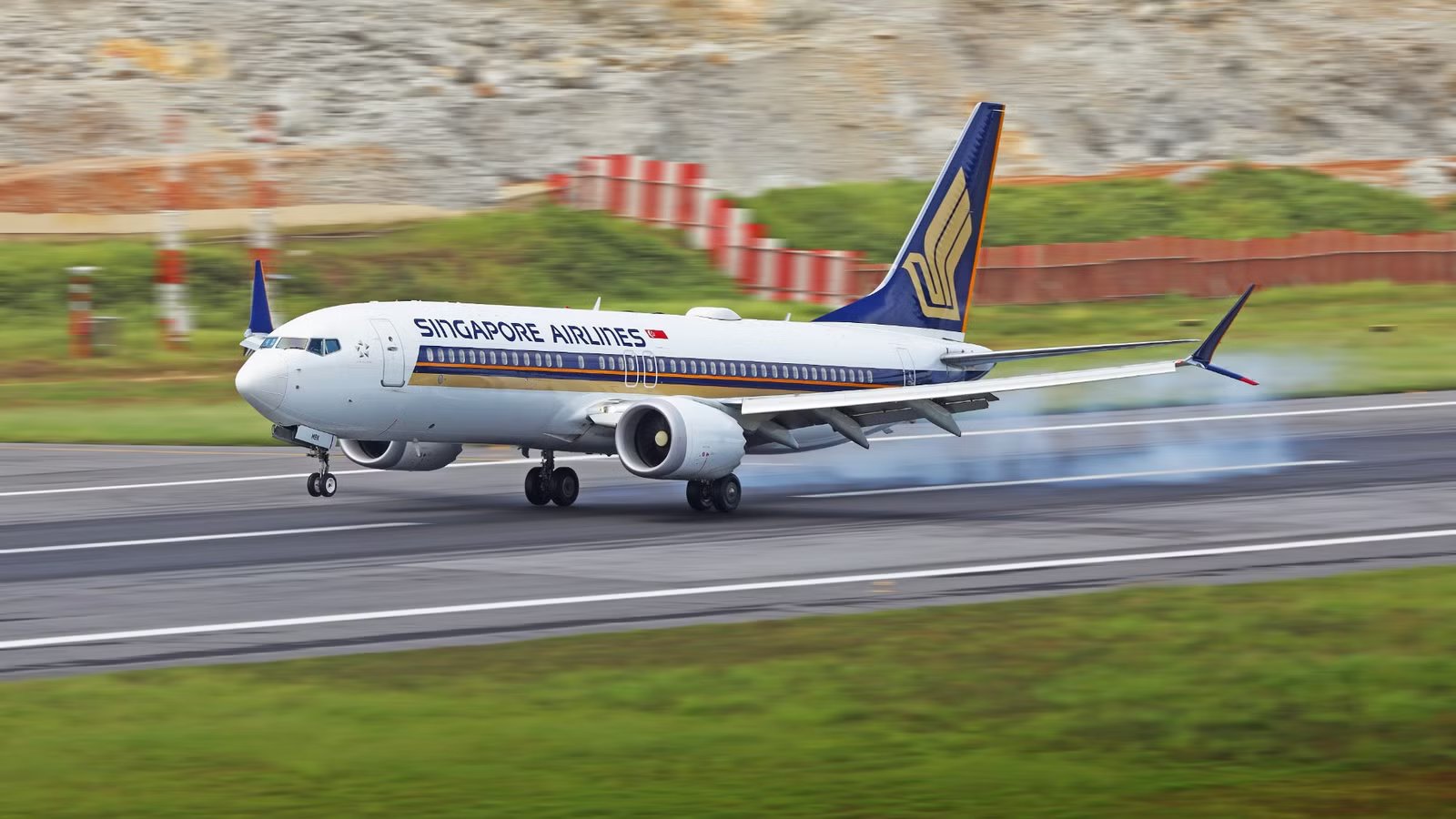
The Boeing 737 MAX is the latest generation derivative of one of the world’s most popular short-haul aircraft types. While this still remains the case, modern technology has allowed narrowbody aircraft to fly for longer distances, unlocking an interesting market segment of long-range narrowbody services.
The 737 MAX aircraft is one of the few aircraft types capable of operating within this segment. Therefore, this feature studies how  Singapore Airlines deploys its fleet of MAX aircraft on short-haul flights, but also routes that are blocked for nearly seven hours of flight time.
Singapore Airlines’ Longest 737 MAX Flights

The latest scheduling data from Cirium, an aviation analytics company, shows that Singapore Airlines has 11 routes longer than 4.5 hours, operated by its MAX aircraft. The schedule is for the remainder of this year, with the airline’s longest MAX flight blocked at nearly seven hours of duration, which is well beyond the traditional narrowbody short-haul operation.
In fact, the majority of these flights are just over five hours long, and it is only the top two longest routes connecting Busan and Cairns to Singapore Changi Airport (SIN) that are blocked at nearly seven hours. The interactive map below shows details of these 11 routes:
Loading map…
Drag to explore
On several routes, the airline faces competition from other narrowbody operators using the 737 aircraft or the Airbus A320 family jets.
In cases such as the Chennai – Singapore route, the airline’s booking engine shows the carrier has two daily services, and with the MAX aircraft complementing the services of the larger Boeing 787-10 widebody aircraft. However, occasionally the MAX service is upguaged to be operated by the Airbus A350-900. This is a key example demonstrating the flexibility the aircraft offers to the operator.
Catch what other flight trackers miss
Emergency squawks, holds, NOTAMs — live signals, no signup.
Open tracker
Catch what other flight trackers miss
Emergency squawks, holds, NOTAMs — live signals, no signup.
Open tracker
Reacting To Demand – Upsizing, Downsizing & Rightsizing

Apart from the Chennai – Singapore route, the map above shows how the airline often uses the aircraft type to complement other existing services, but also how the operator can switch the equipment to meet the seasonal demand. For example, the airline’s services from Cairns and Jakarta to Singapore.
Considering the current summer travel season in the Northern Hemisphere, the airline can cater to the travel demand using widebody aircraft such as the A350 and the Boeing 777-300ER on these routes. However, as per the schedule data, the airline is set to downsize its capacity on these routes later this year by deploying the 737 MAX, essentially rightsizing its capacity.
Historically, an airline would have had to remove certain long-distance routes from its network during the low-demand season because the economics of operating a wide-body long-haul aircraft would not have been viable. However, the latest-generation long-range narrowbody aircraft, such as the 737 MAX, allow the carrier to maintain such routes year-round. This flexibility and the efficiency offered by the aircraft make the jet popular among operators.
More About The 737 MAX Aircraft

The 737 MAX lineup consists of four aircraft variants, of which two are operating in the market currently, while the remaining two are awaiting certification. Singapore Airlines operates only the Boeing 737 MAX 8, which is the smaller of the two variants currently on the market. As per manufacturer specifications, the four variants compare as follows:
Aircraft Variant | 737 MAX 7 | 737 MAX 8 | 737 MAX 9 | 737 MAX 10 |
|---|---|---|---|---|
Maximum Capacity | 172 | 210 | 220 | 230 |
Operational Range | 3,800 nautical miles (7,040 km) | 3,500 nautical miles (6,480 km) | 3,300 nautical miles (6,110 km) | 3,100 nautical miles (5,740 km) |
Certification pending | Certification pending | |||
While the aircraft design allows for up to 210 passengers in an all-economy configuration (specifically the MAX 8200 variant), the carrier has decided to focus some of its space on a premium customer experience. Data from aeroLOPA shows that the carrier has configured its MAX aircraft in a relatively less dense layout, with a total of 154 seats. This includes 10 convertible lie-flat business class seats, in an alternating 2-2 and 1-1 layout, followed by 144 economy seats, in a typical 3-3 layout.
According to Boeing’s delivery data, as of the end of May, the carrier has 23 examples of the aircraft in its fleet. While the majority of these aircraft were delivered directly to Singapore Airlines, six of these jets were originally delivered to its subsidiary SilkAir, which was later unified with the mainline brand. The data also shows the carrier is set to receive a further three aircraft.