dailynewsnblog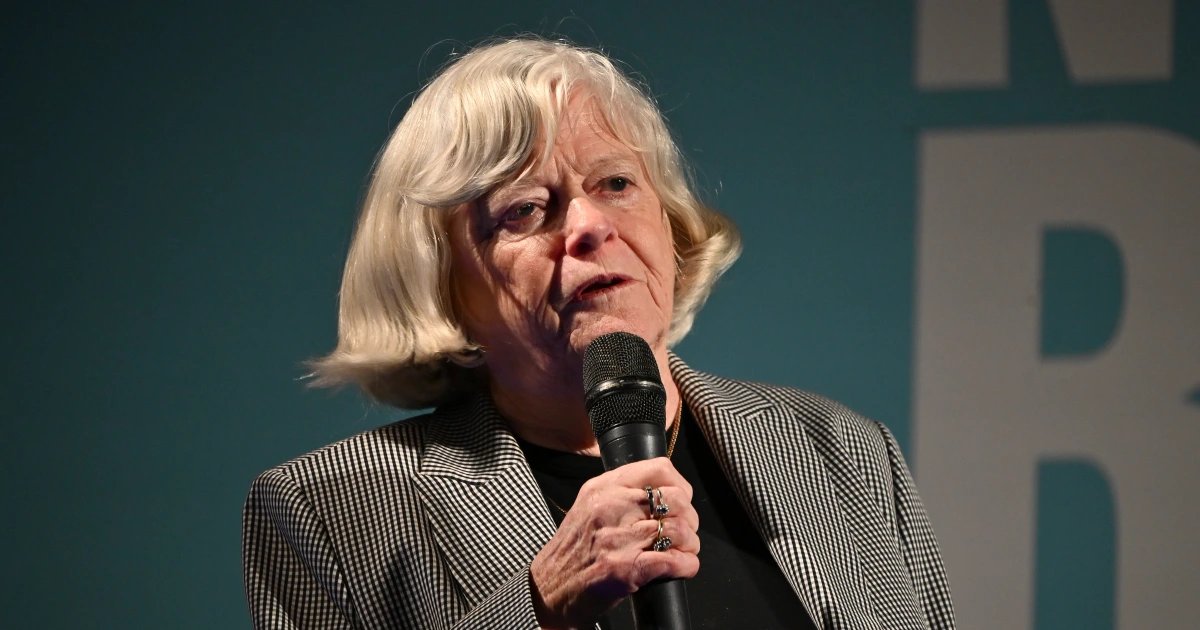
LONDON — A former British member of Parliament was found dead with serious injuries at her home in Thursday, prompting a murder investigation that has reignited concerns about the safety of the country’s politicians.
Subscribe to read this story ad-free
Get unlimited access to ad-free articles and exclusive content.

Ann Widdecombe, 78, was one of Britain’s most recognizable politicians, serving as a Conservative lawmaker for two decades before reinventing herself as a television personality. Known for her strong socially conservative views on abortion and LGBTQ rights, she more recently served as justice spokesperson for the hard-right Reform UK party.
Police said on Friday there is no indication that the killing was politically motivated, but her death has renewed unease about the safety of Britain’s politicians, after two others were killed in the last decade.
On Saturday, police said a 26-year-old man who was arrested on suspicion of murder had been released and was no longer part of the investigation. A large police presence remained outside Widdecombe’s home on Saturday as investigations continued.
“Our murder enquiry is in its early stages but moving at a significant pace. We are deploying all of the necessary resources to find out exactly what has happened,” Assistant Chief Constable Matt Longman of Devon and Cornwall Police said.

Outgoing prime minister Keir Starmer said it was “shocking news,” while Conservative leader Kemi Badenoch said she was “stunned” and “really struggled to find the words”.
Britain’s interior minister Shabana Mahmood said the circumstances of Widdecombe’s death were “extremely distressing,” and urged the public “to avoid speculation and allow the police investigation to progress.”
But Nigel Farage, leader of Reform UK, said he feared that “for anybody in public life, or especially the political space, things have become even more dangerous to them.”
“We don’t know what political motives are, whether they exist at all,” he said. “Was it a burglary gone wrong? We just don’t know.”
Farage received a £5m ($6.7m) gift in early 2024 from crypto billionaire donor Christopher Harborne, which he initially said in June 2026 was for his personal security, adding that he will need protection “until the day that I die.” He later said the gift was “unconditional.”
Britain’s Parliamentary Standards Commissioner is investigating whether he broke the rules by not declaring the gift, which was made months before he became a member of parliament.
For others, Widdecombe’s death sparked memories of the murders, in the last decade, of politicians Jo Cox and David Amess.
Cox’s husband, Brendan Cox, said Widdecombe’s death brought back “all of the pain and emotion” of losing his wife, a Labour MP who was murdered in 2016.
“We obviously don’t know and can’t speculate on the motivation, rationale and motive for the attack,” he wrote in Britain’s Daily Mirror newspaper. “But what we can say is that there is nothing that could ever justify an attack like this.”
Cox, 41, was known for social-justice campaigns and seen as a rising star in Britain’s Labour Party, was stabbed 15 times and received three gunshot wounds in a 2016 attack outside her constituency office in the town of Birstall in West Yorkshire, northern England.
Cox was a high-profile supporter of the campaign to stay in the EU, and to keep the debate from being hijacked by immigration. Thomas Mair, convicted of her murder, repeatedly shouted “Britain first” during the attack, the trial heard.
Five years later, Conservative lawmaker Amess was stabbed multiple times in 2021 by an attacker inspired by the Islamic State group. Ali Harbi Ali was given a whole-life sentence for the murder in 2022.
While the details of Widdecombe’s death remain unclear, it “certainly comes within the backdrop of MPs’ safety becoming more and more of a concern,” said Andrew Barclay, a politics lecturer at the University of Sheffield.
Beyond Cox and Amess, he added, other reported crimes against MPs “have more than doubled since the 2019 General Election, and there have been several other notable cases of harassment since then, both physically and at scale over social media,” he told NBC News.
Tim Bale, a politics professor at Queen Mary University of London, said the U.K. was, “generally, an unviolent society,” yet “almost we’ve had two MPs killed in the last ten years.”
“We’re also a more politically polarised place than ever we used to be,” he said, and politicians have “also had to get used to people threatening them online and, in person, on the campaign trail.”
While it’s possible to exaggerate the risk, he added, “they are right to worry and right to ask for protection.”
The alarm was raised over Widdecombe on Wednesday when she failed to turn up for a remote television interview, Channel 5 presenter Dan Walker said on X.
“Ann was due to appear on 5 Daytime on Wednesday afternoon but stopped responding to messages and didn’t turn up for the show,” he said. “The team contacted her agent to ask them to check in on her. This information has been passed to police as it’s part of the investigation.”
The management company that represented Widdecombe after she left politics said her life and career were driven by strong Christian values and a commitment to public service.
“She loved the cut and thrust of political debate and, 16 years after leaving Parliament, was still actively campaigning for Reform UK and offering forthright views on the hot topics of the day,” Cloud9 Management said.