dailynewsnblog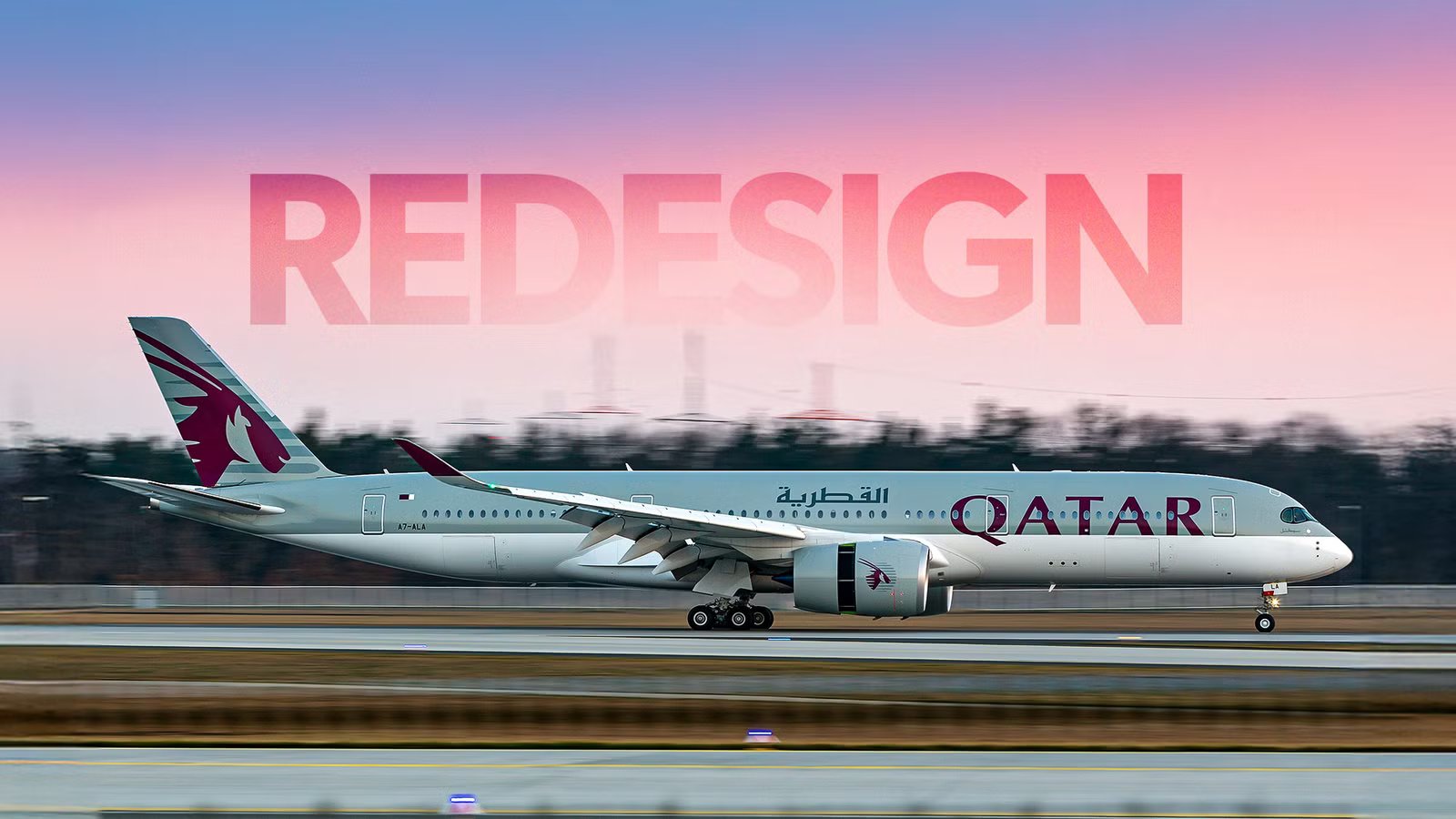
Airbus and  Qatar Airways’ intense legal battle over paint cracking on the manufacturer’s newest widebody may seem a distant memory now. Having surfaced with Qatar’s filing of a lawsuit at the end of 2021, the saga came to a head in early 2023 with a settlement that, importantly, saw no admission of liability on Airbus’ part.
But behind the scenes, the fallout from the lawsuit has had wider ramifications. Airbus began the transition to a different material for its Airbus A350 series before the case had even been resolved. While the French firm maintained that the shift was not related to Qatar’s challenge, it noted that using a new material would increase paint durability.
Qatar Versus Airbus

At the center of the dispute was the layer of copper foil fitted between the carbon fuselage of the A350 and its outer paintwork. Designed to safely disperse the energy of lightning strikes, Qatar had launched legal proceedings against Airbus after cracks and chips emerged on models of its A350s to expose the expanded copper foil (ECF) layer.
Where the two parties clashed was over whether the issue posed a risk to the safety of the aircraft. Qatar grounded around two dozen of its A350s on exactly these fears, arguing that where copper surfaces became exposed, there was a design defect. Airbus maintained that the issue was merely cosmetic, though, and stubbornly pushed back against Qatar’s claims. All told, the ensuing legal battle was said to be worth $2 billion, according to Reuters.
As is standard in settlements like the one Qatar and Airbus eventually came to, details of any concessions, compensation, and faults were withheld from the public. What we do know, however, is that the “amicable” agreement paved the way for a “repair project” to get the grounded aircraft “safely back in the air”. Notably, the deal appeared to fix the duo’s fractured relationship, meaning they would be able to “move forward and work together as partners.”
Airbus And Qatar Had Much At Stake

Rebuilding ties was realistically always going to be key for each party. Today, Qatar is among the largest operators of the A350, with 62 examples in its fleet as of the start of its latest financial year. Any decision to ditch the A350 would have required a hefty strategy shift for Qatar as a result, while placing Airbus at risk of losing a key customer.
That is not to say the prospect was not there while the two were locking horns. Qatar’s initial lawsuit, filed in London’s High Court in December 2021, saw the carrier go in all guns blazing. Not only did it seek $618 million in compensation from Airbus, but it also called for an additional $4 million for every day the aircraft remained out of service. In one specific case of an A350 set to be repainted in a special livery for the 2022 Qatar World Cup, the airline sought $76 million, arguing the jet needed 980 repair patches.
Qatar Airways fleet as of 2025-26 financial year:
Aircraft | Number | Capacity |
Airbus A380 | 10 | 517 |
Airbus A350-1000 | 28 | 327-395 |
Airbus A350-900 | 34 | 283 |
Airbus A330-300 | 11 | 289-305 |
Airbus A330-200 | 6 | 260 |
Airbus A320 | 27 | 132-144 |
Airbus A321neo | 6 | 236 |
Boeing 787-9 | 26 | 311 |
Boeing 787-8 | 32 | 254-267 |
Boeing 777-300ER | 57 | 294-412 |
Boeing 777-200ER | 7 | 272-276 |
Boeing 777 Freighter | 30 | 233,700 lb (106,000 kg) |
Airbus responded in equal measure, denying “in total” the claims made by Qatar. So heated did the ensuing clash become that Airbus confirmed it had revoked all of Qatar’s remaining A350 orders at the time in September 2022. Luckily for both, common ground was found, and the axed orders were later reinstated. Indeed, it took a fair amount of finger-pointing and even involvement from both the Qatari and European regulators to reach that point, but a settlement finally emerged in February 2023 offering a “win-win” in the words of Qatar chief executive Akbar Al Baker.
Airbus Had Already Found A Fix: PCF

Behind the back-and-forth negotiations, Airbus had actually already found a fix. Perforated Copper Foil (PCF) had emerged as a potential replacement for ECF well before Qatar even lodged its lawsuit. Two years prior, Airbus had filed a European patent for the use of such a PCF for lightning protection. This, an Airbus spokesperson for the planemaker later stressed, was “part of the usual continuous aircraft development which is entirely standard in the industry”.
What they were really trying to convey was that the switch had not been made in response to Qatar’s claims, despite an argument from the carrier along these very lines. As it just so turned out, the newly adopted material boasted two notable qualities over its predecessor. One was a weight advantage, which is primarily why Airbus said it had pursued PCF. The other was that it was less susceptible to thermal stress and so ultimately reduced the risk of visible cracks forming, like those that Qatar had cited.
Catch what other flight trackers miss
Emergency squawks, holds, NOTAMs — live signals, no signup.
Open tracker
Catch what other flight trackers miss
Emergency squawks, holds, NOTAMs — live signals, no signup.
Open tracker
It is worth noting that the issue was not just confined to Qatar, despite it being the only one to ground jets as a precaution. Finnair, Cathay Pacific,  Etihad Airways,
  Lufthansa,
  Delta Air Lines, and
  Air France all contacted Airbus over similar paint peeling, per Reuters. Most of these said that the issue did not pose a threat to safety, however, unlike their lone counterpart. So, while Airbus’ clash with Qatar attracted the most attention, the issue had been flagged to the manufacturer repeatedly, making the fix increasingly relevant.
Airbus A350 And Composite Materials

Airbus’ A350 represents one of the latest leaps in aviation technology. Unlike traditional, aluminum-heavy airliners, the A350 is made up largely of carbon composites. Launched commercially in 2015, the ultra-long-haul jet came roughly four years after the Boeing 787. Adopting similar materials, the results were aircraft that were both stronger and lighter than their predecessors. For airlines, the biggest selling point of each was arguably the jump in efficiency they offered.
But among the caveats of developing aircraft primarily out of composites rather than metal was the question of how they would handle a lightning strike. Aluminum naturally offered its own solution for dissipating the energy in such circumstances, but the lack of conductivity of composites meant something had to be done to protect sensitive electronics. Enter ECF.
Both  Boeing and Airbus adopted ECF for their respective 787s and A350s to help shield against lightning strikes. This appeared as a metallic mesh placed around composite parts and beneath the paintwork to conduct and disperse the electricity from a strike, rather than channeling it towards key components.
Airbus A350 Began Switching To PCF In 2022

Each of the major manufacturers subsequently faced controversy around these shields, however. Boeing drew backlash upon a decision to remove it from the wings of its 787s in 2019, having argued that there were several other layers in place to protect against strikes. In Airbus’ case, the unwelcome attention came through the dispute with Qatar.
Despite the mesh being designed to absorb lightning strikes, the flaw appeared to be in how it and the different materials around it interacted. Per a Qatar-cited High Court judgment, a different coefficient of expansion between the composites used in the airframe and the ECF meant that the two materials responded to temperature changes at contrasting rates. This meant they did not expand or contract in line with each other, so ultimately would lead to cracks forming in the layers of paint above.
Airbus held firm that the issue was not a threat to the safety of its A350, but did begin the process of incorporating PCF rather than ECF into parts of new A350s rolling off the production line from late 2022. Namely, this would apply to rear sections of the aircraft at first, before updates being integrated “section by section”. The use of this new alternative, featuring tiny, precise holes rather than a mesh-like appearance, would offer weight advantages and prevent micro-cracking, according to the firm.
Qatar Won Over By Airbus Upgrade?

Airbus seemingly won Qatar over in the end. Or perhaps it was vice versa. Either way, despite some stern words and an argument that at one point appeared only resolvable in a courtroom, the two’s settlement closed the door on the whole saga. While the public was removed from the specific terms of that agreement, one could assume Airbus’ decision to update the copper foil used in its A350s going forward played no small part.
Whether that alone will be enough to convince Qatar to opt for more of the jets in the future, time will tell. That said, the carrier did pen a hefty deal for widebodies with Boeing last year, incorporating 160 firm orders and a further 50 options for 787s and Boeing 777-9s. This, Qatar said in its latest annual report, was “the largest single order in the airline’s history and a deliberate expression of confidence in where this group is heading over the coming decade,” so make of that what you will.