dailynewsnblog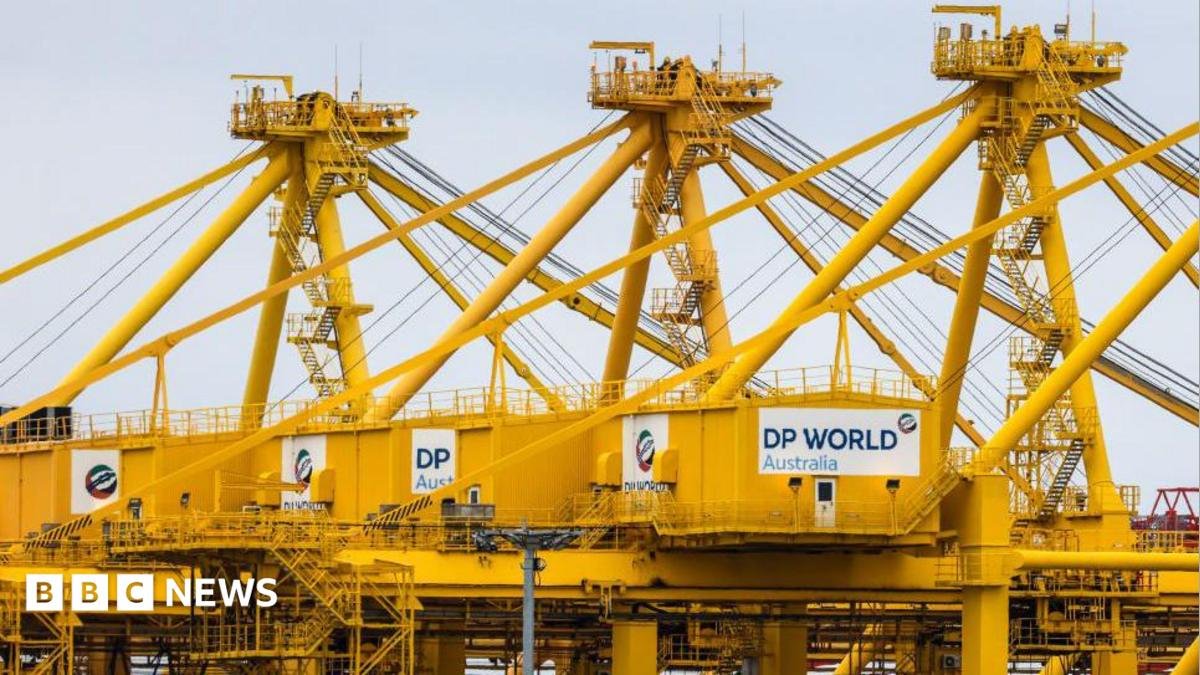
Australian dock workers are demanding a 28-hour work week with no loss of pay as the use of artificial intelligence (AI) and automation expands across the country’s ports.
The AI push is being led by port logistics giant DP World, which the Maritime Union of Australia (MUA) said has put workers’ jobs “in the crosshairs”.
The union said: “If DP World wants AI and automation, then they must pay the social dividend. The new technology doesn’t have to cost our members their jobs or put their livelihoods at risk just so a terminal operator can boost profits.”
The BBC has contacted DP World for comment and the MUA for more details.
DP World, which is based in Dubai, is increasingly testing AI tools to manage employees and work schedules in its operations, according to a study by the Centre For International Corporate Tax Accountability and Research, which was commissioned by the MUA.
The automation programme is part of a pattern of pushing AI into operations “without genuine consultation” and that it threatens up to a thousand jobs or more than 60% of the dock and maintenance workforce, the study said.
The company has also proposed the use of AI-assisted remote-control cranes and driverless vehicles, it added.
The technology “should be used to improve workers’ lives, not destroy them,” the union said in a statement on 3 July as it called for a 28-hour work week.
DP World dock workers are believed to currently work around 32 to 35 hours a week, depending on their location, according to the Australian Financial Review, which first reported the negotiations.
The state-owned DP World is one of the world’s largest port operators and is ultimately controlled by Dubai’s ruler, Sheikh Mohammed bin Rashid Al Maktoum.
In Australia, it moves millions of shipping containers each year through its ports in Sydney, Melbourne and other parts of the country.
With operations in 84 countries and more than 126,000 employees around the world, the firm handles around a tenth of global container traffic.
Last year, DP World’s Asia Pacific chief executive Glen Hilton said the company is using AI across ports in the region to manage increasingly complex supply chains.
The use of the technology is “no longer optional” but essential, he said.