dailynewsnblog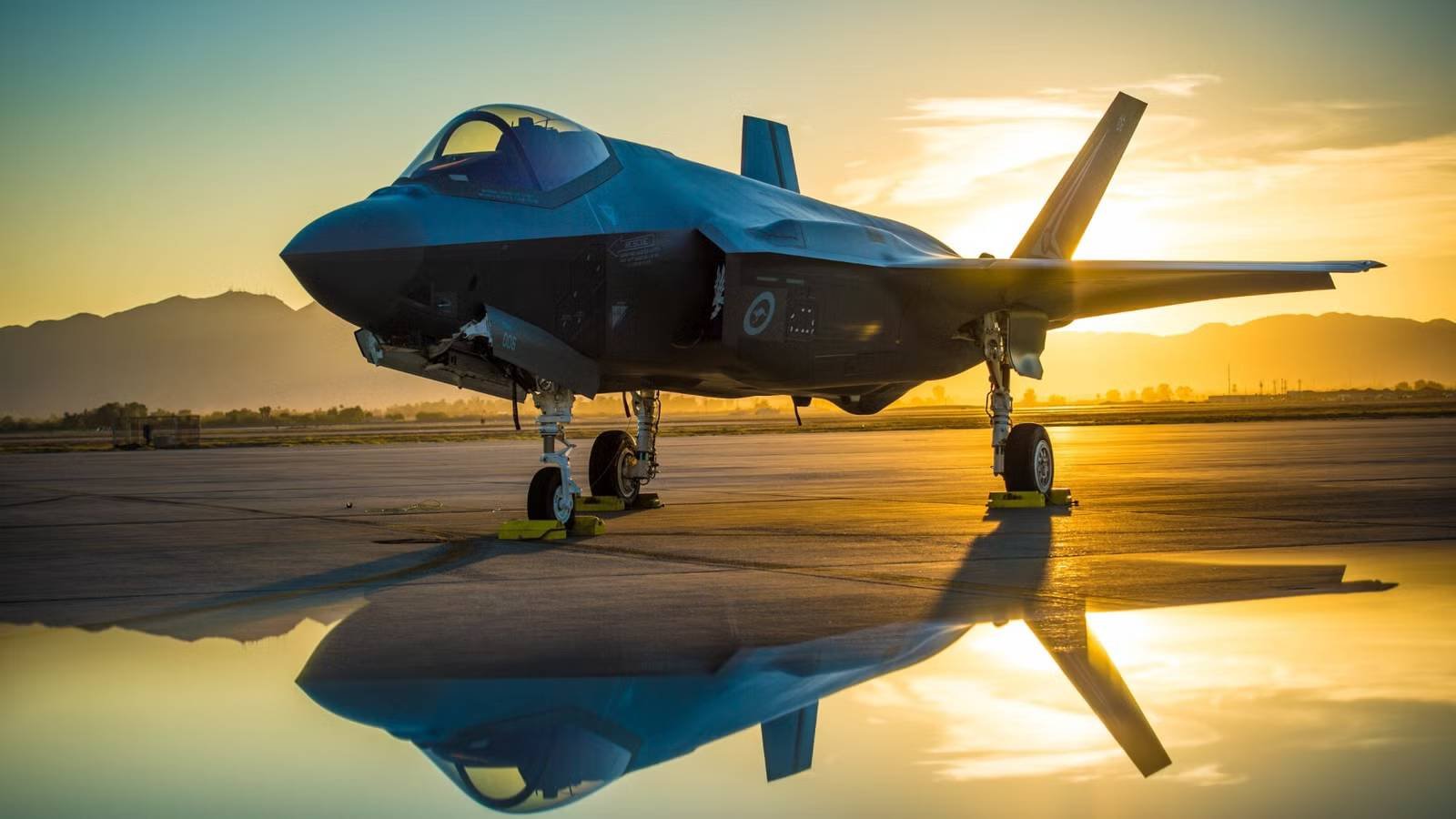
Since the heady days of the peak Cold War arms race between the United States and Russia, these two great powers have been seen as the opposing titans of military aerospace development on the planet. However, since the fall of the Soviet Union in the early 1990s, the American military has continued to make quantum leaps in aviation defense technology. The Russian industrial base has made some gains, but much of the technology has stagnated.
This disparity is evident in the Russian aviation industry’s heavy reliance on Western products, including Airbus and Boeing airframes. It goes even deeper with makers like Sukhoi, Tupolev and the consolidated United Aircraft Corporation using many Western components to devise their own systems. An excellent point of comparison can be found in the construction of radomes used to house tactical radars on fighter jets.
In the US, the standard is to use extremely pure composite materials, including quartz, fiberglass, and aramid fibers bound by resins that are free of virtually any imperfections, according to Global Security. That prevents any interference with the radar signals received or emitted by the array inside. On the other hand, Russia still uses fiberglass and ceramics to construct the radar systems on its tactical airframes.
The Electromagnetic Window To Air Superiority

The performance of a fighter jet’s radar is one of the most influential factors in determining its overall combat performance. The era of visual gunfighting between fighter jets has long since been over, and beyond visual range, missile engagements are more dominant than ever in the skies over the battlefield in the 21st century. Although it is hoped that the military aircraft of these two nations will never meet in hostilities, each continues to refine weapons, radar, and standoff missiles to defeat the other.
Russia has striven to catch up with the United States by developing the Sukhoi Su-57 Felon fifth-generation stealth fighter jet despite the fact that it did not debut until 15 years after the Lockheed Martin F-22 Raptor took to the skies. The fundamental difference between the F-22 and the Su-57 lies in how their radar systems are physically engineered and integrated into the nose of the jet.
The F-22 uses a single, massive, forward-facing AN/APG-77 Active Electronically Scanned Array. It features approximately 1,500 solid-state transmit/receive modules operating in the X-band frequency. The radome that surrounds its AESA antenna is perfectly integrated with its radar-deflecting fuselage, allowing radar waves to pass through without distorting the F-22’s microscopic forward radar cross-section.
The Su-57 uses the N036 Byelka radar system, according to War Wings. The Felon takes a radically different approach with five different radar rays built into five separate radomes at different locations on the airframe. The jet has one in the main nose cone, two in the cheek panels, and two in the leading edge wing slats. It incorporates the X-band in the nose while the two L-band arrays in the wing combine for forward-looking scans to detect very low RCS threats like American stealth aircraft. Meanwhile, the two side-looking arrays also operate on the X-band.
Catch what other flight trackers miss
Emergency squawks, holds, NOTAMs — live signals, no signup.
Open tracker
Catch what other flight trackers miss
Emergency squawks, holds, NOTAMs — live signals, no signup.
Open tracker
Opposing Engineering Doctrines

The United States uses gallium arsenide as its primary material for manufacturing semiconductors for the radar on the F-22 and other fighter jets, as Air Power Australia reported. This technology was developed in the 1990s, and the current generation AESA radar has progressed to gallium nitride for even more powerful and precise radar energy, according to Aviation Week. Russia, on the other hand, is still using silicon and older silicon germanium materials in its radar arrays.
What all that really means is that the American-made radar can operate at a higher power density, which makes a single array capable of scanning far more frequencies in a given time frame than a Russian-made example. The US fighter jets are equipped with much higher-voltage radar per panel, which directly translates to more power per scan. This is why the Russian Su-57 requires multiple arrays to compete with the F-22.
Russian Aerospace did not voluntarily elect to use this inferior material. The Soviet Union failed to make the transition in the 1980s, before it collapsed completely. Russia missed out on a microelectronics revolution that happened in the United States and other Western Bloc nations. The domestic aerospace manufacturing in Russia is limited to larger silicon nodes, which are less efficient.
5 Fighter Jets That Defined Air Combat In The Last Decade & Why They’re Already Obsolete
Obsolescence has various forms, all affecting some of the best fighter jets in the world.
The Tactical Translation of Factory Results

Silicon is highly inefficient at radar frequencies; a massive amount of the electricity pumped into the radar is lost as waste heat instead of being turned into a radar beam. To keep the Su-57’s radar from melting, Russia has to build heavy, complex liquid-cooling piping and heat management systems inside the nose cone. Their radars have to use brute-force power to punch a signal through the sky. Operationally, turning on a Su-57’s radar is like turning on a giant flashlight in a dark room.
The F-22’s GaAs radar can use low-probability-of-intercept (LPI) waveforms. It changes its frequency so fast and uses such low-power, tightly focused beams that enemy aircraft don’t even know they are being locked onto. Building GaAs or GaN arrays requires extreme chemical purity. Since Russia cannot purchase Western-made chips after sanctions were placed on it in 2022 following the invasion of Ukraine, it has had to solely rely on domestically produced products or smuggled goods.
Russian makers throw away a much higher percentage of the chips they produce than their American competitors do. To get around their terrible domestic chip foundries, Russia spent the 2000s and 2010s secretly or openly buying Western dual-use commercial chips to build their fighter components. This lack of efficiency is a primary reason they have built only a couple of dozen Su-57s in 15 years, while the US built nearly 200 F-22s decades ago and has already produced over 1,000 examples of its latest fifth-generation fighter jet.
5 Fighter Jets With The Most Advanced Radar Systems
A closer look at some of the fighters with the longest striking range.
Radomes: Putting It All Together

The semiconductor material gap directly explains why the United States and Russia build their radomes in completely different ways. A fighter jet’s radome and its radar form a single, integrated physics ecosystem. Every material has a dielectric constant that dictates how much it slows and distorts a radar wave, as ScienceDirect reported. The physical connection between the chip choice and the radome design also reveals a stark contrast in operational capabilities.
The Su-57’s N036 Byelka radar runs incredibly hot. To keep the silicon chips from melting, Russia has to pump high-pressure liquid coolant through the radar array. This creates a severe environmental problem inside the nose cone. Russia cannot use delicate, multi-layered US-style composite radomes. The intense heat radiating from inside the radar, combined with aerodynamic friction on the outside, would cause advanced American resins to delaminate and crack.
The F-22’s GaAs modules are highly efficient, turning most of their power into clean microwave energy with minimal waste heat. Because the radar cavity stays relatively cool, US engineers could optimize the radome entirely for stealth and weight. On top of that, because the US has independent domestic access to high-quality composites, the F-22’s radome is mathematically tuned to be over 99% electromagnetically transparent to its X-band radar.
Russia’s domestic fiberglass and thick thermal coatings have a high dielectric constant, meaning they act like dirty windows, absorbing and scattering 15% to 20% of the radar energy before it even leaves the aircraft. Because its silicon chips already produce a weaker signal than Western GaAs chips, the Su-57 has to pump even more raw electrical power into the system. This gives the American fighter jets an advantage over their Russian adversaries in any engagement, thanks to a baseline performance advantage.
How The F-35 Lightning II Stacks Up Against The Sukhoi Su-57 Felon In 2026
Stealth, speed, and strategy: Unraveling the secrets of the F-35 and Su-57 showdown.
Quality and Quantity: How America Won the Numbers Game

The United States closed the F-22 production line in 2012 at 195 aircraft, not due to failure, but because its technological base was ready to scale. Today, the Lockheed Martin F-35 Lightning II has succeeded the F-22 and is now the most-produced stealth aircraft in history. The assembly line in Fort Worth, Texas, at the US Air Force’s ‘bomber plant’ is on track to make at least 2,500 examples of the A, B, and C variants.
The F-35 moved beyond the F-22’s forward-focused GaAs radar by integrating the AN/APG-81 AESA with an Electro-Optical Targeting System and a 360-degree Distributed Aperture System. Meanwhile, Boeing has been awarded the contract for the Next Generation Air Dominance program, and its F-47 fighter jet is expected to be the world’s first sixth-generation stealth fighter when it debuts in 2028. The F-47 is expected to bring another generational leap in radar technology, multispectral stealth technology, and electronic warfare that will vastly overshadow anything currently in development in Russia.
A common critique of American military strategy is that its forces are spread too thin across Europe, the Middle East, and the Indo-Pacific. However, the sheer scale of the F-35 ecosystem invalidates this geographical challenge when confronting a localized adversary such as Russia. If a conflict erupts in Europe, the US Air Force, Navy, and Marine Corps can immediately layer their forward-deployed F-35s with allied fleets. At any single sector on the frontline, Western forces can mass 50 to 100 stealth fighters within hours.
Russia, conversely, can at best deploy a single flight of four or five Su-57s, which must fly cautiously to avoid losing an irreplaceable propaganda asset. The Su-57 remains a low-rate initial production asset that cannot be risked in high-intensity combat. Even if it were to happen, the American-made fighter jets have an advantage thanks to their superior stealth profile, which would allow them to detect a Su-57 before the Su-57 could detect them. Then all the American fighter pilot needs to do is launch a missile from over the horizon.