dailynewsnblog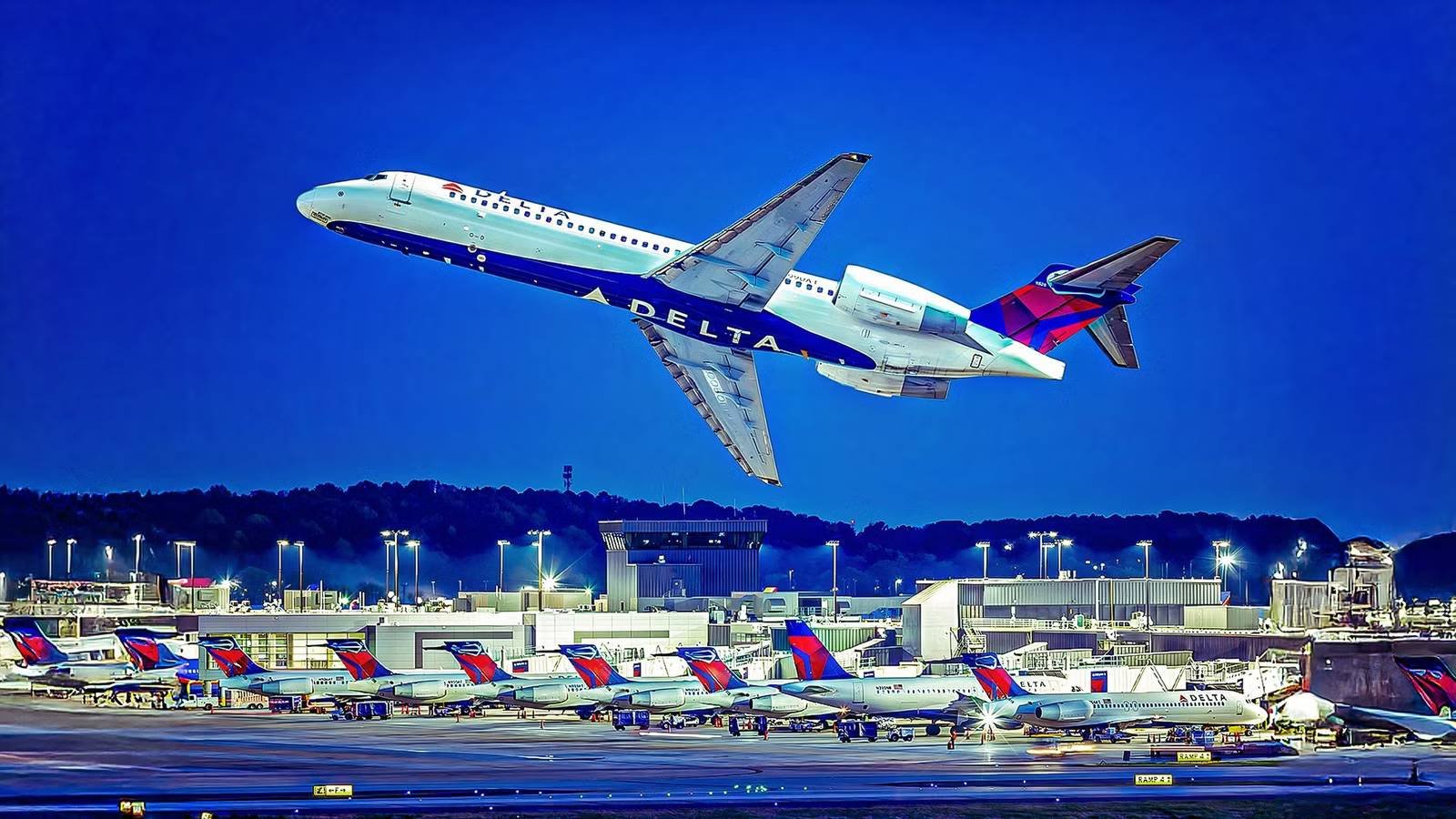
In August 1997,  Boeing acquired McDonnell Douglas in a $13.4 billion deal that created the largest aerospace company in the world. Most of the discussion about the merger in the years since has focused on how McDonnell Douglas’ business culture influenced Boeing’s approach to cost management, engineering investment, and risk tolerance, and not favorably. The two fatal 737 MAX crashes in 2018 and 2019 brought that critique into sharp focus, with analysts drawing a direct line between McDonnell Douglas’ preference for derivative designs and the engineering compromises that produced the MCAS system.
Less frequently discussed is what Boeing actually kept from McDonnell Douglas on the engineering and product side. Several McDonnell Douglas programs, designs, and technical contributions survived the merger and remain part of Boeing’s portfolio nearly three decades later. Some are aircraft that Boeing continued producing under its own name. Others are military programs that generate billions in annual revenue. One is the corporate logo itself. Here are five McDonnell Douglas decisions that became permanent features of Boeing after 1997.
The Boeing 717
MD-95 becomes the 717

When Boeing acquired McDonnell Douglas in August 1997, the MD-95 was already in development as a 100-seat short-haul jet designed to replace aging DC-9s and early MD-80s still operating across US regional and domestic networks. The aircraft was a direct descendant of the DC-9, sharing its T-tail configuration, rear-mounted engines, and basic fuselage cross-section with the aircraft Douglas had first flown in 1965. McDonnell Douglas had launched the program in 1991 and secured launch orders from ValuJet, later renamed AirTran Airways.
Boeing initially considered canceling the program after the merger, as it competed with the 737-600 at the smaller end of Boeing’s narrowbody lineup. The company ultimately decided to continue production, rebranding the aircraft as the Boeing 717-200 and delivering the first example to AirTran in September 1999. The 717 designation connected the aircraft to Boeing’s numbering system while acknowledging that it was a McDonnell Douglas design built at the former Douglas plant in Long Beach, California.
Boeing produced 156 717s before ending the program in 2006 due to limited orders. The aircraft found a niche with airlines operating high-frequency short-haul routes, with Hawaiian Airlines, QantasLink, and Delta Air Lines among its operators. Delta acquired 88 717s from Southwest Airlines after Southwest inherited them through its acquisition of AirTran and had no use for the type. As of 2026, Delta remains the largest 717 operator and continues to fly the aircraft on domestic routes. The 717 is the only McDonnell Douglas commercial aircraft design that entered production under the Boeing name, and the last aircraft to roll off the Long Beach assembly line before Boeing closed the facility.
Military Aircraft Programs
The F-15, F/A-18, and C-17

McDonnell Douglas was a major defense contractor before the merger, and its military aircraft programs represented some of the most valuable assets Boeing acquired. The F/A-18 Hornet, which McDonnell Douglas developed for the US Navy in the 1970s, became the foundation for Boeing’s F/A-18E/F Super Hornet, a substantially redesigned variant that entered service in 1999 and remains the US Navy’s primary carrier-based strike fighter. Boeing has delivered more than 600 Super Hornets and continues to support the fleet. The EA-18G Growler, an electronic warfare variant of the Super Hornet, is another direct continuation of the McDonnell Douglas program.
The F-15 Eagle followed a similar path. McDonnell Douglas designed the F-15 as an air superiority fighter in the 1970s and later developed the F-15E Strike Eagle for ground attack missions. Under Boeing, the program continued evolving, most recently producing the F-15EX Eagle II, a new-build variant ordered by the US Air Force in 2020 with updated avionics, radar, and weapons capacity. The F-15EX uses the same basic airframe that McDonnell Douglas designed nearly 50 years ago, making it one of the longest-running military aircraft production programs in history.
The C-17 Globemaster III continued production at the McDonnell Douglas facility in Long Beach until 2015, when the 279th and final aircraft was delivered. Boeing maintained the program for 18 years after the merger, producing the majority of the C-17 fleet under its own name. Together, the Super Hornet, the F-15EX, and the C-17 represent the most commercially significant assets Boeing inherited from McDonnell Douglas, generating billions in defense revenue across three decades of continued production and support contracts.
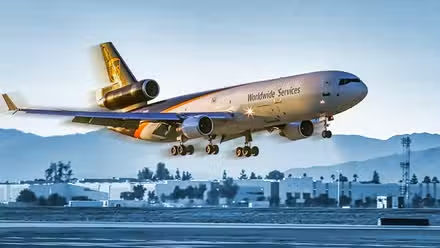
5 McDonnell Douglas Aircraft That Changed Commercial Aviation
A closer look at five of McDonnell Douglas’s most important commercial aircraft.
The MD-11’s Advanced Glass Cockpit And FMS Integration
MD-11’s glass cockpit legacy

The MD-11 entered service in 1990 with one of the most advanced flight decks in commercial aviation. It was classified alongside the Boeing 747-400 and Airbus A320 family as a second-generation glass cockpit, replacing the mechanical gauges and three-crew configuration of the DC-10 with six large CRT displays and a two-pilot crew. The flight management system handled vertical and lateral navigation, performance calculations, and fuel predictions, routing commands to the autopilot and autothrottle through an integrated architecture that reduced pilot workload on long-haul operations.
The MD-11’s approach to automation was notable for how aggressively it centralized system management. The aircraft brought more subsystems under automated control than most of its contemporaries, including fuel transfer, center of gravity management, and longitudinal stability augmentation through an automated tailplane trim system. Some of that automation created problems. The longitudinal stability system was linked to handling characteristics that contributed to accidents and damaged the aircraft’s reputation with pilots and airlines. But the underlying philosophy of integrating flight management, autoflight, and aircraft systems into a single automated architecture was consistent with where the industry was heading.
After the merger, Boeing absorbed the engineering teams that had designed and supported the MD-11’s avionics and flight management systems. Those engineers brought experience with integrated automation architectures into Boeing’s ongoing development programs. The 777, which was already flying before the merger, had its own advanced flight deck, but the MD-11 team’s experience with system integration, automation philosophy, and long-haul FMS design contributed to the institutional knowledge base that Boeing drew on for subsequent programs. The specific influence is difficult to isolate from Boeing’s own parallel work, but the engineering talent and the lessons learned from the MD-11’s flight deck, both its successes and its failures, became part of Boeing’s internal capability after 1997.
Catch what other flight trackers miss
Emergency squawks, holds, NOTAMs — live signals, no signup.
Open tracker
Catch what other flight trackers miss
Emergency squawks, holds, NOTAMs — live signals, no signup.
Open tracker
The Derivative Design Philosophy
Stretching instead of starting over

McDonnell Douglas built its commercial aircraft business on a philosophy of modifying and stretching existing airframes rather than designing new aircraft from scratch. The DC-9 first flew in 1965. Over the following three decades, the same basic fuselage cross-section, T-tail configuration, and rear-mounted engine arrangement was stretched, re-engined, and updated through the MD-80 series in 1980, the MD-90 in 1993, and the MD-95 in 1997. Each variant carried a new designation and offered improved performance, but none required the investment of a clean-sheet design. The approach kept development costs low and allowed McDonnell Douglas to compete on price against Boeing and Airbus despite having a fraction of their engineering budgets.
Boeing had historically taken a different approach. The 707, 727, 737, 747, 757, 767, and 777 were each distinct aircraft designed for specific market segments. The company invested heavily in clean-sheet programs and accepted the development costs and risks that came with them. After the merger, that philosophy began to shift. The 737 MAX, launched in 2011, followed the McDonnell Douglas template more closely than any previous Boeing program. Rather than design a new narrowbody to compete with the Airbus A320neo, Boeing re-engined the existing 737NG airframe with larger LEAP-1B engines, a decision driven primarily by speed to market and lower development costs.
Whether the derivative approach represents a positive engineering contribution or a cultural problem that Boeing inherited from McDonnell Douglas depends on who is making the assessment. The 737 MAX’s MCAS system, which was developed to address handling characteristics created by mounting larger engines on an airframe not originally designed for them, has been directly linked to two fatal crashes that killed 346 people. Many industry analysts have drawn a direct line between McDonnell Douglas’ preference for incremental modification over clean-sheet investment and the engineering compromises that produced MCAS. Others argue that the derivative approach is a legitimate and common practice across the industry and that the MAX’s problems were failures of execution rather than philosophy.
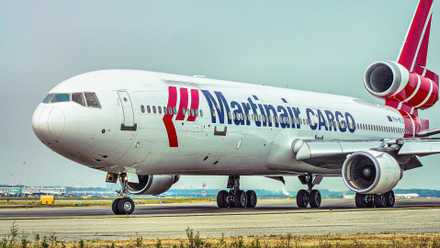
Is It True That The McDonnell Douglas MD-11’s Tail Engine Has A Fan?
Surprising facts about the MD-11’s iconic rear engine and how it breaks from trijet tradition.
Boeing’s Corporate Logo
Boeing’s logo came from McDonnell Douglas

When two companies merge, the acquiring company typically retains its own branding. Boeing did the opposite. After the 1997 merger, Boeing adopted a new corporate logo designed by graphic designer Rick Eiber, based on the McDonnell Douglas symbol rather than Boeing’s existing identity. The logo depicts a globe being encircled, a design element that McDonnell Douglas used in tribute to the first aerial circumnavigation, completed in 1924 by Douglas World Cruiser aircraft. The original Douglas logo referenced one of the company’s earliest achievements, and its adoption by the combined entity preserved that connection.
The choice was not accidental. McDonnell Douglas’ military and government business represented a significant share of the merged company’s revenue and institutional identity. The globe logo signaled that the new Boeing was not simply a commercial aircraft manufacturer that had absorbed a smaller competitor. It was a combined aerospace and defense company with a heritage that extended across both lineages. The branding decision reflected the reality that McDonnell Douglas’ defense portfolio, including the F-15, F/A-18, C-17, and AH-64 Apache helicopter, was as commercially important to the merged entity as Boeing’s commercial aircraft lineup.
The logo remains Boeing’s corporate identity in 2026, nearly three decades after the merger. It is a small but visible reminder that the 1997 deal did not simply end McDonnell Douglas as a company. It folded its history, its engineering, its military programs, and, in this case, its visual identity into a combined entity that carries elements of both companies forward. The Douglas World Cruisers completed their circumnavigation in 1924. A century later, the logo commemorating that achievement still appears on every Boeing facility, document, and aircraft delivery.