dailynewsnblog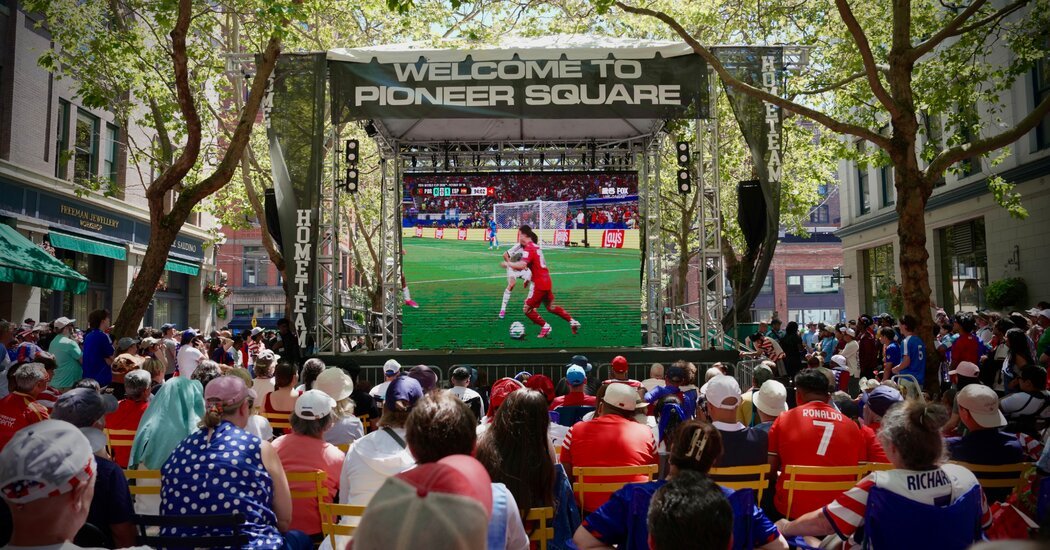
The party started early in Seattle on Monday, as American soccer fans gathered near the waterfront for coffee and pastries before they moved on to hot dogs and beer. Across town, near the stadium, fans from Belgium converged on a beer hall. In between was a mile-long street fair, as people spilled in and out of bars and filled parks and squares.
Monday’s knockout game between Belgium and the United States — what some were calling the biggest sporting event in Seattle’s history — will be the city’s sixth and final game of the World Cup tournament.
Unlike other World Cup host cities in the United States, such as New York, Los Angeles or Dallas, Seattle’s games have been nestled in an urban environment. Instead of fighting traffic or navigating a public transit maze, many visitors have been able to walk to the stadium from their hotels, passing through a carnival atmosphere from Pike Place Market to the revitalized waterfront.
“It’s nice that it’s in the city, because the city is breathing football, breathing soccer,” said Bert Vercauteren, who is from Belgium and has stayed in the United States for nearly a month to attend World Cup games.
It wasn’t always so vibrant. Seattle’s downtown, like many other urban centers, lost much of its foot traffic during the pandemic, as its tech-heavy work force stayed home. The number of unsheltered people on the streets soared, and stores shuttered, further alienating visitors to city’s core.
But ahead of the World Cup, Seattle strategized to recapture the vibrancy of the old downtown, embarking on ambitious plans for park revitalizations, more lighting, painted murals and trash pickup.
In Pioneer Square, the neighborhood that connects downtown hotels to the soccer stadium, visible homelessness had long been a concern, with people in distress wandering into roadways or sleeping in parks.
Before the tournament began, a coalition of business and service organizations developed a list of 80 people who were chronically on the streets in the area, many of whom had severe mental illness. A majority of them had been living outside for at least three years, and some, more than 10 years.
In the span of just a couple of months, a vast majority of those people were placed in shelters that provide supportive services.
“Everyone had to do everything differently than they normally do, and now folks don’t want to go back because it worked so well,” said Lisa Daugaard, the co-director of Purpose Dignity Action, a nonprofit civil rights organization that was involved in the effort.
Peter Tomozawa, the chief executive of Seattle’s World Cup Organizing Committee, said that when he approached City Hall several years ago about becoming a host city, the mayor at the time, Bruce Harrell, said to him, “I need to revitalize downtown.”
“I think people sort of forget, due to Covid and other things, how vibrant and how great our city is when it’s alive,” said Mr. Tomozawa, who is also a former president of the Seattle Sounders, the city’s Major League Soccer team.
Residents have been wondering how long the city’s spruce-up efforts would last and whether the efforts around Pioneer Square were a temporary solution to impress World Cup visitors.
Seattle voters have become cynical about homelessness task forces and promises by politicians to invest hundreds of millions of dollars to solve problems that only grow worse.
But the coalition that formed around the World Cup believes it has now found a template it can build on. And there is a lot more work to be done, particularly in other parts of downtown. Even as some people were moved into shelters from Pioneer Square, other homeless people moved in.
Steven Buyse, 57, who lives Brussels and works in finance, had attended four World Cups before this year’s tournament, and was planning to stay away this year because he didn’t want to visit the United States while President Trump was in office.
But after Belgium beat Senegal last week in a thrilling comeback to advance, he flew to Seattle on Sunday. In the city, he walked from his hotel, and he said he met Americans along the way who apologized for the decision by FIFA to reverse the suspension of the United States’ star striker, Folarin Balogun.
“If you have bars close to the stadium, the vibe, the atmosphere, that’s what you come for,” he said. “To meet, talk and celebrate sports.”