dailynewsnblog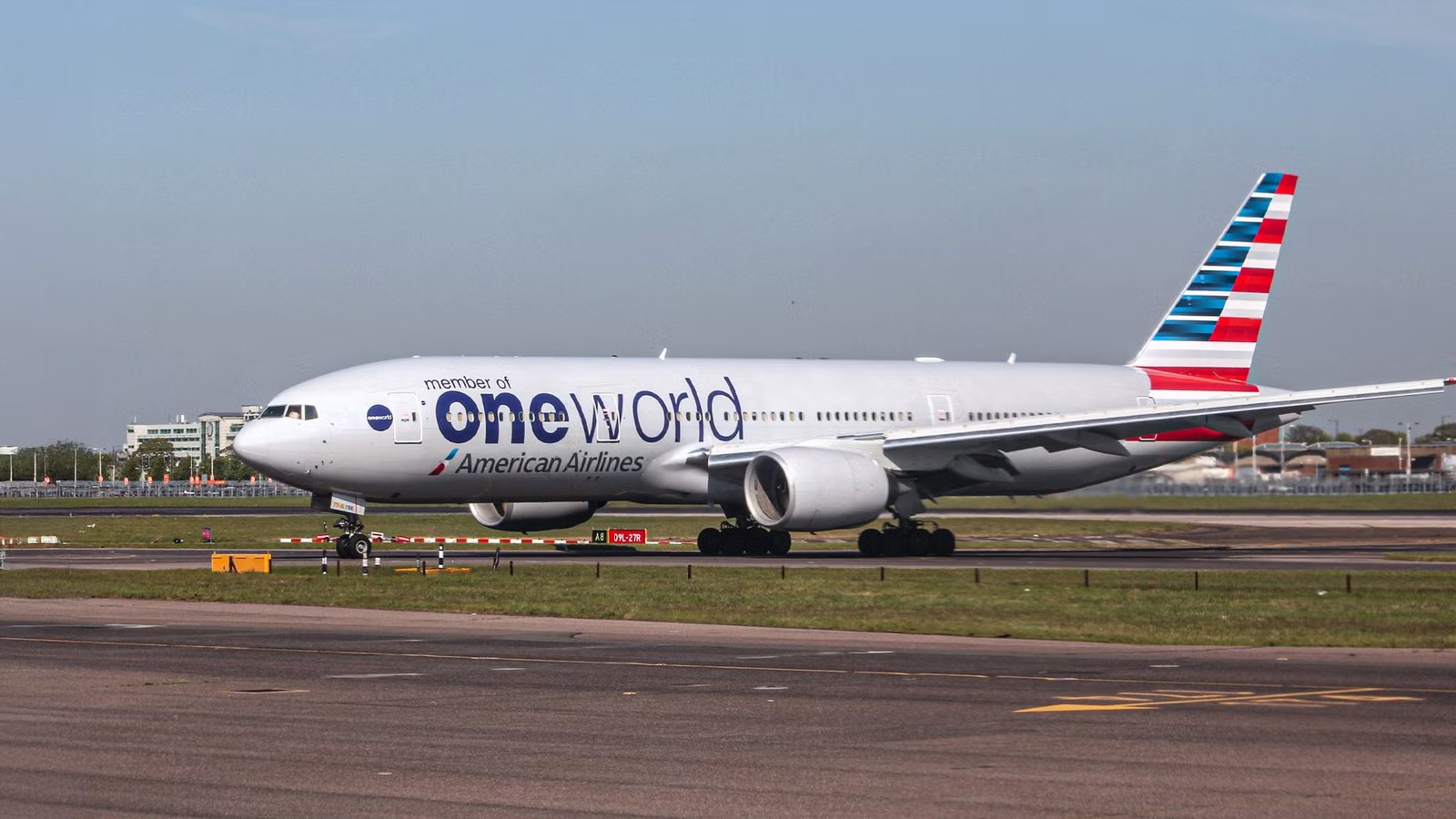
In the early days of aviation, there was no concept of airline alliances. Airlines built their own networks, sold tickets for their own flights, and competed largely on the destinations they could serve. That, however, has changed significantly over the past few decades. Airlines are consistently seeking ways to strengthen their global presence and remain competitive, making alliance membership an increasingly attractive strategic move.
Today, most major full-service airlines belong to one of the three global airline alliances:  Star Alliance,
  oneworld, or
  SkyTeam. More and more airlines are joining these alliances. However, joining an alliance is not automatic or guaranteed. Existing member airlines, especially the founding member airlines, decide whether to admit a new carrier.
How Airline Alliances Decide On New Members

Usually, membership decisions in airline alliances are guided by governing boards made up of the chief executives of existing member airlines. These boards assess airlines on strategic value, including whether they add new geographic coverage or strengthen existing network gaps. Any prospective member is also required to meet established standards for safety and service quality.
In the case of the oneworld alliance, the process is similar. The alliance was established in 1999 by  American Airlines,
  British Airways, Cathay Pacific, Qantas, and the now-defunct Canadian Airlines. Today, it has 15 member airlines and is the third-largest global airline alliance by passenger traffic, behind Star Alliance and SkyTeam.
Within the alliance, new members are approved through the oneworld Governing Board. The board is responsible for setting the alliance’s strategic direction, with the chairmanship rotating between member CEOs. This structure places admission decisions directly in the hands of member airlines, some of which compete on overlapping international routes and markets.
Founding Airlines Hold Key Influence on oneworld Decisions

That said, not all member airlines hold equal influence in the admission process. Within oneworld, veto rights are reserved for the alliance’s founding airlines rather than shared by all members. In the context of airline alliances, a veto refers to the unilateral authority to block the admission of a prospective member airline.
oneworld does not publicly disclose formal voting rules, and the “veto” structure is based on industry reporting rather than official alliance statements.
Today, four of oneworld’s founding members remain in the alliance—American, British Airways, Cathay Pacific, and Qantas—and each retains those veto rights. As a result, a single founding airline can stop an application from moving forward, regardless of whether other member airlines support it. The reason is that the interests of the alliance and those of an individual airline do not always align.
oneworld Alliance Airline Members | |
Alaska Airlines | American Airlines |
British Airways | Cathay Pacific |
Fiji Airways | Finnair |
Iberia | Japan Airlines |
Malaysia Airlines | Oman Air |
Qantas | Qatar Airways |
Royal Air Maroc | Royal Jordanian |
SriLankan Airlines | Philippine Airlines (expected by 2027) |
A prospective member may strengthen the alliance by expanding its network or gaining access to new markets, while also creating additional competition for a founding airline. In those circumstances, a founding member can use its veto to protect its own commercial interests, even if admitting the new carrier would benefit the alliance as a whole.
How oneworld Wound Up As The Smallest Airline Alliance
The alliance has the lowest market share of the three major alliances.
Starlux’s case shows how oneworld membership decisions work in practice

Taiwan’s STARLUX Airlines is the clearest example of how commercial interests can influence the admission process. The carrier, which launched operations in 2020, has expanded rapidly with a fleet of Airbus A321neos, A330-900neos, and A350-900s. It now serves more than 20 destinations across East and Southeast Asia, as well as four destinations in the United States.
For the past several years, Starlux has made no secret of its ambition to join the oneworld alliance. Indeed, the alliance is a natural fit for the airline, as Taiwan’s other two full-service carriers are already aligned with rival alliances: China Airlines is part of SkyTeam, while EVA Air is part of Star Alliance. That effectively leaves oneworld as the only global alliance option for Taiwan’s third full-service airline.
However, STARLUX’s application has yet to make meaningful progress. Industry speculation has long suggested that Cathay Pacific was the main obstacle to the airline’s membership bid. In fact, according to local media outlet Juheng.com, during a shareholders’ meeting in May, STARLUX Chairman Chang Kuo-wei confirmed those reports, stating that Cathay Pacific opposes the airline’s application to join oneworld.
The opposition appears to be rooted in commercial competition. As we know, Taiwan and Hong Kong are geographically close, and both airlines compete for passengers traveling within Asia and on long-haul connecting itineraries. In fact, Taiwan is Cathay Pacific’s third-largest traffic market after mainland China and Japan, which makes it an important source of passengers connecting through Hong Kong to the airline’s wider network.
Past Applications Also Show The Limits Of Alliance Expansion

Despite the setback, STARLUX remains optimistic that it will eventually become part of oneworld. During the same shareholders’ meeting, Chairman Kuo-wei said the views of all alliance members would ultimately determine the outcome and that the airline would “one day” join the alliance. Whether that happens remains to be seen. Furthermore, STARLUX is not the only airline to have been linked with speculation over opposition from within the alliance.
A few years back, China Southern was widely expected to become a oneworld member after it left SkyTeam in 2019. American had invested in the carrier in 2017, Qatar Airways later acquired an equity stake, and British Airways and Finnair also established commercial partnerships with the airline. Despite those ties, China Southern never joined oneworld.
No member airline publicly confirmed opposition to China Southern’s application, but Cathay Pacific was widely reported to be reluctant to support its admission because Guangzhou and Hong Kong are less than 100 miles apart and compete for many of the same passenger flows. These cases show how much influence founding airlines can have over who ultimately joins the alliance.
The World’s Only Full Service Airlines That Still Aren’t Part Of An Alliance
In today’s increasingly connected world, these carriers are interesting exceptions to the rule.
Why Philippine Airlines Moved Ahead In The oneworld Process

However, a veto does not simply come down to geography. Whether a prospective member is considered a direct commercial competitor also appears to play an important role. A recent example is Philippine Airlines, which was invited to join oneworld. The carrier is expected to become the alliance’s 16th member in 2027 and only the second based in Southeast Asia, alongside Malaysia Airlines. Although Cathay Pacific will become Philippine Airlines’ closest geographic peer, the carrier’s application was not blocked.
One likely reason is that the two airlines do not compete as directly as Cathay Pacific and STARLUX do, particularly in the premium long-haul market. Additionally, its admission was approved by the oneworld Governing Board after years of cooperation with several existing member airlines. Philippine Airlines has an extensive codeshare agreement with American that has been in place since December 2023. It also has a strategic partnership with Qatar Airways, a longstanding codeshare agreement with Malaysia Airlines dating back to 2001, a limited partnership with Cathay Pacific, and additional partnerships with  Alaska Airlines, Hawaiian Airlines, and Qantas.
Philippine Airlines’ entry will expand oneworld’s global network by adding 31 destinations, complementing the alliance’s existing connectivity to almost 1,000 destinations across around 170 countries and territories. Announcing the airline’s admission during the IATA Annual General Meeting in June, American CEO and Chairman of the oneworld Governing Board Robert Isom said the carrier would strengthen connectivity “across key markets in the Asia Pacific region.“
He added, “Philippine Airlines flies from New York, Los Angeles, Chicago, Seattle, and San Francisco, providing incredible nonstop access to oneworld markets in the US to Manila. There’s a huge demand between our countries and the regions throughout the world that this partnership enables.”
Airline Alliance Membership Is Never Straightforward

Overall, airline alliance membership is not a straightforward process. Several commercial and strategic factors are taken into account before a carrier is invited to join or its application progresses. Even where an airline appears to be a strong network fit, approval depends on how it aligns with the priorities of existing member airlines. The examples of STARLUX, China Southern, and Philippine Airlines show how these decisions can vary in practice.
Some applications face obstacles when market overlap raises concerns, particularly in cases of direct competition. In the oneworld context, that can give founding members the ability to block an application, meaning a single airline CEO can stop a prospective member from joining, even if others are supportive. At the same time, other cases move forward, with partnerships and network links already in place, helping to secure backing from within the alliance.
For instance, Alaska’s entry into oneworld was backed by American following the development of a close commercial partnership built around codesharing, reciprocal loyalty benefits, and West Coast connectivity into international routes.  Qatar Airways, which joined the alliance in 2013, later played a similar role in supporting Oman Air’s admission in 2025, where prior commercial alignment helped strengthen its case within the alliance.