dailynewsnblog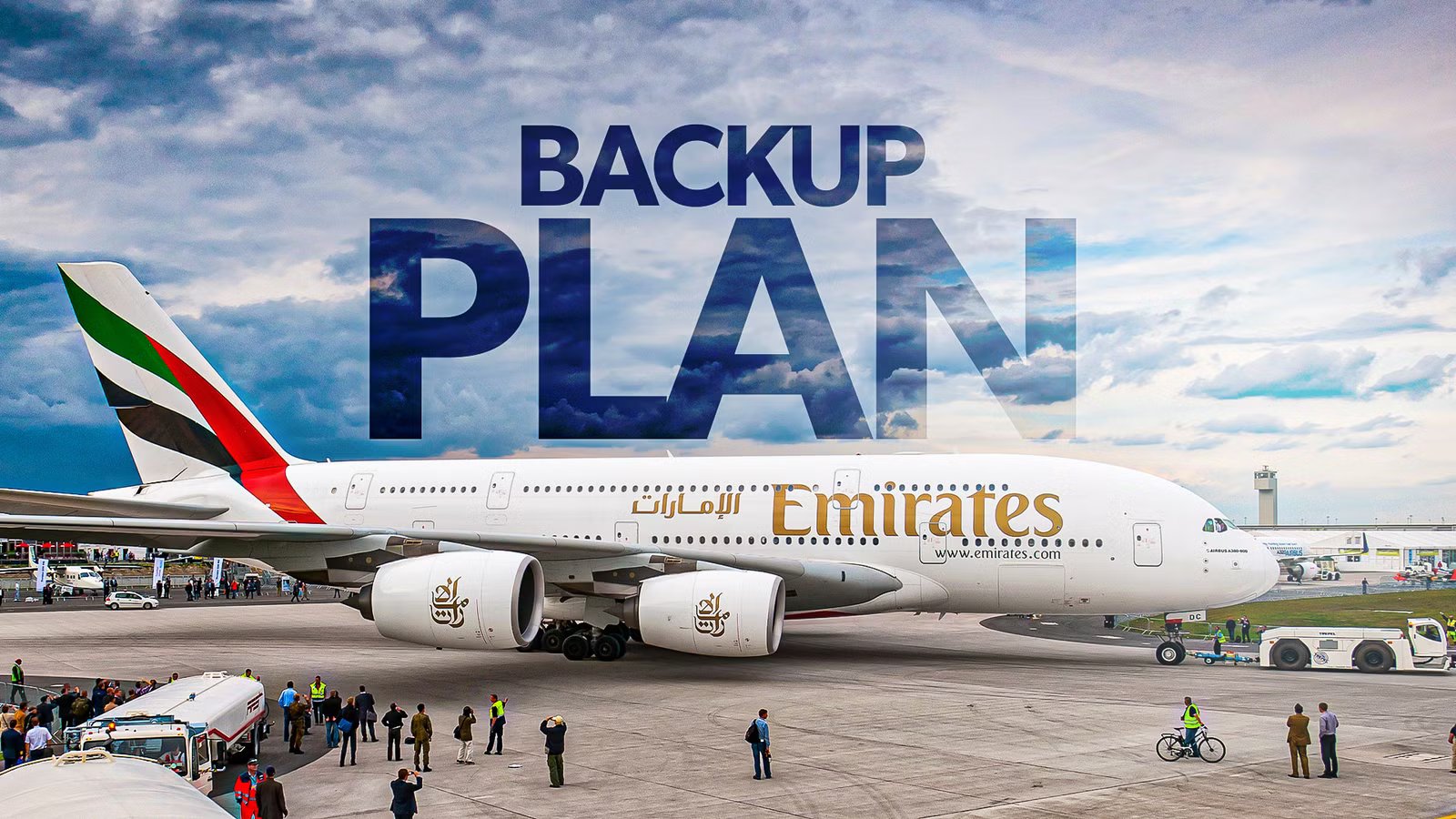
Operating one of the world’s longest commercial flights is often viewed as a symbol of technological capability and airline prestige. For  Emirates, however, the
  Dubai International Airport (DXB) to
  Auckland Airport (AKL) route has always been about more than setting distance records. Since launching the nonstop service in 2016, the airline has maintained a parallel one-stop option through Australia, creating two distinct ways to serve the same market. Rather than choosing between ultra-long-haul flying and traditional hub connections, Emirates has quietly built a network that can adapt to changing demand, operational challenges, and fleet availability.
Today, the approximately 8,820-mile (14,200-kilometer) Dubai-to-Auckland route remains the longest in Emirates’ network, operated by the Airbus A380. With the airline increasing the service to daily flights during June 2026 while continuing to leverage its Australian network, Auckland has become a real-world test of two competing long-haul strategies: a nonstop ultra-long-haul flight and a connected one-stop itinerary. The results offer valuable insight into how airlines can balance efficiency, flexibility, and profitability as the next generation of 18-hour-plus routes begins to emerge.
Why Emirates Launched Nonstop Service While Preserving The One-Stop Model

When Emirates introduced the nonstop A380 service to Auckland in 2016, the decision was not a replacement of its existing Australia-based network, but an expansion layered onto it. The airline had already spent years building strong passenger flows between New Zealand and Europe, the Middle East, and Africa via Australian gateways such as Sydney, Melbourne, and Brisbane. The nonstop service was designed to shorten total journey times and improve competitiveness on a city pair that was increasingly sensitive to travel duration, particularly for business travelers and premium leisure demand.
The strategic logic behind retaining the one-stop option is rooted in network resilience. Ultra-long-haul flights are highly sensitive to payload restrictions, wind conditions, and operational constraints that can fluctuate seasonally. By maintaining the Australia connection, Emirates ensures that Auckland is not dependent on a single daily or near-daily ultra-long sector. Instead, the airline can shift demand between the nonstop and connecting flows depending on aircraft availability, fuel efficiency, and passenger load factors. The one-stop model also protects Emirates against demand-cycle volatility. While the service offers the fastest eastbound travel time between Dubai and Auckland at roughly 15 hours and 50 minutes, the combined routing via Sydney can be more attractive during periods of lower premium-cabin demand or when cargo optimization takes precedence over passenger speed. In these cases, splitting capacity across two sectors can yield stronger overall revenue performance than concentrating demand on a single ultra-long flight.
Another key factor is the structural strength of Emirates’ Australian network. Sydney, in particular, serves as a high-volume interchange point where Emirates can capture not only Dubai-to-New Zealand traffic but also intra-Tasman demand through its fifth-freedom rights. Over time, this has allowed the airline to refine its Sydney operations into a dual-purpose asset that supports both long-haul connections and short-haul regional revenue generation. By preserving both models, Emirates effectively avoids committing fully to a pure ultra-long-haul strategy. Instead, it maintains a flexible architecture where nonstop service and hub-based routing coexist, each acting as a counterbalance to the operational limitations of the other.
Economics Behind The World’s Longest A380 Sector

The Dubai-to-Auckland route is defined not only by its distance but also by the constraints and advantages of operating it with the Airbus A380. Taking more than 17 hours westbound, the route sits at the upper end of what current widebody aircraft are routinely scheduled to do in commercial service. Emirates deploys the A380 on this sector because its high seat capacity helps offset the costs of operating such an extended flight. With over 400 seats in a typical configuration, each departure adds significant weekly capacity to the Auckland market, totaling roughly 6,800 seats across the schedule during peak deployment periods. This scale is critical on a route where operating costs are heavily influenced by fuel burn over long distances and extended crew duty periods.
Catch what other flight trackers miss
Emergency squawks, holds, NOTAMs — live signals, no signup.
Open tracker
Catch what other flight trackers miss
Emergency squawks, holds, NOTAMs — live signals, no signup.
Open tracker
However, the economics of the route are not static. Emirates adjusts frequency and deployment based on seasonal demand patterns and broader network considerations. For June 2026, the airline increased the nonstop A380 service from four weekly flights to daily operations, effectively consolidating capacity into a higher-frequency schedule during a peak travel period. This shift suggests a deliberate balancing act between maximizing aircraft utilization and ensuring a consistent market presence in New Zealand.
Payload and range performance also play a significant role in how the route is managed. Ultra-long-haul operations of this magnitude often require careful weight planning, particularly in warmer months when fuel efficiency can be affected by temperature and wind conditions. The A380’s payload capacity allows Emirates to prioritize passenger volume while still accommodating cargo uplift, but these variables can influence whether the nonstop service is favored over the one-stop alternative through Australia. Another layer of complexity arises from the opportunity cost of deploying aircraft. An A380 assigned to this route cannot simultaneously serve other high-demand trunk routes such as London, New York, or Sydney. This makes scheduling decisions highly sensitive to yield expectations. Emirates therefore uses the Auckland nonstop not just as a point-to-point product but also as part of a broader global optimization model, in which aircraft rotation is continuously adjusted to balance long-haul prestige routes with higher-frequency global hubs.
Why The Airbus A350-1000 Is Perfect For Emirates’ Ultra‑Long Flights
Why the Airbus A350-1000’s range, efficiency, and comfort can make it the ideal aircraft for Emirates’ ultra-long-haul global network.
Leveraging The Tasman Fifth-Freedom Network

Beyond the nonstop A380 flight, Emirates maintains a less visible but strategically important layer of connectivity across the Tasman Sea. Its fifth-freedom rights allow the airline to operate services between Australia and New Zealand, most notably via Sydney, creating a flexible extension of its Pacific network. While the Auckland nonstop captures attention as an ultra-long-haul flagship, the Australia-based routing serves as a structural backup, absorbing demand fluctuations and operational constraints without requiring a schedule-wide disruption.
Historically, the Sydney service played a dual role, feeding both Auckland and Christchurch. Over time, Emirates has adjusted this flow, with Christchurch increasingly becoming the primary Tasman destination from Sydney. This subtle redistribution reflects changing demand patterns in New Zealand and allows Emirates to avoid overconcentrating capacity in Auckland when nonstop services already serve that market directly. By splitting the Tasman demand base, the airline ensures that regional connectivity remains commercially viable even when long-haul capacity is scaled up or down. The operational value of this structure becomes most apparent when disruptions affect ultra-long-haul sectors. Weather variability in Auckland, air traffic congestion in Dubai, or payload limitations on the A380 can all influence the feasibility of operating a full nonstop schedule. In such cases, the one-stop pathway through Australia provides an alternative routing option that preserves market access without requiring cancellations or significant schedule restructuring. This redundancy is particularly important on routes approaching 16 to 17 hours of flight time, where small operational constraints can have disproportionate effects on dispatch reliability.
A380-800 Weights | |
|---|---|
Weight | Value |
Maximum Takeoff Weight | 268,000 lb (121,562 kg) |
Fuel capacity | 559,937 lb (253,983 kg) |
Operating Empty Weight | 628,000 lb (284,856 kg) |
Economically, the Tasman network also functions as a revenue diversification tool. The shorter Australia–New Zealand sectors allow Emirates to deploy premium products, including A380 First Class, on relatively short flights where such cabins are typically absent. This enhances yield on regional segments while also strengthening brand positioning in markets that might otherwise be dominated by narrowbody operators. The result is a layered revenue structure in which long-haul Dubai–Auckland traffic and regional Tasman passengers contribute independently to the route’s overall profitability. In effect, the fifth-freedom network acts as a pressure valve for Emirates’ broader Australasian strategy. It absorbs excess capacity, stabilizes demand during seasonal swings, and ensures the airline retains flexibility as nonstop A380 service scales up or down in response to market conditions.
Aircraft Variables And Sydney Slot Economics Shaping Service

From a performance perspective, the A380 operates near the upper practical boundary for long-haul commercial service on the Dubai-to-Auckland sector. The route length places it in a category where payload, wind patterns, and temperature conditions can materially affect fuel planning and passenger uplift. Westbound sectors are especially sensitive to headwinds over the Indian Ocean and Southeast Asia. These conditions can influence whether Emirates prioritizes nonstop operations or routes passengers through Australia to optimize weight and fuel efficiency.
Seasonality further complicates scheduling. Demand for New Zealand travel is heavily influenced by Northern Hemisphere holiday periods, Southern Hemisphere summer peaks, and shoulder seasons that can produce uneven load factors. During peak travel windows, Emirates has increased the nonstop frequency to as many as seven weekly flights in June 2026, reflecting greater capacity to absorb demand in the point-to-point market. In lower-demand periods, however, the airline can lean more heavily on its Australia connections, where demand is distributed across multiple city pairs rather than concentrated on a single ultra-long sector.
Sydney plays a central role in this balancing mechanism. As one of Emirates’ most important fifth-freedom gateways, it serves not only as a passenger hub but also as a slot-controlled environment in which timing rights directly influence network design. Access to favorable arrival and departure slots affects the viability of onward connections to Christchurch and other Tasman destinations, which in turn shapes how Emirates structures its one-stop offerings versus nonstop Auckland capacity. Taken together, these variables explain why Emirates maintains both a nonstop and a one-stop structure rather than committing fully to either model.
Emirates Abruptly Cuts Airbus A380 Flights To Heathrow In July [Full Schedule]
The airline will now ‘only’ fly the superjumbo five times daily. See the latest information here!
How Emirates’ Hybrid Strategy Fits Into The Next Generation Of Ultra-Long-Haul

As airlines continue pushing the boundaries of nonstop flying, Emirates’ approach to Auckland offers a useful counterpoint to the industry’s growing focus on record-breaking route lengths. Rather than relying exclusively on an ultra-long-haul operation, the airline has spent years refining a model that combines nonstop service with a complementary hub-and-spoke alternative. This provides a level of flexibility that few carriers operating comparable routes can match.
The contrast is particularly relevant as Qantas prepares to launch Project Sunrise, which will connect Sydney and Melbourne with destinations such as London and New York using Airbus A350-1000 aircraft. Those flights are designed around a pure nonstop strategy, leaving little room to reroute passengers via an alternative network if operational disruptions, changing demand, or aircraft availability affects the schedule. Emirates, by comparison, can shift traffic while continuing to serve the same market with relatively limited impact on passengers.
This flexibility also reduces commercial risk. If premium demand softens or seasonal travel patterns change, Emirates is not dependent on filling every seat on a single ultra-long-haul flight. Instead, it can distribute passengers across multiple Australian gateways or adjust frequencies to reflect prevailing market conditions. The result is a network that can respond to changing circumstances without fundamentally altering its presence in New Zealand.
The strategy also highlights the enduring value of a global hub. While nonstop flights eliminate a connection, they also remove the opportunity to aggregate passengers from multiple origins onto a single departure. Emirates continues to leverage Dubai’s extensive network to feed both its nonstop and one-stop Auckland services, maximizing connectivity across Europe, Africa, the Middle East, and Asia. The Australian component further expands those options by generating local traffic under fifth-freedom rights, creating additional revenue streams beyond the long-haul sector itself.
The Future Of Emirates Auckland Nonstop Service

Emirates’ Auckland strategy demonstrates that the future of ultra-long-haul flying may not be defined by nonstop flights alone. By simultaneously operating both nonstop and hub-fed services on the same city pair, the airline has created a real-world benchmark for comparing two fundamentally different network models under the same market conditions. As more carriers invest in 18-hour-plus routes, the question may shift from whether an aircraft can fly farther to whether a nonstop service consistently delivers greater value than a flexible connecting network. Emirates has been quietly gathering that answer for years.
Catch what other trackers miss
Emergency squawks, holds, NOTAMs — live signals, no signup.
Open tracker
Catch what other trackers miss
Emergency squawks, holds, NOTAMs — live signals, no signup.
Open tracker