dailynewsnblog
For decades, airports have operated on a shared-process model: passengers across all fare classes use the same core infrastructure. While service levels differ across economy, business, and first class, the physical airport experience has remained largely unified within a single operational flow. Services like PS introduce a separation from that flow. At select airports, including, most recently,  Miami International Airport (MIA), certain passengers use a dedicated private terminal where security and customs screening are handled outside the main passenger terminals, before being transferred directly airside to their flights. This creates an alternative entry path into existing commercial aviation infrastructure without changing the underlying airline system itself.
The opening of PS MIA at Miami International adds scale to that model. Located inside the former Pan American World Airways regional headquarters, the $12 million redevelopment creates a 34,000-square-foot private terminal where guests bypass the main airport entirely. Processing is handled through private TSA and Customs checkpoints, with waiting areas that include private suites and a shared lounge called The Salon, followed by direct BMW transfers to aircraft on the tarmac.
The Airport You’ll Probably Never See

For most passengers, the airport experience can be frustrating. Parking structures, curbside congestion, security queues, crowded boarding areas, shifting departure gates, and long internal transfers have become normalized parts of air travel. This reflects the scale of modern hub airports, which process tens of millions of passengers annually. Miami Airport alone typically handles over 50 million travelers in a normal operating year, requiring highly standardized systems to maintain flow.
PS operates by removing its passengers from that shared flow. Instead of entering Miami Airport’s main terminal, travelers using PS MIA arrive at a separate facility located at 4900 NW 36th Street. From there, they complete private security screening and customs procedures within a controlled environment before being transferred airside directly to their aircraft.
The result is a mode of travel that resembles ‘backstage access’ more than conventional airport movement. The public terminal continues to operate as the core system for mass air travel, with the airport itself coordinating around 1,000 daily departures and arrivals across a complex air traffic network. PS does not replace that system; it overlays it, extracting a small subset of passengers into a parallel process that reduces contact with the broader airport environment while still relying on the same underlying aviation infrastructure.
Pan Am & The Reversal Of Aviation History

The location chosen for PS MIA carries significance beyond the renovation itself. The facility occupies the former Pan American World Airways regional headquarters, retaining key architectural elements from the original structure, including Pan Am insignia and design features from its mid-century construction. Rather than building an entirely new private terminal, the project repurposes a site that was tied to one of the most influential periods in commercial aviation.
Catch what other flight trackers miss
Emergency squawks, holds, NOTAMs — live signals, no signup.
Open tracker
Catch what other flight trackers miss
Emergency squawks, holds, NOTAMs — live signals, no signup.
Open tracker
Pan Am occupied a defining position in the development of modern air travel. During the jet age, the airline built one of the most extensive international networks of its time, serving more than 80 countries across 6 continents by the late 1960s. This expansion coincided with a broader surge in global aviation, as US airline passenger volumes grew rapidly. Within that trajectory, long-haul international flying shifted from a service concentrated among governments and affluent travelers to a more mainstream transportation system, with hub airports evolving to handle tens of millions of passengers each year as global connectivity became routine.
Miami played a central role in that expansion strategy, particularly as a gateway into Latin America and the Caribbean. During the airline’s growth period, Pan Am’s network expanded to 122 airports worldwide while passenger traffic increased substantially, rising from approximately 4.8 billion revenue passenger miles in 1960 to more than 20 billion by 1970. The building now occupied by PS MIA sat within that larger system, supporting one of the most extensive international aviation networks of its era.
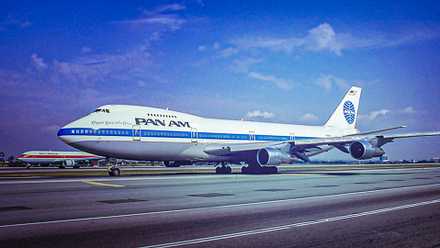
35 Years On: Why American Icon Pan Am Ceased Operations
What are your memories of the legendary airline?
Luxury Is Not The Only Product

The obvious interpretation is that PS sells luxury. Private suites, curated interiors, personalized service, and high-end design all support that narrative. But luxury alone does not fully explain why facilities like this are appearing at some of the country’s largest airports. Premium travel products already exist in multiple forms, from airline lounges and concierge programs to first-class cabins and private aviation. The existence of another high-end offering does not by itself explain the broader trend.
The actual product being sold is privacy. Traditional premium travel generally improves comfort while keeping passengers inside the same airport system as everyone else. Travelers may move through priority lanes, receive better service, or gain access to exclusive spaces, but they still operate within the same infrastructure. PS changes that dynamic by reducing interaction with the system itself. Privacy, predictability, and control are increasingly becoming the primary value proposition rather than visible luxury features.
That distinction matters because it changes the economics. Traditional luxury often works by adding features on top of an existing experience. PS instead creates value by removing parts of the process altogether. The goal is not necessarily a better airport experience, but a reduced need to participate in the airport experience at all.
The Economics Behind The Experience

The numbers help explain why airports are increasingly willing to support projects like PS. The Miami location required a $12 million renovation and operates under a 20-year agreement with Miami-Dade County. Under the terms of the deal, Miami Airport receives a guaranteed minimum of $600,000 annually or 7.5% of gross revenues, as reported by the Miami Herald, creating a structure where the airport benefits from both fixed payments and increases in demand over time. Rather than functioning as a simple leasing arrangement, the model aligns airport revenue with the performance of the service itself.
From an airport operator’s perspective, this represents monetization of existing infrastructure rather than construction of an entirely new facility. Airports increasingly generate income through retail, parking, real estate, and premium services in addition to passenger traffic. Repurposing a historic property into a revenue-generating operation can be more attractive than leaving a specialized building underutilized. In this case, a former Pan Am facility becomes a long-term commercial asset rather than a legacy property.
The pricing model also reveals who the company believes its audience will be. The cost places PS somewhere between traditional premium travel and private aviation. While the service remains inaccessible for most travelers, it offers some of the privacy and convenience associated with private flying without the costs attached to aircraft ownership or chartering. That potentially expands the customer base beyond high-net-worth travelers.
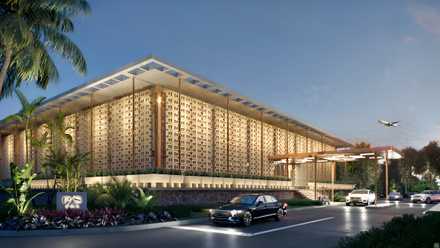
Pan Am’s Old HQ Is Now Miami’s New Luxury $1,295-Per-Use Private Terminal: Here’s What’s Inside
Groups of four can also book private spaces within the terminal.
Four Locations Change The Story

Having just one private terminal could be dismissed as a luxury experiment, but four locations strategically create a high-functioning nationwide network, offering users a standardized product across the country. By expanding to major hubs like  Los Angeles International Airport (LAX),
  Hartsfield–Jackson Atlanta International Airport (ATL), and
  Dallas/Fort Worth International Airport (DFW), PS has occupied critical aviation junctions across the United States. This rapid scaling is designed to capture massive, high-value travel corridors; for instance, the newly rolled out DFW location was specifically positioned to handle the surge of international traffic flowing through the central hub.
While the core blueprint remains identical, featuring private TSA/Customs clearance, premium spa perks, and a direct BMW tarmac chauffeur right to the aircraft door, the network relies on highly specific, large-scale infrastructure at each hub. The flagship facility at LAX is completely tucked away from main airport traffic and houses 12 ultra-private suites, each roughly 300 square feet (28 sq m), with ensuite marble bathrooms, daybeds, and direct runway views, alongside a shared social club called The Salon. Prices for The Salon start at $1,295 per person. The Private Suite starts at $4,950 (which covers up to four passengers).
At the world’s busiest airport, the PS ATL terminal offers private suites equipped with personal climate controls and daybeds, alongside a curated Southern-inspired lounge and an outdoor garden area. Meanwhile, the network’s addition at DFW is a massive 12,200-square-foot gated facility next to Corporate Aviation that splits its footprint between individual luxury suites and an expansive social Salon built on its signature 40-foot (12 meters) bar.
The Quiet Emergence Of A Parallel System

The most important shift is not simply that some travelers can avoid crowds. That has long been possible through fast-track security, airport lounges, and private aviation. These options traditionally functioned as upgrades within a shared system, where passengers still moved through the same core airport infrastructure even if their experience within it differed significantly.
What changes with PS is the degree of separation from that shared system. Passengers can now use a whole dedicated private terminal for standard commercial flights. They then transfer directly airside to the aircraft, bypassing much of the standard terminal process while still flying on commercial airlines.
This reflects a broader structural shift in how access to infrastructure is organized. Instead of only offering differentiated experiences within a single system, services like PS introduce parallel processing layers that run alongside existing airport operations. The result is not a different mode of aviation, but an additional pathway through the same network that reduces direct interaction with the public-facing components of the system.