dailynewsnblog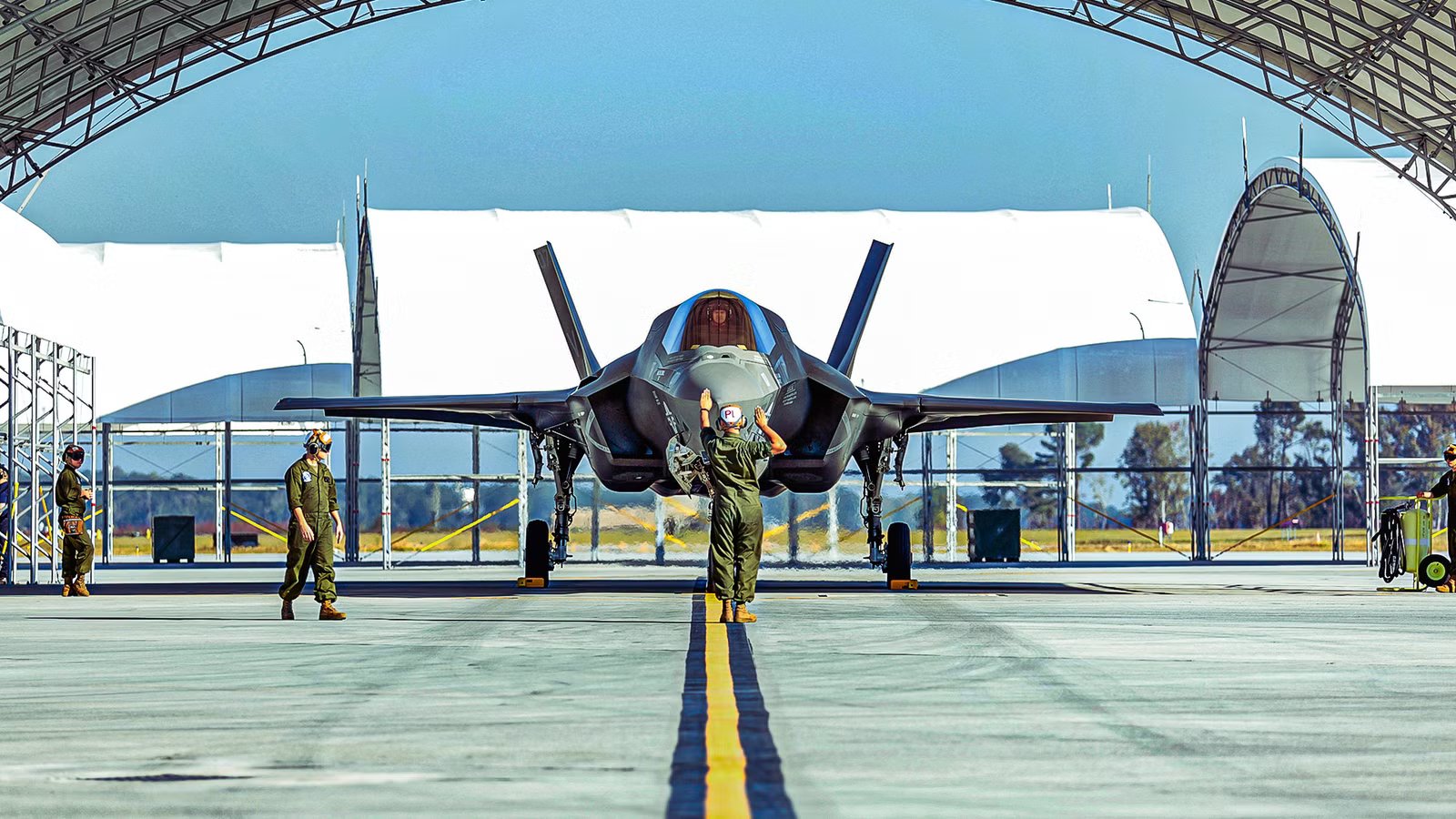
The issue of the US Department of Defense losing military pilots to the airline industry is true across the fast jet service branches (the Air Force, Marine Corps, and Navy) and across fighter jet types. Until mid-2026, the Marines operated four types of fast jets: the F-35B, the F-35C, the McDonnell Douglas AV-8B Harrier II, and the legacy F/A-18 Hornet. It faces pilot retention issues with all its fast jet pilots, not just with the F-35B.
Unlike the Air Force and Army, the US Marines operate a mixed fleet of fixed and rotary wing platforms. In recent years, the Marines have been short of the target by around 600 pilots. These are particularly clustered in the fast jets and less so in helicopters. Fighter jet communities face high training costs, long pipelines, as well as a high operational tempo, bureaucracy, low flight hours during modernizations, and high expeditionary demands.
Aircraft Type Doesn’t Dictate A Pilot’s Base Pay

Firstly, it should be noted that all military pilots are officers and that their base pay is identical across the service branches: a pilot’s base pay is based on rank and years of service, not the type of aircraft they fly. The base pay of an Air Force pilot is the same as that of a Marine Corps pilot of the equivalent rank and years of service. These pilots receive the same basic pay as any other officer in the Armed Forces of equivalent rank and years of service, including in the US Space Force and the US Army.
However, it should be stressed that base pay is not the same as total compensation. Like other professional militaries, the US has been exploring some ways around uniform pilot rank and service-based pay by offering targeted retention bonuses. However, these retention bonuses generally do not distinguish based on the type of fast jet they are trained to fly.
Pilots are also paid based on combat deployment and other factors, as well as receiving various allowances and pensions. A military pilot typically earns from $120,000 to over $200,000 annually, including flight pay, bonuses, and allowances. Early in their career, the pay gap relative to new regional pilots is not that stark. However, by the time commercial pilots reach senior status, the pay gap can be double. A senior commercial pilot can make over $450,000.
Pressures On Marine Corps Pilots

Some issues may add greater stress to Marine Corps fast jet pilots relative to their United States Air Force counterparts. Marine F-35B fighter pilots are heavily tied to Marine Expeditionary Units and are deployed on amphibious assault ships. Life on these ships includes cramped quarters, long deployments, and intense operational tempos. Life may be more rugged compared to Air Force F-35A pilots living on land in barracks or off the base.
The Marines also stress that every Marine is a Rifleman, whereby aviators are viewed first as Marine officers and then as pilots. They are often pulled out of the cockpit for non-flying ‘ground jobs’ like serving as a Forward Air Controller or Air Officer attached to an infantry battalion. This can negatively impact their quality of life and how much flying they get to do, while Air Force pilots can more confidently stick to their job of flying and supporting the wing.
However, the biggest difference lies not with other service branches, but with flying with major airline carriers. With a career flying for an airline, pilots not only enjoy better pay, but also a home-based schedule, a stable location, a predictable seniority-based system, and a quality of life that may be better suited for their families. They don’t need to be away for months at a time, and they can lose much of the paperwork and focus on flying.
A Look At The Salaries Of Royal Canadian Air Force Fighter Jet Pilots In 2026 & Why They’re Still Not Enough
Canada may have a small air force compared with its giant USAF counterpart, but it is still struggling to retain enough pilots for the aircraft it has
Marine Corps Reforms

In 2022, Task and Purpose wrote that “during the early months of 2020, the Marine Corps was fighting a losing battle of its aviators resigning in droves to join commercial airlines.” Since then, the Marines have been working on developing efforts to better retain their pilots, but are also working on Force Design 2030 aviation restructuring and its associated Talent Management 2030 initiatives.
These have had a mixed but generally positive or stabilizing impact on overall retention, although fixed-wing pilot retention continues to face structural problems. One aspect of aviation restructuring is to reduce aircraft per VMFA squadron (such as from 16 F-35s to ten). It is also divesting some of its MV-22 tiltrotors.
This has reduced the Marine Corps’ demand for pilots. Benefits from smaller squadrons include a more sustainable ops tempo, better flight hours per pilot (which has been a key source of complaints), and a focus on high-value platforms like the F-35B. However, the transition period has also caused disruption, which has generated some issues but has not triggered a mass exodus.
The Retirement Of The AV-8B Harrier IIs

In 2026, the last AV-8B Harrier II squadron (the VMA-223) had its sundown ceremony. The Marines now only operate the F-35 and legacy Hornet as frontline fighter jets, with the legacy Hornet also being phased out. Fighter jet retirements raise the question of what happens to the pilots. This has been a cause of concern for some commentators in the past when the Air Force wanted to retire the A-10 en masse.
These transitions need to be handled carefully by the Marines (and other service branches) to prevent mass resignations. Most former Harrier Marine pilots transition to the new F-35B (or other platforms). As the Harrier is a (tricky) STOVL aircraft, these pilots have skills that transfer well to the F-35B. They are prioritized by the Marines for retention and retraining for the F-35B.
F-35B Lightning II Fleets | Fleet in 2026 | Number planned (per F-35.com) |
|---|---|---|
Marine Corps | 205 | 280 |
Royal Navy/RAF | 47 | 138 (program of record) |
Italian Navy/Air Force | 8-15 | 40 |
Japanese Navy | 6 | 42 |
It should also be stressed that the Harrier didn’t retire overnight: rather, it was phased out over the years, allowing the force to gradually transition its pilots. Speaking of the Harriers’ retirement, the Marine Corps quoted Paul Truog as saying in 2025 that “everybody knows that VMA-231 is transitioning to F-35s.”
He added that “that capability is because of the Marines and the pilots who, in record numbers, raise their hands saying, ‘I want to continue on, I want to keep moving forward.’” The gradual retirement of the Harrier has allowed experienced Marine aviators to transition into the expanding F-35B community, helping provide a cadre of qualified pilots and instructors as the fleet grows.
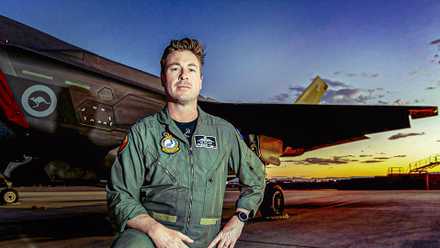
A Look At The Salaries Of Royal Australian Air Force Fighter Pilots In 2026 & Why They’re Still Not Enough
RAAF fighter pilots earn strong salaries in 2026, but booming airline pay is intensifying Australia’s military pilot retention crisis.
The Size Of The Marine Corps’ Fleet

Taken by itself, the Marine Corps has one of the largest cadres of trained military pilots in the world. It has around 3,500 pilots and is short of its target by several hundred (although the exact number fluctuates). For comparison, the Navy has around 7,500 to 8,000 pilots, the Air Force has around 13,000, and the Army has around 4,700, mostly helicopter pilots (per Task and Purpose).
The RAF is one of the largest air forces in Western Europe and has around 1,500 trained pilots, plus roughly 500 more each in the Royal Navy and British Army. Meanwhile, the Indian Air Force reported having exactly 3,834 pilots in 2021, plus another estimated 1,200 combined in the Indian Army and Navy. The Russian Air Force is thought to have around 4,000 to 5,000, plus the army and navy, while the Chinese PLAAF is thought to have something similar or somewhat less.
It’s worth keeping in mind that the number of pilots for a particular aircraft platform is a much smaller subset. The Marine Corps has a program of record for 420 F-35s (Bs and Cs), of which it is expected to have 205 F-35Bs and 56 F-35Cs by the end of the year. Assuming it has 1.5 trained pilots for every aircraft, that is a pilot pool of around 300 pilots for the F-35B. Losing even a couple of dozen can have a big impact.
The Airline Push For Helicopter Pilots

However, while attention is typically focused on fast jet pilots, the Marines and other service branches have faced a new challenge from commercial airlines in the last decade. In the mid-to-late 2010s, commercial airlines moved to actively recruiting military helicopter pilots. Recruitment efforts accelerated during the late 2010s and again following the post-COVID recovery in airline travel. Airlines weren’t able to find enough pilots through civilian flight schools and former military fixed-wing pilots.
One retention advantage the military had with helicopter aviators was that civilian helicopter jobs often paid less and had worse schedules than those of commercial airlines. In the military, helicopter pilots are paid the same (base pay) as fast jet pilots of the same rank and years of service. Starting with regional airlines, Rotor Transition Programs were created to lower barriers and make the switch to commercial airplane flying more attractive.
Airlines often cover or reimburse the roughly $20,000 to $35,000 costs of retraining. Hundreds of military rotor pilots have transitioned through these paths. For Frontier Airlines, its program to retrain helicopter pilots has been so successful that its relevant webpage now reads:
“Due to the overwhelmingly positive response and large number of applications we received for our Rotor Transition Program, we have temporarily closed the application window. Keep an eye out for more information regarding the application window opening and future recruitment events.”