dailynewsnblog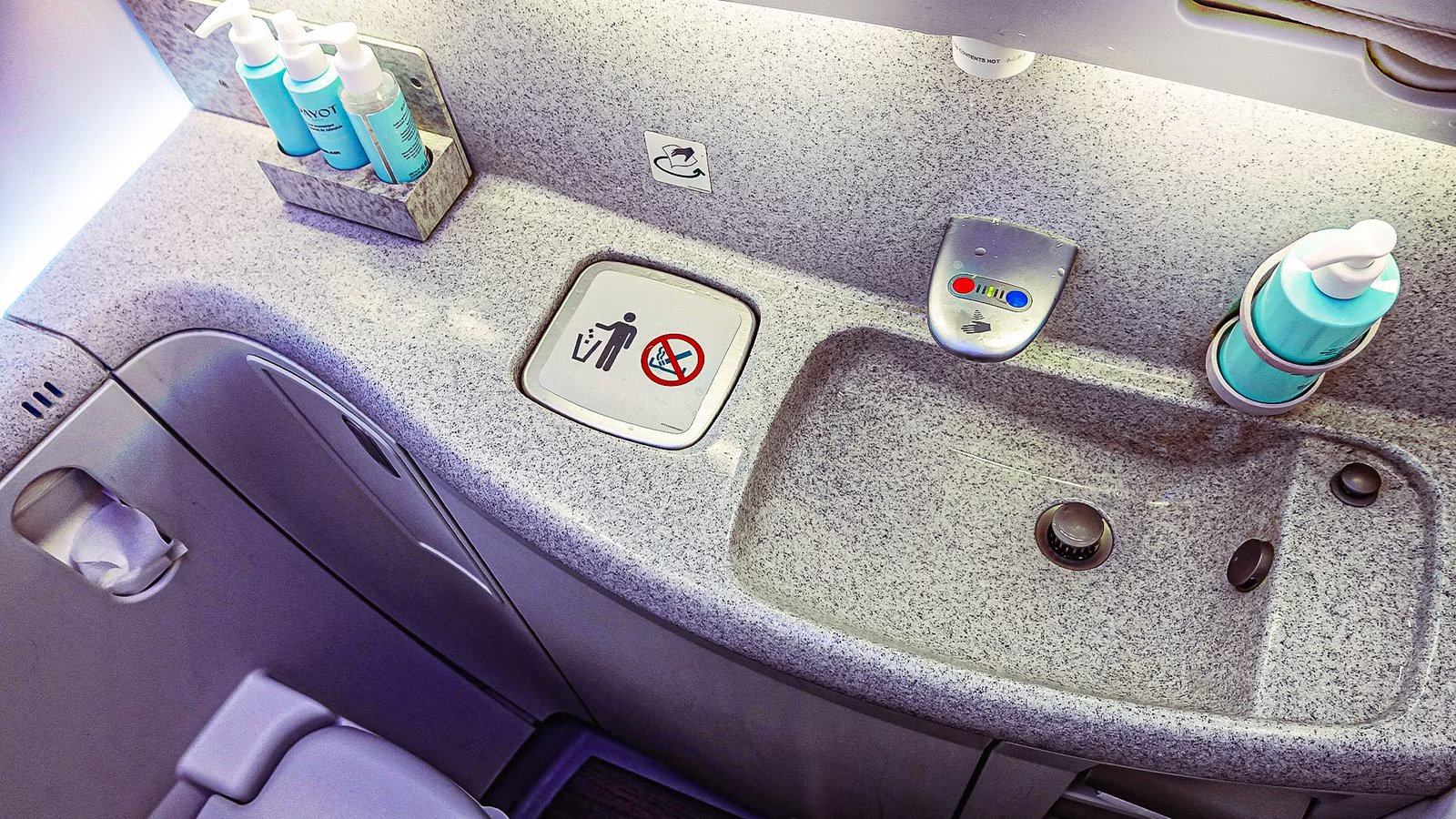
On any given flight, many passengers end up standing in the pristine, modern lavatory of a brand-new aircraft. It is a space defined by seamless surfaces, antimicrobial touchpoints, and mood lighting, sometimes even nicer than the bathroom at home. Yet, mounted on the door is a small, polished metal tray. It feels like a jarring relic from a smoky, long-gone era, but it is actually a piece of cutting-edge safety engineering. Why does this ghost of the past remain a requirement on the most advanced jets in the sky?
Aviation safety is rarely about optimism and is more about assuming the worst. While it might seem like a design oversight, that ashtray is a calculated hedge against human behavior. This article explores how a tiny piece of metal can be a final, desperate line of defense against the most dangerous threat in a pressurized cabin: an in-flight fire.
Designed For The Real Passenger

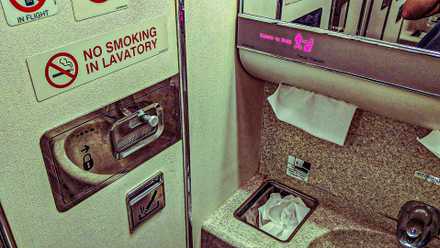
The ashtray is not there for your comfort, and it certainly is not an invitation by any means. It is actually a mandatory safety device, required by law, specifically designed for the passenger who ignores the no-smoking signs. It exists to provide a dedicated, fire-proof container for a lit cigarette, preventing the alternative of a smoldering butt tossed into a paper-filled waste bin. Without it, a fire could easily become out of control, putting the flight in serious danger.
Engineers design aircraft for the ideal passenger, but safety protocols are designed for the real passenger, the one who panics when they realize they have been caught smoking and needs an immediate place to hide the evidence. When a passenger breaks the rules in the lavatory, they are already in a natural state of high anxiety. If they feel trapped by a smoke detector, their instinct might be to discard the cigarette as quickly as possible, attempting to leave no trace of their actions.
Without that ashtray, a desperate smoker might flick a lit cigarette into the nearest waste bin, a terrible idea that would only make the situation worse. That bin is filled with paper towels, tissues, and flammable debris that will ignite instantly. So, by providing a dedicated, fire-proof container, the ashtray prevents a single, illicit bad decision from becoming a life-threatening inferno high in the sky, where very little can be done to stop it from becoming too dangerous.
Safe For Everyone, Everywhere

You might wonder why regulators do not simply update the rules to remove them. However, international aviation law is a fragile, interconnected web that spans across all corners of the globe. An aircraft certified in one country has to meet global standards to land anywhere in the world, so removing them would need a global rewrite of certification standards and the costly re-certification of thousands of existing aircraft. It is not as simple as unscrewing a piece of hardware; instead, legal compliance has to be maintained, and avoiding the complex web of dispatch rules that ensure an aircraft is airworthy is always the choice that is made.
Under FAA rules, the requirement is rooted in 14 CFR 25.853(g), which mandates that lavatories must have self-contained, removable ashtrays located conspicuously on or near the entry side of each lavatory door. Aviation safety regulations are often written in the wake of a tragedy, meaning regulators are historically unwilling to remove any safety layer, no matter how archaic or nonsensical it may appear.
Factor | Scenario: Ashtray Present | Scenario: Ashtray Absent |
Discarded Cigarette | Contained in metal receptacle | Tossed into paper-filled waste bin |
Ignition Risk | Negligible (fire-proof housing) | High (paper towel ignition) |
Containment | Isolated | Rapid spread to cabin panels |
This rule was solidified following a series of tragic lavatory fires in the 1970s and 1980s. Regulators decided that if they could not completely stop people from smoking, they had to ensure those people had a safe place to put out their cigarettes, just in case there were to be another event where a fire could become out of control.

The Safest Seats On A Plane To Survive A Deadly Crash
Experts have analyzed whether seats such as the exit row, the aisle, the middle, and the window have higher survivability rates.
Layers Preventing Disaster

Manufacturers like  Boeing and Airbus do not include these by choice; they include them because authorities like the FAA and EASA mandate them. For these manufacturers, the ashtray is a box-ticking exercise in a massive, complex certification document rather than something architectural for design purposes. Safety is built in layers, and the ashtray is simply one mandatory layer in a chain of defense designed to keep a small spark from becoming a structural threat.
Maintenance crews view the ashtray as a controlled item and feature as part of the minimum equipment list (MEL). If one is missing or damaged, the plane may technically be unairworthy, meaning it cannot legally depart until it is replaced or the situation is handled according to the specific airline’s MEL. This is why you will see them checked on every pre-flight inspection, demonstrating that this is something considered integral to the safety of any passenger-carrying operation.
Like any operational hazard, the threat of a fire in the lavatory can be broken down into layers that can help risk assessors catch the problem before it becomes any bigger. First, detection is always present as high-sensitivity smoke detectors alert the flight crew. Next, containment is the logical response, and fortunately, waste bins are designed to be fireproof, preventing flame spread. Automatic fire extinguishers will then activate in waste bins, and if, even at this point, the fire is not out, the ashtray is there as the final backup to prevent ignition in the first place.
When All Else Fails

It is natural to ask why we still rely on a standard ashtray when modern aircraft are equipped with high-sensitivity, multi-zone smoke detectors and automated fire suppression systems. The reality is that technology, while powerful, is not infallible and has its own inherent flaws. High-sensitivity detectors are designed to be extremely responsive, but they can be triggered by non-fire events like aerosol sprays or heavy moisture, and more importantly, they can be deliberately sabotaged.
A determined rule-breaker might attempt to mask the smoke or tape over a sensor, bypassing the proactive layer of safety. If the detector is compromised, the ashtray remains the only physical barrier preventing an ignition source from reaching the flammable contents of the trash bin. This contrast between proactive and reactive safety is exactly why the ashtray remains, as it is a fail-safe for when all other layers of electronic detection fail.
One system warns you that a fire has started, and the other is designed to stop the fire from ever happening in the first place. Maintaining both, aviation safety designers ensure that no single bad decision by a passenger can easily progress to a cabin-wide emergency. It is a dual-layered approach that prioritizes physical containment over reliance on sensors alone.
The Real Reason Why Airplanes Still Have Ashtrays In The Lavatory
Airplanes keep lavatory ashtrays not for comfort but as a mandated, last-line safety tool—ensuring safe disposal of illicit lit cigarettes
Oversight Can Result In Aircraft Grounding

Rules are in place to protect the aircraft from passengers, but what happens if an airline tries to circumvent the rules and remove them? They quickly run into the reality of the airworthiness directives, the legal safety notices that dictate what an airline can and cannot do with their aircraft. Just like passengers, airlines cannot get away with breaking the rules and must ensure that ashtrays are installed according to what has been outlined in these directives. AD 74-08-09 R3, outlined by the FAA, regulates the use of and regular inspection of these items.
In 2009, a  British AirwaysBoeing 747-400 bound for Mexico City had to return to the gate while on the runway because a single ashtray was found missing from a lavatory door. The aircraft had a full load of passengers and was scheduled for a long-haul transoceanic flight, meaning the airline had to follow the strict letter of the law to ensure the flight remained compliant. The maintenance team could not simply ignore the missing hardware, and the plane stayed on the ground until the safety compliance was absolute.
Take this as a warning: the presence of an ashtray is a sign that the airline takes its safety mandate seriously, and you should too. What may seem minuscule has the ability to ground an aircraft if it is absent. Smoking on a modern aircraft is not a minor infraction by any means and will always lead to immediate pilot intervention, expensive emergency landings, and severe legal consequences upon arrival.
A Nod To The Past

The aircraft ashtray is a memorial to past tragedies and a concession to human nature. It tells us that aviation does not trust the idea of a perfect flight and prepares for the flawed reality of the people on board. Acknowledging that passengers might ignore the rules, the industry has successfully engineered a way to deal with the most common fire hazard, keeping millions of travelers safe every single day.
The next time you walk into an aircraft lavatory and see that small, silver tray, don’t view it as a relic of a bygone era. View it as a piece of quiet, effective safety engineering that stands guard against the consequences of a single bad decision. It is a reminder that even at cruising altitude, safety is not found in luxury, but in the small, mandatory details.
Will these relics ever go away? Likely not until the design of the entire lavatory module undergoes a radical, risk-free transformation that renders the paper-filled waste bin obsolete. Until that day, the ashtray remains a small but permanent guardian on the cabin wall, silently ensuring that a momentary lapse in judgment does not turn into a permanent disaster.
Catch what other trackers miss
Emergency squawks, holds, NOTAMs — live signals, no signup.
Open tracker
Catch what other trackers miss
Emergency squawks, holds, NOTAMs — live signals, no signup.
Open tracker