dailynewsnblog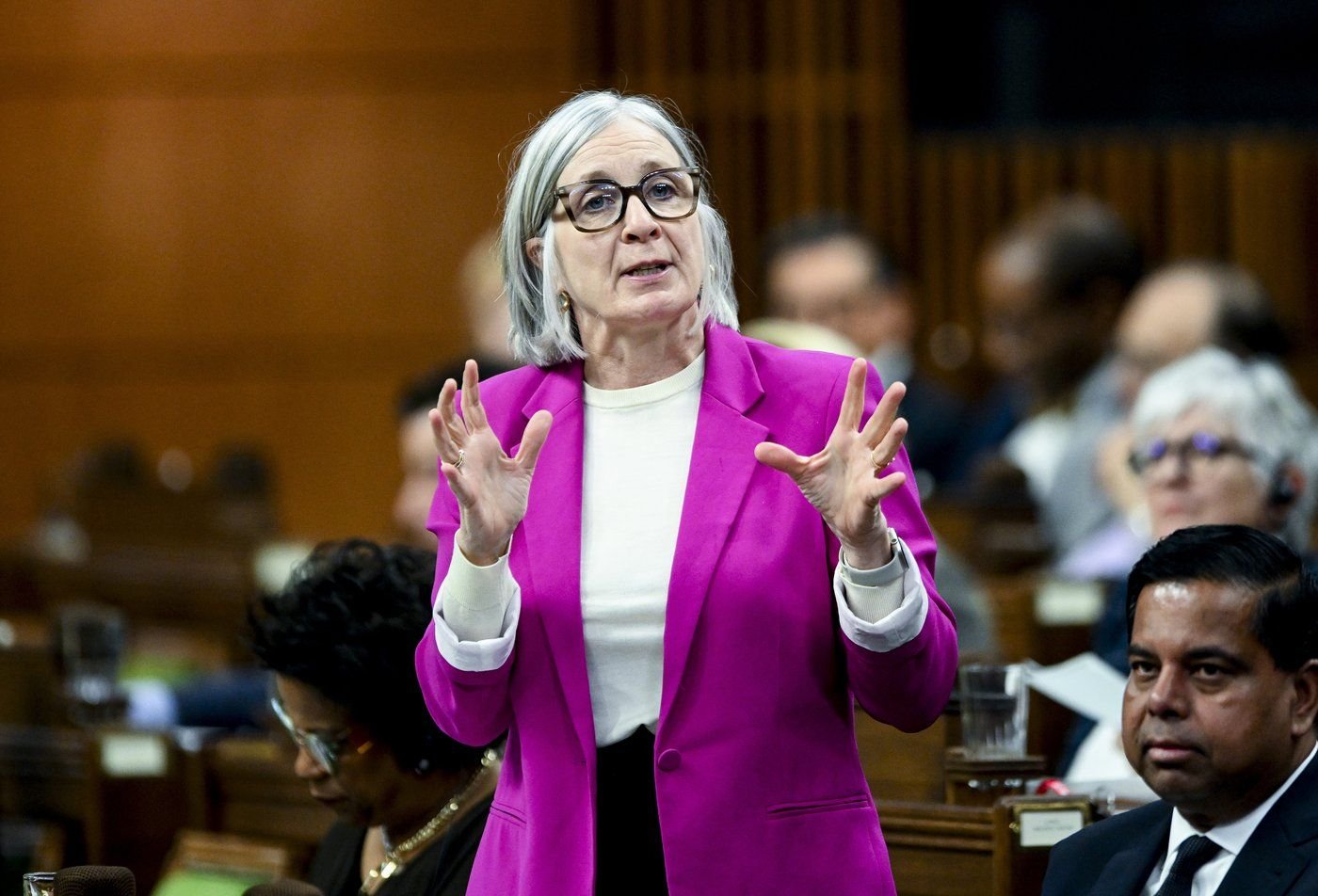
Labour leaders are warning that they’re preparing to fight tooth and nail should Jobs and Families Minister Patty Hajdu make any moves to curtail their powers at the bargaining table.
The Liberal government is expected to table legislation in the coming months on Canada’s labour laws after holding consultations on potential changes over the spring and summer.
For industry and labour, there’s some broad signals on what’s on the table, but it’s uncertain what direction the government is moving towards, with Ottawa chalking it up to the need to strengthen the federal collective bargaining framework to support Prime Minister Mark Carney’s economic agenda.
Jobs and Families Minister Patty Hajdu hasn’t tipped her hand at this point about what the government is planning, other than hinting at support for early intervention by mediators and reiterating that the right to strike is protected by the Charter.
That hasn’t stopped those in organized labour circles from warning that they’re prepared to fight tooth and nail should Ottawa make any moves to curtail their powers at the bargaining table.
Bea Bruske, the head of the Canadian Labour Congress, told iPolitics the consultations were only ordered at the behest of industry and to “determine pathways to preventing strikes and lockouts that will impact the economy.”
“Labour will fight back against any encroachment on the right to strike,” she said in an emailed statement on Friday.
“That will mean organizing in every province and territory to ensure workers understand what this means to them and how it will impact the negotiations for 1 million workers in Canada.”
Secretary of State for Labour John Zerucelli said that’s not the case.
He told iPolitics in an interview on Friday the government respects the collective bargaining processes and the consultations are focused on updating Canada’s labour laws to keep pace with economic and technological disruptions.
“We have section 232 tariffs that are hurting key sectors of our economy. We are facing one of the largest transitions in technology with AI, other modernizations, and so that is about ensuring that we have the right framework for unions and corporations to come to the table and get the deal,” he said, referencing the title of the U.S. sectoral tariffs imposed by the Trump administration.
NDP strategist Erin Morrison said the Liberals only have themselves to blame for any mistrust from organized labour.
She said unions have largely lined up in support of Carney’s efforts to shore up the Canadian economy, but have grown frustrated with the government’s frequent interventions to end strikes in federally regulated sectors. This could turn into a full-blown rift if the Liberals aren’t careful, she warned.
“We see labour leaders coming to the table, playing ball, and obviously hoping for Mark Carney’s success on the economic front. But the huge risk here is that they’re not seeing that come back the other way,” said Morrison, a vice-president at Texture Communications.
“The bottom line in the right to strike is about… workers fighting for a deal that’s fair for them — a deal that means they can pay bills and put food on the table. That is what is at risk here, and I think labour is just not seeing any acknowledgement from Carney or Hajdu that strong unions need strong paycheques.”
The first wave
The consultations on Canada’s labour laws kicked off in April and were originally set to wrap up in late May. The tight turnaround suggested the Liberals may have wanted to table a bill before Parliament rose for the summer, though that didn’t materialize.
Instead, the government announced Friday it was launching a second round of consultations that would “build on areas” from the initial phase, “while also exploring emerging topics raised by stakeholders and opening the door to any other topics.”
Some of these new topics include expedited grievance arbitration, bad faith bargaining, the length of a strike or lockout mandate, first collective agreements, paid medical leave and wage theft issues and enforcement.
Written submissions will be accepted until Aug. 2.
The group that represents federally-regulated employers said Ottawa needs to use these consultations to craft solutions to halt the pattern of “highly impactful strikes affecting critical supply chain industries.”
Derrick Hynes, the president and CEO of FETCO, said no one is calling for a curtailing of the right to strike, but there needs to be more tools offered to Ottawa for those “exceptional circumstances where the national public interest is at risk.”
“We have to find better pathways, and we think the government can bring forward a set of solutions here that will not diminish or take away that right to strike, but will deal in these specific circumstances… where the risks are so high that we just cannot afford this sort of work stoppage,” he said in an interview.
Over the past three years, strikes or lockouts have temporarily closed the B.C. ports, the Port of Montreal, the St. Lawrence Seaway, and CN and CPKC railways, while Air Canada and WestJet have had to cancel flights because of contract disputes. The federal government intervened in all of the disputes, often using powers in the Labour Code to end the work stoppages, citing the impact on the broader Canadian economy.
Labour leaders have blamed many of these disputes on businesses not increasing wages to keep pace with the explosive post-pandemic spike in the cost of living, and warned that intervention only teaches management to wait out workers and let Ottawa come to the rescue.
Still, the government said over 95 per cent of collective bargaining agreements in federally-regulated sectors are reached without a work stoppage.

Section 107 — The Big Question
The original consultation document pointed to a government-ordered report last spring on labour disputes at the West Coast ports. That report, ordered after a nearly two-week-long strike shut down all of B.C.’s ports in 2023, recommended creating a special mediator role to help guide tough negotiations, though the rest of the proposed changes were specific to port employers and longshore workers’ unions.
The special mediator role was one of several topics directly related to labour negotiations listed as discussion topics for the consultation, alongside timelines for bargaining, strike or lockout notices, conciliation and cooling off periods; and perhaps most notably, reviewing section 107 of the Canada Labour Code.
This section has become a lightning rod in labour circles as the government has increasingly used it to curtail strikes and lockouts in federally-regulated sectors.
Unions want the controversial section removed, while industry have said it’s an imperfect tool that needs to be refined and coupled with more opportunities for early intervention in the bargaining process.
“Currently, it’s a reactive tool, and often it has been invoked after a catastrophic work stoppage has already begun. We don’t think that’s the best approach forward,” said Hynes.
“It could be used in a better way, but we think what we need are tools that are more preemptive in nature — before we get to this point of crisis, we have tools in the toolbox, steps in the process that would allow these parties that would increase the odds that these parties would get a deal.”
The broadly worded section gives Ottawa wide discretion to make any order to ensure labour stability, and has only recently been used to end strikes and lockouts.
Typically, the feds would bring forward back-to-work legislation in the House to end a labour dispute. But that changed in 2024.
Faced with a strike by WestJet mechanics, then-Labour Minister Seamus O’Regan made an order under s. 107 to send to the dispute to binding arbitration. But in a surprise to the government, the Canada Industrial Relations Board made the order yet refused to curtail strike activities, saying it hadn’t been directed to do that.
O’Regan expressed frustration, though a deal was eventually reached at the bargaining table.
A few months later, Canada’s biggest freight railways were shuttered because of a labour dispute, and new Labour Minister Steven MacKinnon made an explicit order to the CIRB under s. 107 to end the lockouts and refer the matter to binding arbitration.
This time, CIRB ordered the rail lines to resume operations, saying it had no other option but to comply.
The Teamsters union launched a judicial appeal, though it’s still making its way through the courts.
And in light of that uncertainty, the government continued to make use of s. 107.
It’s easy to see why. Unlike back-to-work legislation, there is no need for MPs to vote in the House, locking down the potential of a caucus rift or in the case of a minority government, finding a dance partner to support the bill.
That’s not to say there’s no risk. Hajdu faced public outcry after invoking of s. 107 to order Air Canada flight attendants back to work in the fall of 2025.
The union defied this order, and Air Canada was forced to settle the strike at the bargaining table.
Carney vs. Labour?
Morrison said that was a catastrophic miscalculation by Hajdu — the flight attendants were demanding to be paid for work they do before the plane leaves the ground, and had broad public support in their fight with the airliner.
She said Hajdu is in a tough spot as Carney has proven that he’s not sensitive to concerns from unions and the prime minister doesn’t tolerate disagreement at the cabinet table.
“Cabinet ministers who have wanted to remain cabinet ministers have had to get in line with Carney’s views, and Carney is more conservative than some Conservative prime ministers this country has had,” she said.
Bruske called the minister “very approachable,” but said it’s “clear that there is significant pressure from the business community to use this moment to push through changes that will weaken workers’ bargaining power.”
“How this government responds to that as a whole will be telling in terms of their priorities and their willingness to protect the very workers who actually keep our economy running,” she said.
Despite her comments about Hajdu, Bruske added that under Carney, the government “has not been as open to timely and active engagement with labour as we have seen in the past.”

Zerucelli said that’s not the case, noting the number of labour leaders that join Carney at major announcements and frequent discussions through channels like the new Tripartite Advisory Council, which also includes representatives from the business community.
He said the government understands that the “best deals are the ones that are that unions and companies come together on their own,” and the federal Labour Code “needs to facilitate” those outcomes.
“We’re trying to build big things. We’re investing big dollars in ensuring that that we are training union members and others to build big projects, and all of this is to build a prosperous Canada, and it doesn’t work if we don’t have a proper functioning Labour Code.”
Hynes said it’s been tough to decode what Ottawa is planning, though he’s “encouraged by the breadth of the topics that were discussed during the consultations.”
He said he believes it’s still possible for the government to settle on changes that are palatable to both industry and labour.
“I do think that reasonable people can find solutions to difficult problems.”
Welcome back to Adjournment Proceedings, our weekly long read series. We publish a new edition every Friday when the House is sitting, and every second Friday during the summer recess. Missed a week? Take a look through our archives here.