dailynewsnblog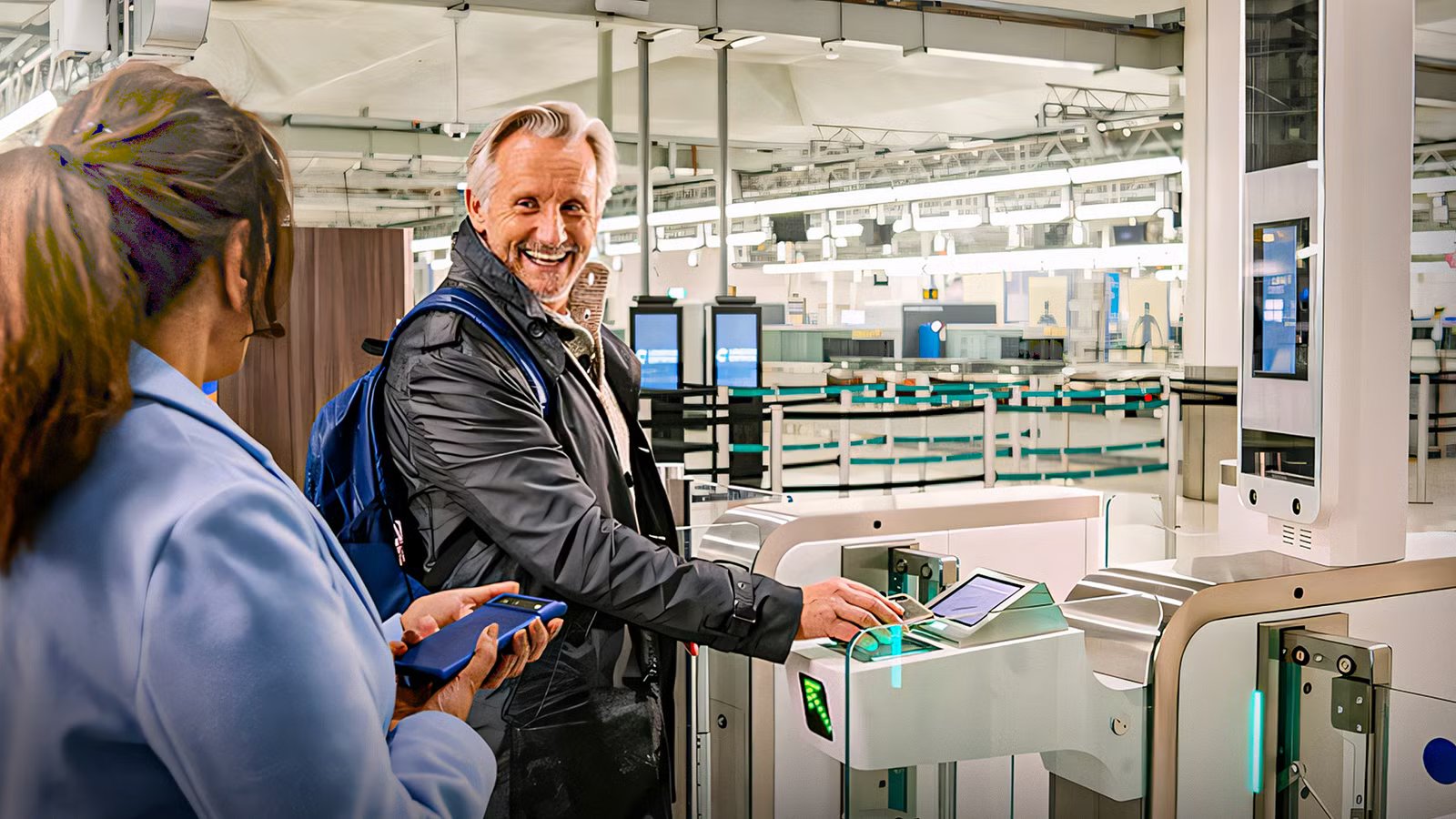
At select UK airports, travelers no longer need to take liquids out of their bags, and the infamous 100 ml rule no longer applies in some cases. Leading the charge is VINCI Airports, a private operator that has a majority stakeholder position in London Gatwick Airport, Edinburgh Airport, and Belfast International Airport. It has been rapidly installing next-generation 3D CT security scanners, which are enabling airports to roll back their decades-old liquid rules.
Across the Atlantic, the TSA awarded a $781.2 million contract in 2022 for its own 3D CT units. These have been installed throughout the country, but a smaller percentage of US airports have received the new scanners. Of course, there’s hardly a comparison between the three UK airports that VINCI manages compared to the hundreds of airports under the responsibility of the TSA. The process has still been quick for the TSA, especially considering the level of complexity that the agency has to navigate through.
The New Scanners

Traditionally, airport security agents check bags using X-rays. The software used by officers assigns different colors to distinguish between various materials, such as plastics and metals. Items like large electronic devices can cast a shadow over items beneath them, which is why they need to be removed and placed in a separate bin. Similarly, X-ray machines have difficulty seeing through thick liquids, resulting in the 100-milliliter rule and the requirement that they be removed from bags.
Newer Computed Tomography scanners use advanced rotating X-ray scans to create hundreds of 2D images at different angles to construct a single 3D image. The system can determine the density and shape of items inside, allowing security officers to view the contents of each bag entirely on the screen. The image can be rotated, and the systems paired with the CT units can automatically flag prohibited items as well as any abnormalities within a given bag.
The CT scanners have small openings that can create bottlenecks, and their automated threat detection systems can be prone to false alarms. In addition, CT machines often destroy photographic film. As a whole, however, they provide much more information to airport security agents and rarely require officers to manually search bags. It’s meant to provide a quicker experience for passengers that’s also more reliable in detecting potential threats than a traditional 2D image.
VINCI’s Roll-Out Of CT Scanners

VINCI Airports has invested heavily in deploying CT systems across its three UK airports: Belfast International Airport, Edinburgh Airport, and  London Gatwick Airport. The roll-out is now complete, meaning that every security lane at these three airports features the updated equipment, allowing for faster security flows with infrequent manual bag searches.
Passengers no longer need to remove liquids or electronic devices from their bags, and passengers may now bring liquids in containers of up to two liters. In addition to the new scanners, VINCI Airports has also redesigned the security halls for these three airports. Each now has more passenger capacity, further reducing security wait times.
Edinburgh now has eight security lanes (an increase of two), whereas Gatwick Airport has 19 security lanes across its North and South terminals. Belfast also has eight security lanes (an increase of two), and at all three airports, every single lane is equipped with 3D CT systems, creating a consistent experience for all travelers.
The UK government set a mandate in 2022 requiring all major airports to be equipped with CT scanners by June 2024, but many airports required further extensions. VINCI partnered with Smiths Detection to begin installing CT scanners at Belfast in 2024, while Edinburgh began receiving the new Smiths Detection units in 2025. Gatwick Airport’s rollout of CT scanners was completed in March 2025, and all three airports now offer far quicker security processing times, typically under ten minutes.
Wow: EU Airports To Ditch 100ml Hand Baggage Liquid Restrictions
The 100ml rule is finally being scrapped after last year’s false start.
The TSA’s Introduction Of CT Scanners

Whereas VINCI Airports is a private company specializing in airport operations, the TSA (Transportation Security Administration) is a federal agency responsible for security at the vast majority of US airports. It’s been testing CT units in airports since 2017, with Phoenix Sky Harbor International Airport and Boston Logan International Airport being the first airports to receive them, and the TSA subsequently operated trials in other airports.
In 2022, the TSA awarded contracts for 469 base-size and 469 full-size CT units, with Analogic receiving the entirety of the contract. These first started being deployed across major airports during the 2022 summer season, but to this day, many US airports still lack these machines. While the deployment has been rapid, it’s estimated that full operational capability won’t be reached until the late 2030s or early 2040s.
UK Airport | Number Of Passengers (2025) | US Airport | Number Of Passengers (2025) |
|---|---|---|---|
London Gatwick Airport | 42.8 million passengers | Hartsfield-Jackson Atlanta International Airport | 106.3 million passengers |
Edinburgh Airport | 16.9 million passengers | New York John F. Kennedy International Airport | 62.6 million passengers |
Belfast International Airport | 6.7 million passengers | Seattle Tacoma International Airport | 52.7 million passengers |
What’s more, the TSA is only installing the machines in certain lanes, rather than fully equipping a terminal or airport. Of course, the major difference is that VINCI Airports is a private operator managing just three airports in the UK, as well as just over 70 airports across the world.
The TSA is a government agency that has to manage well over 400 airports across the US. In addition, the TSA manages some of the world’s largest and busiest airports, such as Atlanta, JFK, Los Angeles, DFW, Chicago, and more. Not only is the agency responsible for a massive portfolio of airports, but many of these have a huge number of security lanes, requiring far more machines than Belfast or Edinburgh.
Airport Management In The US Versus Abroad

While both manage security functions at the airports under their jurisdiction, the TSA and VINCI Airports are fundamentally different types of organizations. VINCI Airports performs several functions at the airports that it manages, including security, but while many US airports are operated by private companies, the TSA is the sole party that manages security. What’s more, many commercial airports are publicly owned, with private companies simply handling day-to-day operations.
But whereas the TSA handles security functions, it doesn’t usually own the checkpoint infrastructure. Installing CT units typically requires a redesign of security lanes, and the deployment also involves installing new automated bin return systems, integrating the equipment with TSA software, and training staff. It requires coordination with several different parties, including the airport authority, the operator (if applicable), as well as with airlines, depending on how capacity is impacted.
The process for VINCI Airports is much simpler since it’s a single entity that controls many functions at its airports, whereas the TSA’s project is inherently more complex. In addition, although VINCI’s CT systems rollout is more straightforward, the TSA has been fairly aggressive in rolling out its own updated scanners. There are now well over 200 airports that have at least one security lane with the system, and the TSA continues to add them at a brisk pace.
Heathrow Just Fixed Airport Security Forever – And It Cost £1 Billion
The future of airport security has arrived in the British capital.
Additional Funding For TSA CT Scanners

After the $781.2 million award in 2022, the TSA awarded additional contracts totaling $1.3 billion in 2023. This was composed of 426 base units provided by Analogic, 359 mid-size units provided by IDSS Holdings, and 429 full-size units provided by Smiths Detection. The newly ordered units started arriving during the 2023 summer season, and the TSA had previously placed large CT scanner orders in 2021 as well as in 2019, in addition to the 2022 award.
VINCI Airports redesigned the entire security checkpoint in its airports as part of the deployment of CT machines, but the TSA is taking a lane-by-lane approach. This means that passengers have different experiences even at the same terminal, depending on which lane they’re assigned to. This helps reduce the impact of the projects, keeping capacity high while minimizing the complexity of each project.
TSA CT Scanner Order Years | Monetary Value Of The Order | Total Number Of CT Scanners Ordered | Supplying Companies |
|---|---|---|---|
2019 | Not stated | 300 scanners | Smiths Detection |
2021 | $198 million | 300+ scanners | Analogic |
2022 | $781.2 million | 938 scanners | Analogic |
2023 | $1.3 billion | 1,214 scanners | Analogic IDSS Holdings Smiths Detection |
In addition, the TSA has been focusing on ensuring that airports have several of these units operational, even if they’re not present in all lanes. The TSA’s roll-out of the scanners is inherently complex, which makes the current status of the deployment extremely impressive.
Ultimately, the US has more commercial airports than any other country in the world, and it’d be unrealistic to expect the new systems to show up everywhere within a few years. However, for those who do experience them, the 3D CT scanners are shortening screening times and allowing passengers to make it to the gate quicker, while reducing the likelihood that their bag will be manually inspected.