dailynewsnblog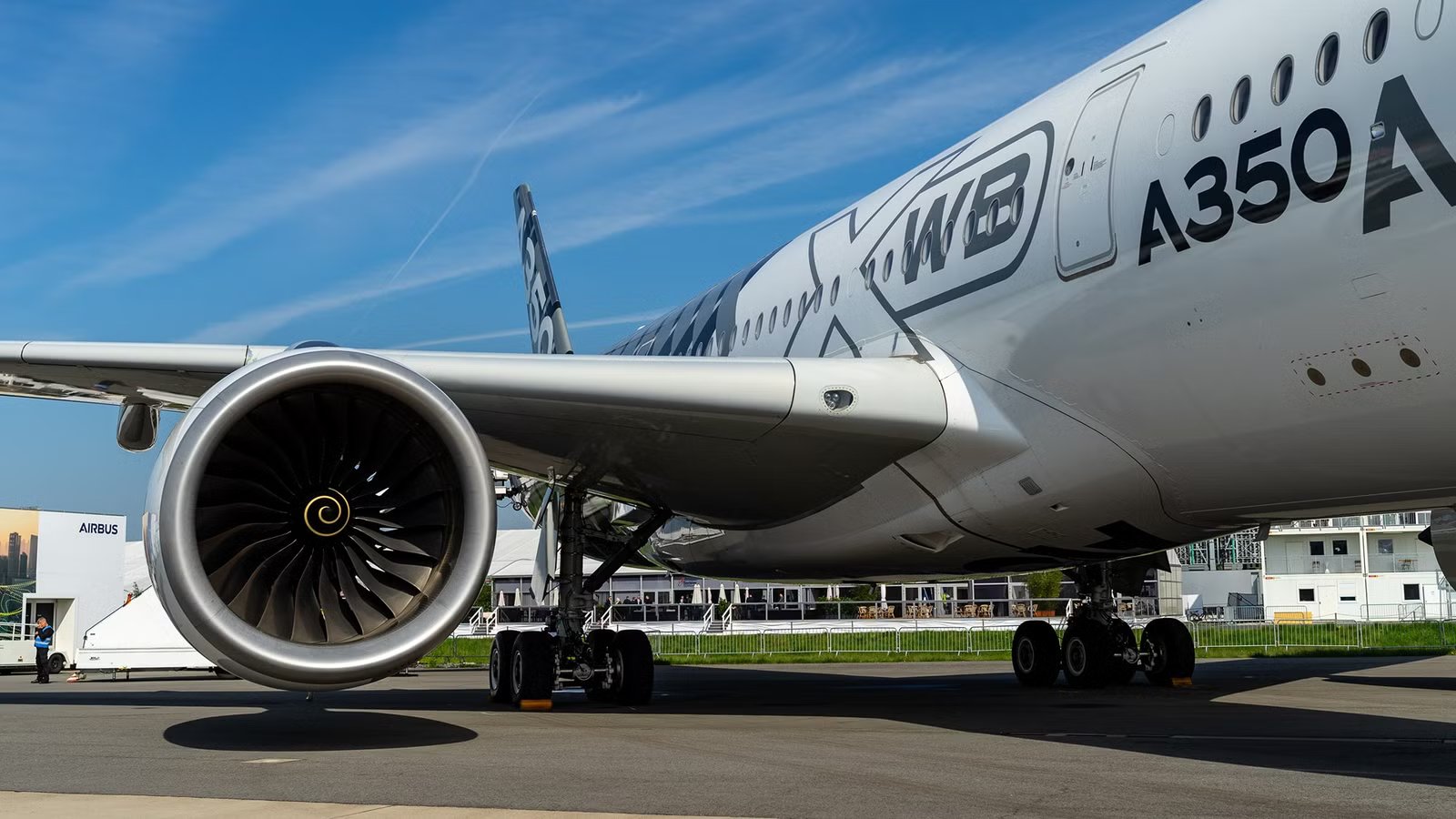
Simple Flying attended a round table with one of the world’s largest manufacturers of aircraft engines, Rolls-Royce, yesterday as the manufacturer celebrated the results of improved thrust-specific fuel consumption (SFC) on its Trent XWB-84 EP engines. Initially, the goal was to save around 1%, but it is now aiming for 1.8%.
1% SFC on aircraft equates to a saving of around $500,000 per year on your annual fuel bill, meaning that airlines that operate up to 20 of these planes could see a total saving of up to $10 million to the carrier’s bottom line. The Trent XWB remains one of the most utilised engines in the world, delivers the lowest fuel consumption among its closest competitors, and is world-leading in reliability for customers globally.
Nine Out Of Ten Profitable Airlines Pick The Trent XWB

Delivering such strong benefits for customers, it is no surprise that 90% of profitable airlines pick the Trent XWB engine, and the significant benefit in fuel savings is crucially important to airlines when the cost of jet fuel continues to rise. Rob Watson, President of Civil Aerospace at Rolls-Royce, told journalists at the pre-Farnborough Airshow, which was attended by Simple Flying, that the XWB-84EP engine, when first launched, had an ambition to deliver up to 1%, through a series of incremental improvements.
These improvements, which have optimized airflow through the engine, have delivered a more efficient engine. The improved engine has been in service for more than a year, with US carrier  Delta Air Lines being the launch customer last year. More than 100,000 hours have since been recorded with that engine program, and results in SFC improvement have almost doubled. Watson explained:
“We are thrilled to bits, and I think in the current environment, if you’re an aircraft operator, that SFC showing up will do better than expected is hugely valuable. 1% SFC on an 84 at an aircraft level is worth about just under $500,000 a year. So if you’ve got 20 aircraft on your fleet, it’s delivering $9 or $10 million worth of cost improvement straight to your bottom line.”
Continuous Improvement Means A More Profitable Operation

Through these latest enhancements, this has strengthened the Trent XWB’s industry-leading engine reliability and can produce greater fuel efficiency, with a lower impact on the environment. The reduction in fuel consumption contributes to annual fuel fleet savings that will reach into the millions, translating to reduced carbon emissions, operating costs, and an overall quieter aircraft.
The engine type itself is already certified to be able to operate with blends of sustainable aviation fuel (SAF) of up to 50%, with a goal to run with 100% in the future. Engineers at Rolls-Royce have been hard at work demanding extensive engine redevelopment and thousands of hours of rigorous testing on the ground and in the air.
Trent XWB-84 EP was certified by EASA in December 2024 and entered service in May last year as part of a $1.33 billion (£1 billion) investment to modernize the Trent fleet. Large airlines such as Delta and  Singapore Airlines have continued to rely on this engine to support their medium- to long-haul and ultra-long-haul operations.
The Real Reason Why Rolls-Royce Owns The Airbus A350 Engine Slot
A closer look at the host of advancements offered by the Trent XWB, and how it continues to develop.
Better Fuel Efficiency And Stronger Network Resilience

The Trent engine can deliver real-world results to improve airlines’ operational efficiency and sustainability goals. The target of 1% improvement in fuel burn, has now been elevated to 1.8%, is a monumental feat, and as a result, now improves the operational costs for its operators.
XWB-84 EP is an evolution that stemmed from the previous A350-900 engine, which had already been one of the most fuel-efficient widebody engines in the market. The A350 is a leader in long-range operations in the 300 to 410 seat category.
Simple Flying’s Managing Editor, Sumit Singh, attended the pre-Farnborough Air Show update on July 2, courtesy of Rolls-Royce. Simple Flying will be attending the Farnborough Air Show, which is set to take place from July 20 to 24 at the Farnborough International Exhibition & Conference Centre in Hampshire, England.