dailynewsnblog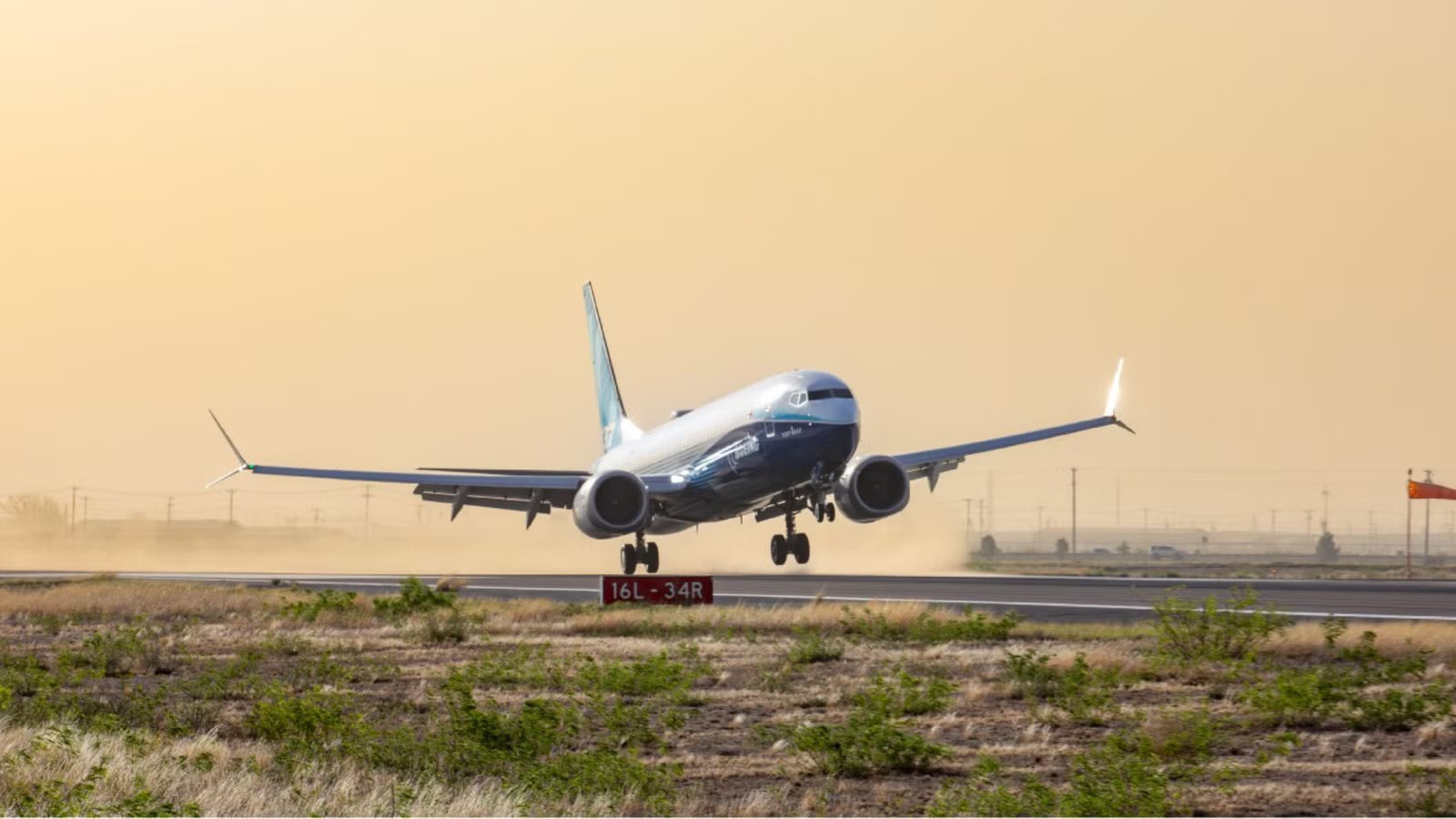
The road to aircraft certification is rarely built around smooth flights and predictable weather. Some of aviation’s most important developments emerge when engineers deliberately seek conditions that push an aircraft beyond routine operating environments, forcing technology to prove itself where precision becomes critical. For the Boeing 737 MAX 10, that moment arrived during a series of demanding crosswind evaluations designed to assess the aircraft’s autoland capability under extreme wind conditions.
Rather than waiting for ideal weather, Boeing flight crews actively tracked forecasts and pursued strong gusting conditions over Midland International Air & Space Port (MAF), Texas, where rapidly changing winds created a realistic testing environment, though the manufacturer did not directly disclose the actual conditions. The campaign forms part of the certification process for the 737 MAX 10, the largest member of Boeing’s MAX family.
Chasing Extreme Conditions for Certification

Unlike conventional airline operations that attempt to avoid severe weather whenever possible, certification programs often require crews to seek out difficult environments intentionally.  Boeing monitored weather systems closely and operated on short timelines, sometimes relying on only two or three days of accurate forecasting before deploying aircraft for testing. Flight test engineer Lauren Auerbach explained that teams effectively remain on “wind watch,” adding that crews are often “ready to launch within a couple of days’ notice.”
The purpose of these flights extended beyond determining whether the aircraft could simply land safely. Dan Mangel, the Boeing pilot who flew the tests, said the team was assessing whether the aircraft’s autoland system was “performing appropriate, timely corrections to the flight path” while “staying within the lateral confines of the runway.”
Crosswinds pose a unique challenge because they constantly push aircraft off their intended flight path. A steady crosswind already requires continual correction, but gusty winds make the situation more difficult, as intensity and direction can change within seconds. Automated systems therefore have to process changing data continuously and make corrections almost instantly. Mangel noted that some scenarios introduced conditions significantly beyond standard requirements.
“A lot of the tests were performed at winds actually in great excess of the requirement.”
What Makes The MAX 10 Different From The Rest Of The Family?

As the largest member of the series, the MAX 10 stretches the long-running 737 platform to approximately 143 feet 8 inches (43.8 m), making it around 5 feet 2 inches (1.6 m) longer than the MAX 9. In a standard two-class configuration, it typically seats around 204 passengers, while denser layouts can accommodate as many as 230 passengers, increasing capacity for airlines operating high-demand routes.
The aircraft’s larger dimensions required engineering changes beyond simply extending the fuselage. Boeing introduced a modified levered landing gear design and strengthened systems to support the increased size and weight of the aircraft. While the MAX 10 retains the same 117 feet 10 inches (35.9 m) wingspan used throughout the MAX family, differences in weight distribution and structural characteristics can affect handling qualities during approach and landing. Mangel emphasized that despite those changes, the aircraft was “specifically tuned to give it the same characteristics as the other models.”
Performance figures place the aircraft in one of the industry’s most competitive segments. Powered by two CFM LEAP-1B engines generating approximately 29,300 pounds of thrust each, the MAX 10 has a maximum takeoff weight of nearly 198,000 pounds (90,000 kilograms). It cruises at approximately Mach 0.79 (453 knots) and can operate routes up to roughly 3,560 miles (5,740 km), depending on configuration.
The Striking Differences Between The Airbus A321XLR & Boeing 737 MAX 10
The Airbus A321XLR and Boeing 737 MAX 10 represent the pinnacle of evolution in the aviation industry, pushing narrowbodies to their absolute limits.
A Key Step Toward Entry Into Service

The wind campaign represents only one component of a much larger certification effort involving multiple aircraft, hundreds of flight hours, and extensive technical analysis. Modern aircraft certification extends beyond flight testing and includes detailed assessments of braking systems, hydraulics, engines, flight controls, and failure scenarios before regulators approve entry into service.
The MAX 10 program also involves substantial behind-the-scenes engineering work. Boeing engineers are conducting extensive System Safety Assessments designed to evaluate how systems behave under potential failure conditions and how backup systems respond. The process includes examining first-, second-, and third-order effects across multiple aircraft systems. The aircraft also carries major commercial significance, with the MAX 10 attracting more than 1,200 orders and commitments globally. Among the largest customers is Ryanair, which placed an order for up to 300 MAX 10 aircraft, including 150 firm orders and 150 options, as the airline pursues long-term fleet expansion plans.
For passengers, these evaluations may remain almost entirely invisible long before an aircraft reaches airline fleets. Yet behind every routine landing lies a complex effort involving engineers, meteorologists, test pilots, and regulators working to ensure the aircraft has already been pushed into some of the most challenging conditions it may ever encounter in service. As flight controls engineer Arlo Shen observed, teams involved in the program “truly believe in the work that they’re doing.”


![5,100 Miles: Inside The USA’s 11 New Longest Nonstop Domestic Flights [List & Map]](https://dailynewsnblog.com/wp-content/uploads/2026/09/united-airlines-boeing-767-400er.jpg)