dailynewsnblog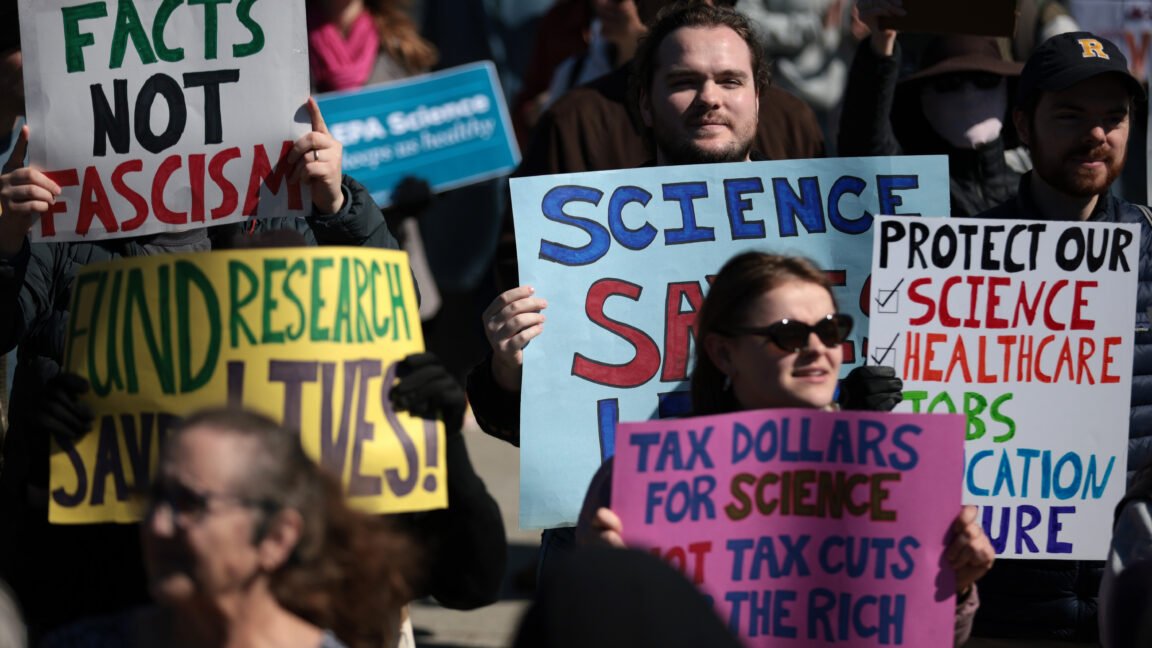
Shane Jacobson, CEO of the American Cancer Society, had similar thoughts. “Codifying shifting policy preferences into formal federal regulations risks triggering repeated cycles of overhaul with each change in administration,” he said in a statement. “Such back-and-forth would create a chronically unpredictable environment, making it extremely difficult for institutions and investigators to plan and sustain the multi-year, long-term research essential to clinical trials and breakthrough discoveries that patients urgently need.”
Nancy Brown of the American Heart Association echoed these worries, saying, “Policies that undermine independence or shift decisions away from established scientific and public health expertise risk weakening the innovation and collaboration needed to meet current and future health challenges.”
And it’s not just the people in the biomedical sciences who are worried. The American Geophysical Union called the change “a rule that would rewrite the terms of US science” and accused the government of “using the language of scientific rigor as a screen for political gatekeeping.” Its statement echoed a number of the concerns in Ars’ coverage.
“Political officials would have the authority to reject proposals that passed rigorous expert evaluation if they determine the work does not advance ‘the President’s policy priorities’ or is inconsistent with ‘the national interest,’ which could change or reverse course at any moment,” its statement said. “We have spent generations building peer review precisely because decisions about which science to fund should rest on scientific merit, not political alignment. This proposal would undo that.”
The American Physical Society was equally blunt. “These proposals would let political preference override expert peer review, restrict travel, limit collaboration, impede the sharing of results, and affect programs that train the next generation of scientists,” it said. “The proposed federal rule would establish regulations that would have politics shadow every research dollar, making it far harder to undo, no matter who holds office next.” In a follow-up, it said, “The proposal crosses the line, threatening all science, under any administration, now and into the future.”