dailynewsnblog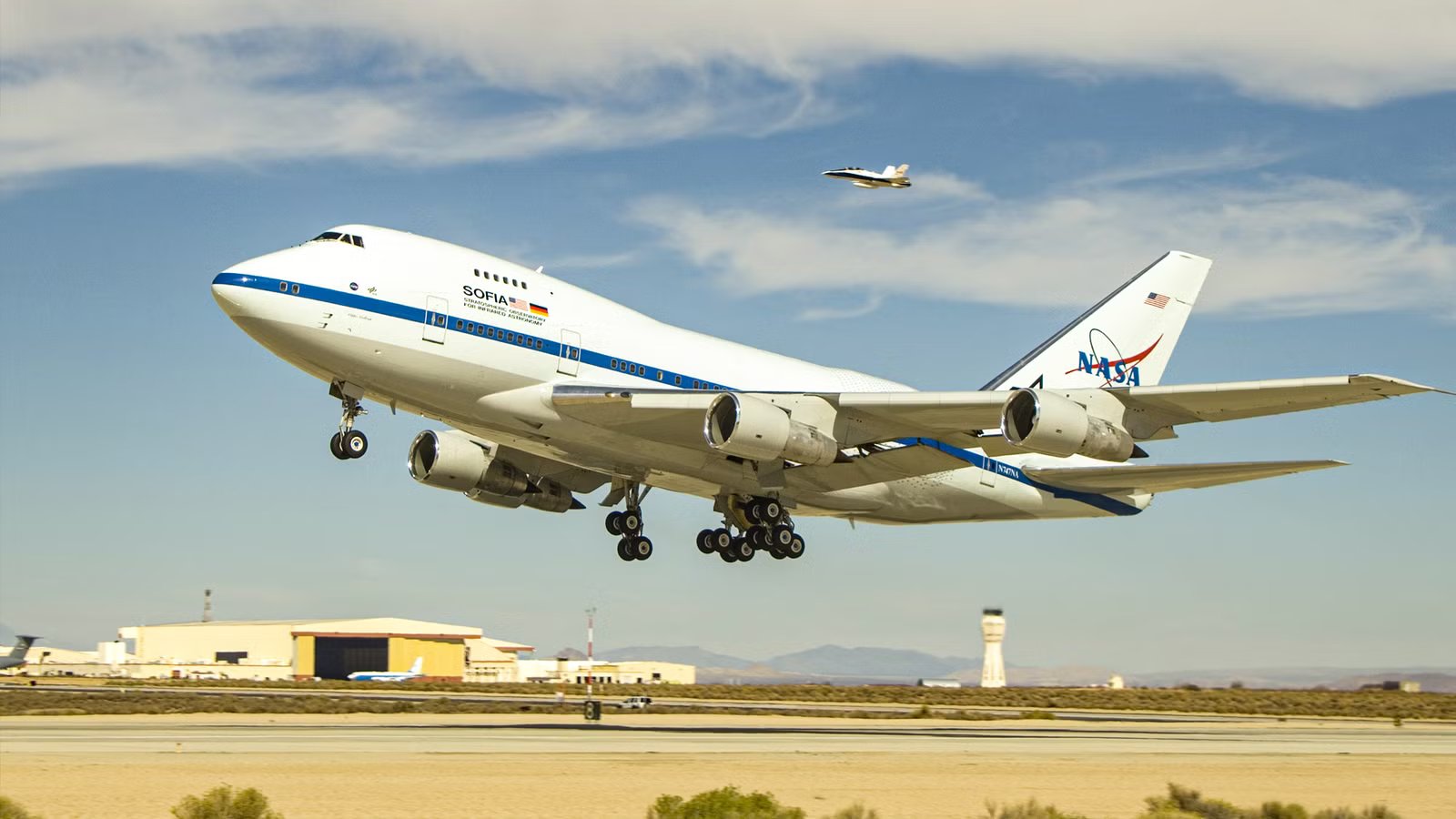
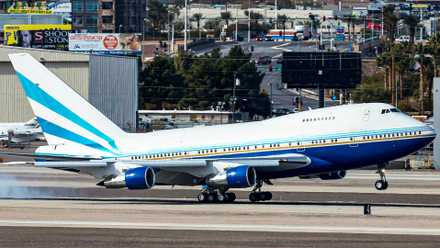
Those attending the 2015 SBD Fest at San Bernardino International Airport (SBD) may have been lucky enough to catch a glimpse of the infamous Boeing 747SP. Just 45 of the shrunk-fuselage long-range jets were built in total, placing the models among the rarest widebodies ever produced.
But this particular model, registered “N747A” by its final owners, had a fascinating backstory that may not have been immediately obvious to those at the air festival back in 2015. Having first been delivered in 1980, N747A enjoyed a near-40-year career, changing hands several times.
From Braniff To NASA

N747A’s list of owners offers an intriguing story of the airframe itself. The 747SP began its journey at Braniff International Airways in May 1980 after rolling off the production line at Boeing’s Everett production site in Washington, according to Planespotters.net. The following six years saw the aircraft then move from Braniff after the airline collapsed in 1982, to Pan Am for a two-and-a-half-year stint, and then to United Airlines, where it remained until early 1993.
At this point, the 747SP had flown its final conventional passenger service. Its moves between Braniff, Pan Am, and United saw varying seating configurations installed to shift its capacity from 293 seats across two classes to three-class layouts with 225 seats, and finally to 143 seats. But a move to the Royal Flight of Oman meant that the typical passenger seats were stripped out, marking the start of its career as a VIP airliner.
For over 11 years, N747A has been used as transport for Oman’s royal family and government officials. Then, from October 2004, the aircraft faced storage at various locations before another owner emerged. Fry’s Electronics took the jet off the Royal Flight of Oman’s hands in late 2006 and began operating it as a VIP carrier roughly a year later. Here it was registered as “N747A” and named “Clipper America” – perhaps a nod to its time at Pan Am, where it flew under the same name. But the airframe’s days were numbered, and in 2016 it entered storage in the Mojave Desert, where it was ultimately bought by NASA for spare parts the following year.
Passenger Aircraft, VIP Jet, And Supporting Test Flights

Coming from a line of exceptionally rare aircraft, N747A’s accolades speak for themselves. Not only did the aircraft serve three airlines as a specialist long-range carrier, but it also served as a VIP airliner for multiple owners before finally supporting research operations at NASA.
While the aircraft itself never appeared to fly under NASA colors, having instead been bought to be cannibalized, its parts will no doubt have proved invaluable to the space agency. Given their scarcity, sourcing spare parts for the remaining 747SPs was a challenge operators had to work around.
Catch what other flight trackers miss
Emergency squawks, holds, NOTAMs — live signals, no signup.
Open tracker
Catch what other flight trackers miss
Emergency squawks, holds, NOTAMs — live signals, no signup.
Open tracker
NASA’s 747SP, named Stratospheric Observatory for Infrared Astronomy (SOFIA), saw service from 2014 to 2022, according to the space agency. Fitted with a reflecting telescope that would take the aircraft to altitudes of up to 45,000 feet, it was designed for astronomers to study the solar system from a point above most of Earth’s infrared-blocking atmosphere. Based on the 747SP website, N747A’s engines were removed in March 2018 to be reconditioned for SOFIA.
Why The Boeing 747SP’s Ultra-Long-Range Fuselage Design Will Be Nearly Impossible To Replicate In 2026
The Boeing 747SP remains one of the most unique aircraft in commercial aviation history.
Boeing 747SP Itself

Why the N747A was used in several different settings is down to the 747SP’s versatility. Boeing developed the variant to compete with the McDonnell Douglas DC-10 and Lockheed TriStar back in the seventies. Its first flight took place in July 1975, before the aircraft entered commercial service the following April.
This meant the 747SP was developed soon after the original Queen of the Skies, the Boeing 747-100, and launched following the Boeing 747-200, using a shortened version of the latter’s fuselage. The 747SP – or “Special Performance” – offered  Boeing something its predecessors could not, though: A foothold in the smaller end of the widebody market. While arguably just as groundbreaking, the 747-100 and -200 were simply too big to compete with the likes of the DC-10 and TriStar mentioned above.
Boeing 747SP technical specifications:
Wingspan | 195 feet 8 inches (59.64 meters) |
Overall length | 184 feet 9 inches (56.31 meters) |
Fuselage length | 173 feet 11 inches (53.01 meters) |
Height | 65 feet 5 inches (19.94 meters) |
Maximum take-off weight | 659,890 lb (299,320 kg) |
Maximum cruising speed | 581 mph (935 km/h/Mach 0.88) at 35,000 feet (10,670 meters) |
Economic cruising speed | 568 mph (914 km/h/Mach 0.86) at 35,000 feet (10,670 meters) |
Service ceiling | Approximately 45,000 feet (13,700 meters) |
Range | 6,650 nautical miles (12,320 km) |
Engine | Four Pratt & Whitney JT9D-7R4W or Rolls-Royce RB211-524C2 turbofan engines |
Measuring 184 feet 9 inches (56.1 meters) in total, the 747SP’s length was well off the 747-100’s 231 feet 11 inches (70.7 meters), hence its stubby appearance. This helped boost the 747SP’s range to 6,650 nautical miles (12,320 km), far exceeding the 4,620 nautical miles (8,560 km) of the 747-100, however. As such, the model held the title of longest-range widebody at the time until the 747-400 came along in 1989.
Catch what other flight trackers miss
Emergency squawks, holds, NOTAMs — live signals, no signup.
Open tracker
Catch what other flight trackers miss
Emergency squawks, holds, NOTAMs — live signals, no signup.
Open tracker
747SP’s Popularity Never Really Took Off

Pan Am swooped for the 747SP just weeks after the program was approved by Boeing. Through a deal valued at approximately $280 million, the airline ordered ten aircraft and left options for fifteen more. For the airline, the aircraft offered the perfect solution for long, thin routes, where the range of the first 747s was too low, and their capacities were excessive.
The squashed design and extended range are arguably why the 747SP also became popular among governments and private owners. Indeed, the penultimate and final models were delivered to the Iraqi and United Arab Emirates governments respectively. Interestingly, these rolled off the production line almost five years apart, but that is a story for another time.
Aside from NASA’s research missions, two 747SPs also found a home as testbeds for Pratt & Whitney engines in later life. However, the 747SP failed to attract buyers in any great numbers, and despite the versatility proven by N747A’s own history, the test of time was just too much for the variant.

Inside Pan Am’s 1986 Boeing 747SP Cabin
Pan Am’s Boeing 747SP featured luxurious cabins and dining, reinforcing its legacy.
Why So Few 747SPs Were Built

While the 747SP outdid the likes of the DC-10 and TriStar in range, it was inferior to the duo in fuel burn. Four engines simply required more fuel than the trijets the 747SP was designed to compete with. Such sustained operating costs, coupled with the reduction in seat capacity and revenue, ultimately proved too great for the masses to ignore.
Boeing, as mentioned, produced just 45 of the airliners as a result. While this meant the manufacturer hit its initially projected break-even point, the figure was well off the 214 sales Boeing had estimated in the meantime. As it turned out, the emergence of newer long-range jets in the eighties and nineties meant the economics of the 747SP became increasingly unfavorable.
Boeing may well have helped to dig the 747SP’s grave with the release of the likes of the 747-400, too. At well over 7,000 nautical miles (12,964 km), the -400’s range proved to exceed its specialist predecessor without the need to forgo capacity. Another factor that would have done little to help was the collapse of the 747SP’s biggest customer, Pan Am, into bankruptcy in the early nineties. All this goes to say that the odds were stacked against the 747SP over time, and most airline operators had retired the variant by the early 2000s, leaving just a select few with the model on their books.
Boeing 747SP’s Story Not Over Just Yet

Today, just a handful of operational 747SPs remain, leaving the variant’s story not quite over just yet. Two of these belong to Pratt & Whitney and serve as test beds for engines. The final active model was reportedly in the hands of the Saudi Arabian Government as of early this year, according to theaviation website Airport Spotting. Although spotting a 747SP in flight now may be a big ask, several more remain preserved or stored around the world, meaning catching a glimpse of the unique airframe is by no means impossible.
N747A itself offers a glimpse into the overall story of the 747SP. From passenger services to a VIP aircraft to supporting research at NASA, the model proved valuable in several different settings. Its own experience really sums up how, despite ultimately being among just a small number built, the 747SP deservedly wrote its name into the history books.