dailynewsnblog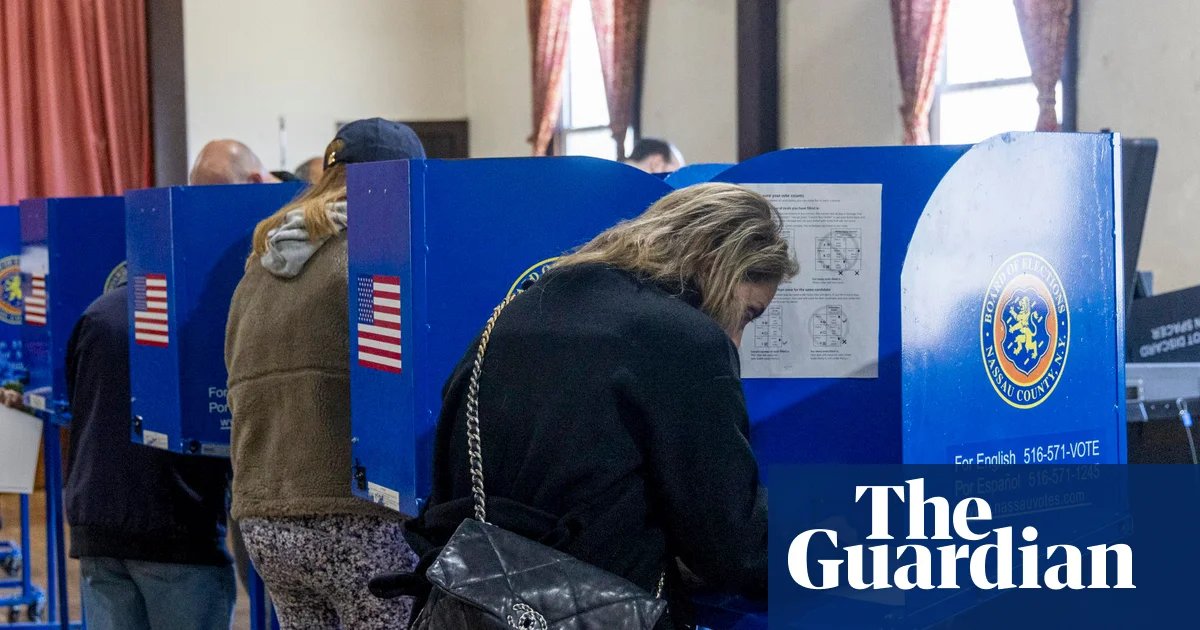
One of the last remaining barriers between wealthy donors sending unlimited funds to federal political candidates fell after the US supreme court struck down a lower court ruling that limited spending by political parties in support of their candidates.
“A BIG WIN FOR REPUBLICANS and, more importantly, The First Amendment!” wrote Donald Trump in a post on Truth Social.
The first amendment of the US constitution includes protections for free speech, and the supreme court has repeatedly ruled that campaign spending is a form of speech.
The case, National Republican Senatorial Committee v Federal Election Commission, stems from a 2022 lawsuit by JD Vance, Republican former congressman Steve Chabot of Ohio, the National Republican Senatorial Committee and the National Republican Congressional Committee, challenging the Federal Election Commission’s enforcement of limits on so-called “coordinated party expenditures”.
The US supreme court has chipped away at restrictions on political donations and spending over the last two decades. The Citizens United v FEC ruling of 2010 struck down federal restrictions on corporate spending by independent groups influencing elections, followed in 2014 in McCutcheon v FEC, which struck down the aggregate limits on how much an individual may contribute to all candidates and committees combined in an election cycle.
Together, this led to the rise of Super Pacs raising and spending unlimited amounts of money on campaigns, which is legal as long as there is no coordination between the organization and the candidate. Meanwhile, large contributions to joint fundraising committees allowed parties and candidates to raise funds together under their combined limits.
Representative Richard Hudson of North Carolina and Senator Tim Scott of South Carolina, chairs of the Republican party’s campaign committees in their respective chambers, hailed Tuesday’s decision as “a major win for the integrity” of the US political system.
“The supreme court made clear that the federal government has no authority to place arbitrary limits on how political parties support the candidates they nominate,” Hudson and Scott argued. “By striking down these unconstitutional caps on coordinated spending, the court has restored core political speech and ensured parties can compete on a level playing field.”
Democratic leaders, conversely, described the ruling as eliminating a key safeguard against election corruption.
“House and Senate Democratic candidates have consistently outraised their Republican opponents, powered by strong grassroots support from voters,” the Democratic National Committee wrote in a statement with the Democratic Senate and House campaign committees. “Republicans’ scheme to overturn campaign finance law is a clear and blatant effort to rewrite election rules for their own benefit and spend more money from billionaires to prop up their candidates.”
Tuesday’s decision is just the latest in a long trend, campaign finance experts said.
“The decision was not a surprise,” said Erin Chlopak, senior director of campaign finance at Campaign Legal Center, and a former senior attorney at the Federal Election Commission. “The fact that the court took this case when there’s already settled law from the supreme court question that was before the court was not a good sign to begin with. The fact that the government chose not to defend its own law also was not a good sign.”
Vance and the plaintiffs argued that limits on political party spending are unnecessary when Super Pacs have no meaningful restrictions. The law as it stands “severely restrict political party committees from doing what the first amendment entitles them to do: fully associate with and advocate for their own candidates for federal office”.
The Trump administration supported Vance’s case, leading the court to appoint outside counsel to represent the FEC, which has not had a quorum since April 2025 and cannot initiate enforcement actions. Roman Martinez, advocating to uphold the law, argued that ending the limits effectively legalizes quid pro quo political corruption, and that Vance’s claim is moot because the vice-president has “repeatedly denied having any concrete plan to run for office in 2028”.
after newsletter promotion
The ruling undermines laws that were meant to prevent the creation of the kind of slush fund that led to Richard Nixon’s Watergate scandal, according to Eric Petry, counsel in the Brennan Center’s Elections and Government Program.
“This is another example of the court’s drive to destroy anti-corruption laws and drive to undermine campaign finance laws in this country,” Petry said. “The court has just been extremely hostile to any sort of restriction on campaign finance limits in adopting this really radical and wrong interpretation of the first amendment.”
Justices opined that their rulings should not be expected to lead to broad evasions of campaign finance rules that have continued to escalate, Petry said. “We saw donors like Elon Musk spending a quarter of a billion dollars in the ‘24 election cycle through their own Super Pacs.”
It was not clear how much of an impact this ruling will have because the state of campaign finance regulation today is deeply compromised, he added.
A fully appointed Federal Election Commission has six members, with no more than three from any single political party. Without at least four members, it cannot take substantive action such as opening an investigation, issuing fines, or creating new rules. It currently has two members, and Trump has refrained from appointing more.
Corporations and wealthy people are pouring money through the gap, particularly among technology firms facing public backlash over datacenter placement and artificial intelligence policy. “AI spending is already the largest spending loop, and they have lots of money in their war chest,” said Petry. “That’s going to be a huge story over the next several months, and going forward.”