dailynewsnblog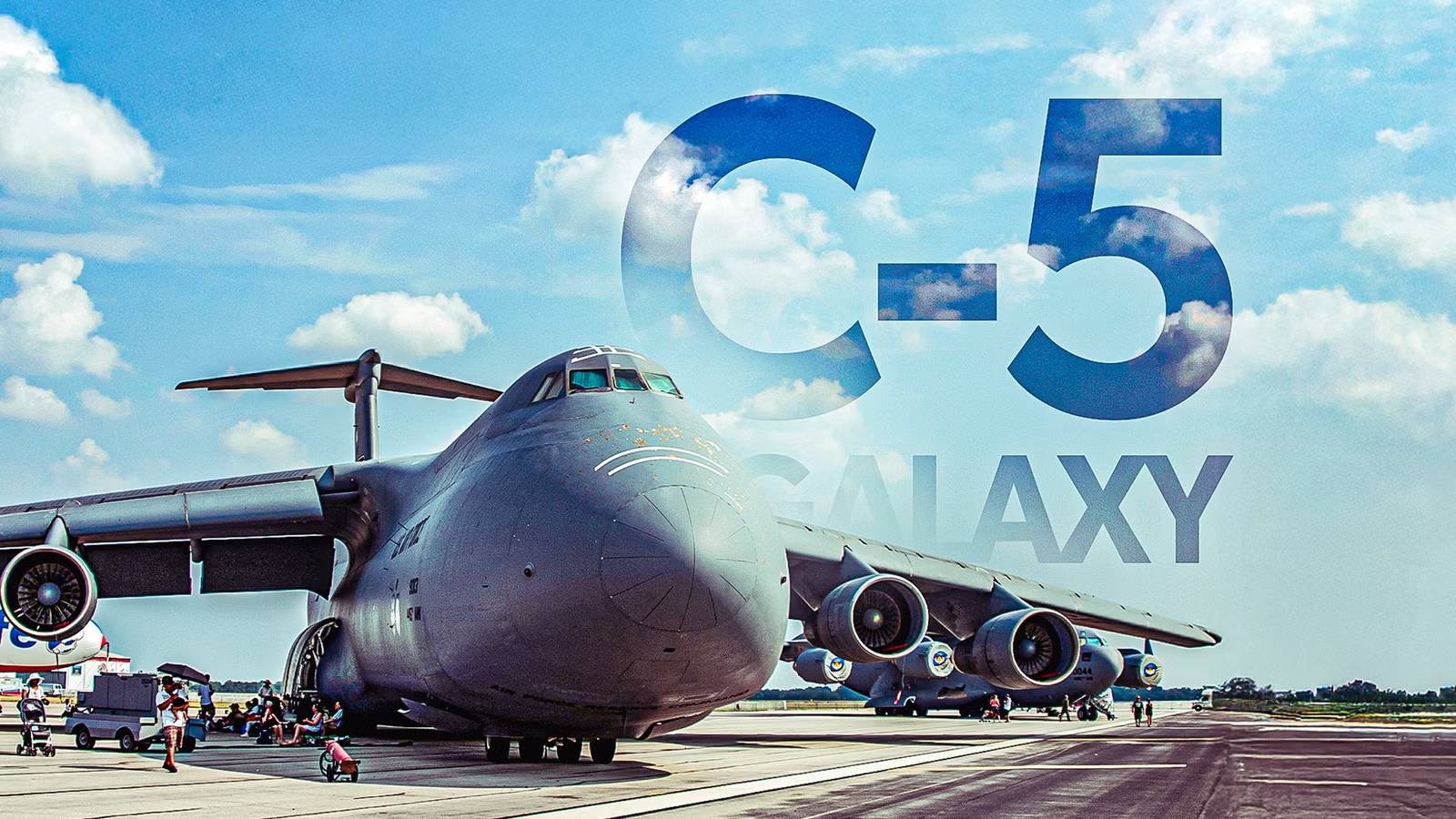
When it comes to tactical airlift, choosing the right tool for the job makes all the difference, and when size matters, there’s only one answer in the US Air Force: the Lockheed Martin C-5M Super Galaxy. The behemoth jet was built in the 1960s to deliver main battle tanks, assault helicopters, and even fighter jets to the front line from across the Pacific Ocean.
In 2026, the C-5M remains the ultimate answer in strategic transport for the US military as it pivots to the Pacific and reorganizes for a future battle space spread across vast expanses of open ocean. Under the doctrine of Agile Combat Employment, the US Air Force will rely on the C-5M to sustain fighter and bomber squadrons deployed to remote islands.
It can also be used to reposition entire squadrons of advanced ‘loyal wingman’ drones, and even set up and tear down temporary airfields for aircraft on the move. The extreme engineering of the Super Galaxy is the only way it’s possible to accomplish any one of these missions in a single sortie.
No Shortcuts For Sheer Power
The Drive-Through Cargo Bay

The C-5M Super Galaxyis the largest airlift plane in the western hemisphere by volume, and only one plane slightly edges it out as the absolute champion, the Ukrainian-made Antonov AN-124 Ruslan. While the Antonov has an edge over the C-5M in tonnage and volume in payload capacity, the Super Galaxy makes up for that with superior performance, advanced engineering features, and virtually unlimited range thanks to aerial refueling, which the AN-124 cannot match.
Looking at the US Air Force fleet, we find an even more stark comparison. Indeed, the C-5M can haul almost double the capacity of a Boeing C-17 Globemaster III, the second-largest airlifter in the USAF. Compared to the Lockheed C-130J Super Hercules, the frontline workhorse of the US Armed Forces, the Super Galaxy can accommodate almost eight times the payload. Even with its colossal mass, the C-5M is still built to be as rugged as its smaller cousins.
The Super Galaxy was specifically designed not only to carry an enormous amount of equipment but to rapidly unload and offload those vehicles or pallets. The way the plane achieves that is by opening its huge hinged nose door as well as the rear cargo ramp to allow for simultaneous drive-through loading and unloading. The C-5Mis also the only split-deck cargo jet in the USAF with an upper deck completely separated from the cargo bay for troops, gear, and a crew rest compartment.
Just In Time Delivery, Any Time, Anywhere

Lockheed specifically set out to meet the US Air Force’s goal of crafting a single jet that could change the balance on the battlefield in a single sortie. The C-5M combines several engineering solutions to make the Super Galaxy a ‘one-ship army’ of global logistics for the US military. It has an unheard-of aerial refueling capability for a plane of its size, combined with kneeling landing gear, cargo deck rail tracks, plus an onboard winch and even an overhead crane in the cargo bay.
By design, the C-5M is the ultimate expeditionary support platform for large-scale deployments and repositioning across the globe. A small crew can manually push 36 standard 463L pallets down the length of the football-field-sized bay and lock them into place in minutes. The rail deck is equipped with permanently installed rollers and tie-down points that are almost instantly reconfigurable.
Meanwhile, the overhead crane can reposition disabled vehicles or heavy equipment like jet engines quickly and easily without the need for a forklift. The C-17 has a highly advanced floor design, but it requires reconfiguring floor panels manually to switch from rolling pallets to driving vehicles. The C-130 also has a roller system, but requires crews to do even more manual work when carrying outsize and irregular loads, making every sortie a little slower.
When faced with loading outsized equipment, they will typically need K-loaders or mobile cranes to assist for safe and rapid work. Because passengers need to share the deck with cargo, precious space must be sacrificed to make the cargo bay safe and navigable in flight.
Why The US Air Force Believes 1 Aircraft Can Replace Both The C-17 Globemaster & C-5 Galaxy
The USAF’s NGAL aims to replace both the C-17 and C-5 with one aircraft—blending tactical agility and massive lift into a single future platform.
No Sidekick Necessary
Flying Solo On The Super Galaxy

To leverage the efficiency of the drive-through cargo bay design with its built-in handling equipment, the C-5 can also lower its landing gear into a kneeling position that maximizes the combined potential of all of these features. Its unique landing gear system with hydraulic actuators can lower the entire fuselage closer to the tarmac while parked.
This is tailored to bring the floor level of the main cargo deck down to about six feet off the ground outside the plane, which matches up squarely with the average height of a flatbed truck’s tailgate. This feature dramatically reduces the slope angle of both the front and rear loading ramps, which greatly speeds up the process and eliminates the need for too many pieces of ground support equipment.
The C-17 and C-130 sit at a fixed height, so crews may be forced to assemble external, temporary ramp extensions to prevent loading vehicles from high-centering or scraping. The C-5’s kneeling ability is particularly valuable when transporting heavy, delicate equipment that will be moved by truck before and after delivery, like jet engines.
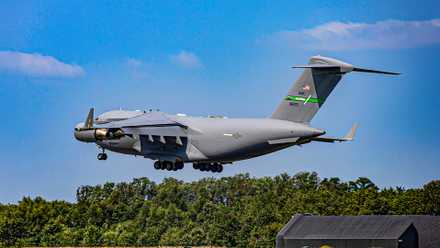
How The C-17 Globemaster Drops 25,000 Feet In 2 Minutes Using Inflight Reverse Thrust
The incredible engineering of the USAF’s unique airlifter.
Catch what other flight trackers miss
Emergency squawks, holds, NOTAMs — live signals, no signup.
Open tracker
Catch what other flight trackers miss
Emergency squawks, holds, NOTAMs — live signals, no signup.
Open tracker
The Economics Of Airlift
Room For Everything But First Class

If we were to make an analogy between commercial aviation and the biggest names in the USAF’s cargo fleet, the C-5 would be akin to an A380. Meanwhile, the C-17 would be comparable to your typical mainline single-aisle jet, and the C-130 would be more like a regional plane. In a single sortie, the C-5M can deliver two US Army M1A2 Abrams tanks simultaneously, or an entire combat-ready package: two Bradley Fighting Vehicles, support Humvees, ammunition pallets, and the troops too.
Not surprisingly, their mission sets are comparable as well. The Super Galaxy delivers staggering amounts of cargo every time it touches down, and the Globemaster can support these large missions or run ‘long and thin’ routes. The Super Hercules handles the ‘last mile’ deliveries, getting into the smallest airfields where its larger counterparts simply won’t fit.
At the same time, despite the misconception that it’s delicate, the C-5 isn’t restricted to pristine airfields if there’s enough room for it to touch down. Indeed, the C-5M’s 28-wheel landing gear distributes its massive weight so effectively that its footprint pressure allows it to land on the same unreinforced, temporary, or damaged runways as a fully loaded C-17.
Thanks to flotation landing gear, the C-5M brings twice the firepower of a C-17 into the same rugged, forward-deployed environment in a single landing. This is where the autonomy of the C-5M comes into the spotlight as well, as both the C-17 and the C-130 lack comparable built-in support equipment that rapidly perform offload and unload the same outsized cargo in the field.
What The C-130J Super Hercules Delivery Halt Means For The US Air Force & Lockheed Martin
The newest Herk hits turbulence.
Firepower On Demand
Heavy Metal Express Air Mail

The C-17 can deliver a single Abrams main battle tank, making it a very flexible and valuable support platform alongside the C-5M, but during massive strategic movements, the Super Galaxy shines. Not only because the bigger Lockheed can move two tanks at one time, but also because it can do it faster and more efficiently. To unload an Abrams tank or heavy vehicles from a C-17, the crew must manually flip the floor panels from pallet rollers to flat floor mode.
Because the C-17 only has a rear ramp, vehicles must be backed out slowly. However, the C-5M uses its hydraulically powered kneeling gear to flatten the ramp angle, so the massive tanks can exit effortlessly on touchdown. Thanks to the nose door and its rear ramp opening simultaneously, the Abrams simply drives straight out of the nose and onto the battlefield. As these tanks are exiting from the front of the jet, medical evacuees or disabled vehicles can be loaded in the rear during intense combat operations.
While the Super Hercules can’t haul a main battle tank at all, a clear comparison can also be drawn between the C-130J and the C-5M when it comes to transporting troops. The Super Galaxy can deliver a rapid response force of almost 300 soldiers with all of their combat gear in a single sortie. That includes tactical vehicles and a two-week supply of consumables like rations and ammunition. Meanwhile, the Super Hercules can only manage about 90 soldiers with zero vehicles or heavy gear.
Troop transport isn’t just about getting bodies to a location: it is about ensuring those soldiers are physically ready to fight the moment they step off the plane. In a C-130, soldiers sit on low-slung nylon web seats along the freezing, vibrating walls of the cargo bay. They are crammed shoulder-to-shoulder versus the pressurized passenger deck on the C-5M. Flying in theater on the Super Galaxy means commercial-style airline seats with dedicated restrooms and a galley, completely separated from the cargo bay.