dailynewsnblog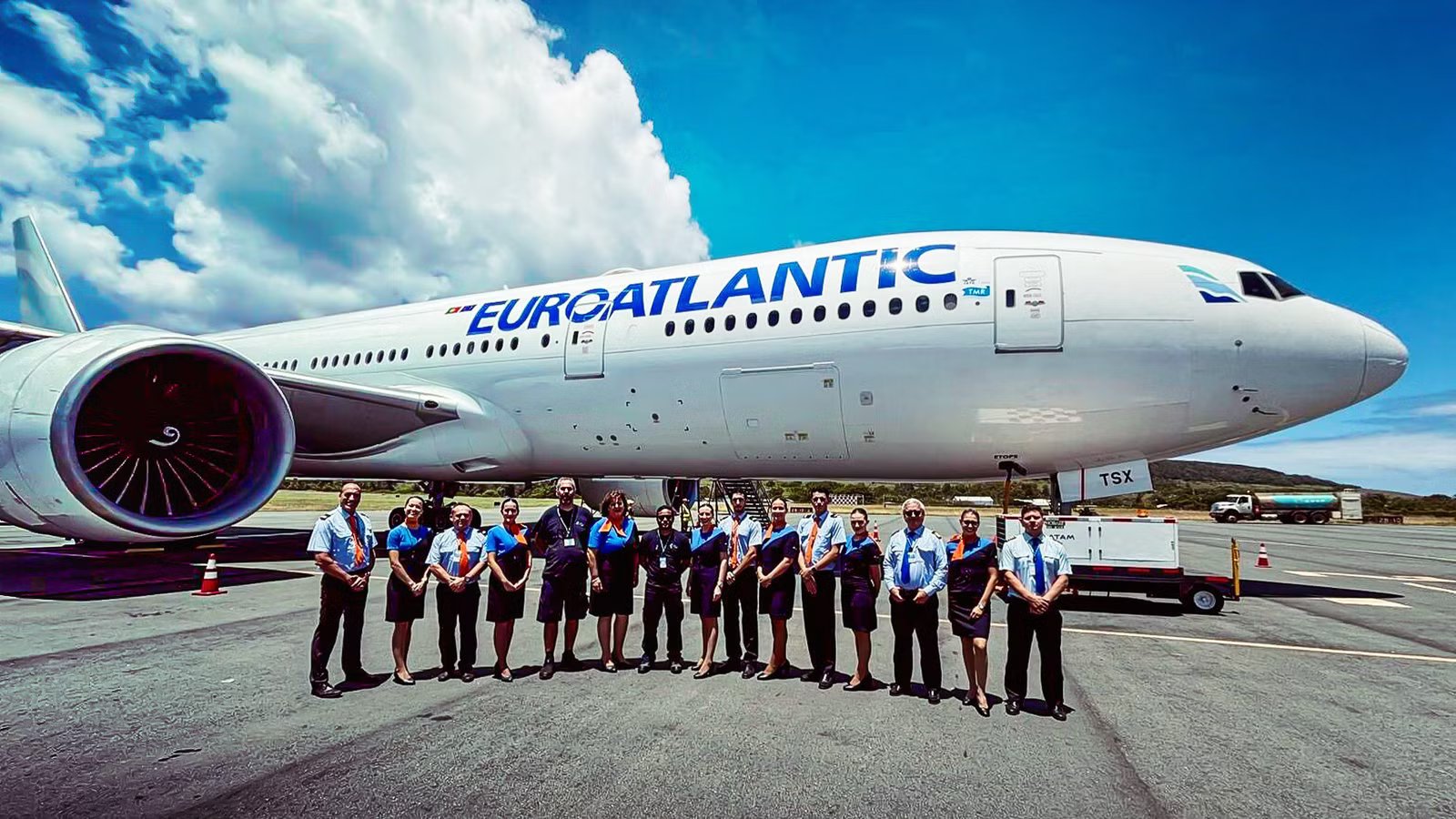
At the IATA Annual General Meeting in Rio de Janeiro earlier in June, Simple Flying sat down with euroAtlantic Airways CEO Pauls Calitis for an exclusive discussion covering the Portuguese carrier’s long-term strategy, fleet evolution, and his transition into the top role. Having joined euroAtlantic after years at AirBaltic, Calitis enters the company at a time of expansion and transition as the carrier seeks to strengthen its position in the increasingly competitive widebody ACMI market.
During the conversation, Calitis outlined plans for sustained growth while emphasizing that expansion will not come at the expense of operational discipline. The airline is expanding its Airbus presence alongside its established Boeing operations, while also keeping an eye on opportunities for next-generation aircraft further down the line. Alongside fleet discussions, Calitis reflected on lessons learned from AirBaltic’s challenges and explained how those experiences are shaping his leadership.
Introducing euroAtlantic Airways

euroAtlantic Airways has built its reputation on operating in the ACMI and charter markets, providing aircraft, crew, maintenance, and insurance services to airlines and other customers worldwide. Unlike traditional passenger airlines, which focus on selling tickets and building consumer loyalty, euroAtlantic operates largely behind the scenes, helping other airlines meet capacity and operational demands.
The carrier occupies a unique position in the market because of its focus on widebody operations. While many ACMI providers concentrate heavily on narrowbody fleets, euroAtlantic has developed expertise operating larger aircraft on long-haul missions. Its portfolio includes Boeing 767s and Boeing 777s, while Airbus A330 aircraft are increasingly becoming part of its operation.
Calitis described the company’s market position as particularly attractive because it increasingly focuses on long-term customer relationships rather than solely ad hoc work. He explained that euroAtlantic has moved beyond simply filling short-term gaps and toward “bringing sort of a structural offer to clients where we can be long-term partners.”
The Airline’s CEO

Calitis arrived at euroAtlantic Airways after spending more than three decades at airBaltic, where he built a career spanning flight operations, executive leadership, and airline strategy. His progression through the company took him from the cockpit into senior management roles, including Senior Vice President of Flight Operations, Chief Operating Officer, Accountable Manager, and eventually Interim CEO.
During his time at the Latvian carrier, he also played a role in key initiatives such as fleet modernization, operational development, and the airline’s broader growth strategy. His background gives him a relatively uncommon perspective entering the top job at euroAtlantic. Unlike executives who arrive primarily from commercial or financial backgrounds, Calitis brings experience from multiple areas of the industry, combining years as a pilot and Line Training Captain with leadership responsibilities across operational departments.
That exposure also extended into AirBaltic’s rapidly growing ACMI business, providing familiarity with many of the customer and operational dynamics that define euroAtlantic’s business model today. Speaking with Simple Flying, Calitis acknowledged that he remains very new to the role, explaining that “this is my first month with euroAtlantic, so definitely fresh and new in this role and in this part of the business.”
However, he emphasized that his previous experience provides a strong foundation to build from. He said that “over the years, I’ve had the chance to be both operationally and commercially involved on a very significant network-type operation, but over the last few years also a very rapidly growing ACMI business as well.” Calitis adds that “bringing my knowledge and my focus to the business here at hand with euroAtlantic is something that I think will work well.”
A Short History of Portugal’s EuroAtlantic Airways
The Portuguese charter operator celebrates 25 years of operations this year.
Why Fleet Decisions Are So Crucial

Fleet planning sits at the center of virtually every airline strategy, but Calitis explained that those decisions become even more significant in the ACMI world. Unlike traditional airlines, ACMI operators plan not only around their own needs but also around the requirements of partner airlines. Customers often want aircraft that integrate smoothly into existing operations, meaning fleet composition can directly influence competitiveness and long-term contracts.
He called fleet selection “one of the most significant decisions that we can take.” Historically, euroAtlantic operated primarily as a Boeing airline, with its fleet centered around  Boeing widebody aircraft, including the 767 and 777. More recently, however, the carrier has expanded that strategy by introducing A330s as part of a broader growth plan aimed at meeting market demand while maintaining operational stability.
The carrier’s first A330-200, delivered last June, is leased from Aircraft Engine Lease Finance. It is configured with a dual-class layout, transporting 12 in business and 283 in economy, up to 295 passengers. Calitis believes maintaining that mix provides euroAtlantic with a clear competitive advantage.
Indeed, he said that “this is really a strength and expands the portfolio, the product portfolio that we can present to customers.” He explained that flexibility becomes increasingly valuable when airlines are looking for aircraft that align naturally with their own fleets and operations, allowing euroAtlantic to offer a wider range of solutions to customers.
Why euroAtlantic Is Keeping Both Boeing & Airbus Jets

Although the 767 remains a key part of euroAtlantic Airways’s operations today, it raises a common issue many airlines eventually face: what to do when older aircraft approach retirement. Some carriers choose maximum standardization, like AirBaltic, which has shifted toward an all-Airbus A220 fleet to reduce training and maintenance complexity, while low-cost operator Ryanair relies heavily on the Boeing 737 family.
In contrast, full-service and global network carriers like Turkish Airlines and Lufthansa operate more diverse fleets to match different route lengths and demand profiles. Against this backdrop, euroAtlantic’s approach, as outlined by Calitis, reflects a preference for maintaining flexibility rather than committing to a single aircraft type. This keeps options open in a way that aligns more with multi-fleet operators than with strict single-type efficiency models.
Indeed, he said that “we definitely plan to maintain both fleets, so have a Boeing fleet and Airbus fleet as well and maintain this unique position, which is a strength.” While operating multiple aircraft families can introduce additional complexity in areas such as maintenance, training, and operational planning, many global airlines have chosen to maintain that approach.
Indeed, carriers including Lufthansa,  British Airways, and Turkish Airlines operate both Boeing and Airbus aircraft, balancing added complexity with greater flexibility and a broader range of operational capabilities. Looking further ahead, Calitis suggested the airline’s long-term structure would likely evolve around the newer 777s and A330s, gradually shifting away from older aircraft while preserving a dual-manufacturer strategy.
Beyond that, next-generation aircraft could eventually enter consideration as market needs continue to evolve. “Eventually we’d also be moving into the next generation as well, so be it 787s or A350s,” he explained, indicating that future fleet decisions will ultimately be shaped by customer demand and broader industry trends.
Wow: airBaltic Has Now Been Operating the Airbus A220-300 For 7 Years
Since its introduction in 2016, airBaltic has carried almost 450,000 passengers on its Airbus A220s.
Lessons Learned From AirBaltic’s Engine Challenges

During his time at AirBaltic, Calitis experienced firsthand the operational strain caused by issues with the Pratt & Whitney GTF engine. The reliability problems didn’t affect a single operator in isolation; they rippled across the industry. For airlines like AirBaltic, this meant having to constantly reshuffle schedules, extend maintenance windows, and rely more heavily on contingency capacity just to maintain published networks.
Across Europe and beyond, carriers such as Lufthansa and IndiGo also faced similar constraints, as grounded aircraft and delayed engine shop visits reduced operational flexibility at scale. Rather than focusing solely on the difficulties themselves, Calitis described the experience as a learning opportunity in managing uncertainty at the system level. As he put it, “the things that are specifically very difficult and have a big impact are the things that shape us.”
In practical terms, that meant learning how quickly a technical issue can cascade into crew rescheduling challenges, disrupted aircraft rotations, and increased dependency on wet-lease or ACMI solutions. He also pointed to another important takeaway: understanding the customer perspective during disruption. Because AirBaltic itself had to rely on ACMI operators at times, he gained insight into what customers require when they are under pressure from their own operational constraints.
ACMI partnerships can solve capacity problems, but they also introduce coordination complexity between operators, especially when disruptions cascade across multiple stakeholders. In that context, he explained that operators should aim to “do good, not make more problems” for partners already facing operational pressure.
Building Growth Around Reliability & Customer Focus

As Calitis enters his first year leading euroAtlantic Airways, his priorities extend beyond simply adding aircraft or increasing scale. Instead, he has repeatedly returned to themes of reliability, communication, and responsiveness throughout his discussion with Simple Flying, framing these as the foundations of how an ACMI operator earns long-term trust in a highly time-sensitive part of aviation.
In a business where last-minute requests, irregular operations, and rapid deployment are often the norm, he emphasized that consistency of execution matters just as much as fleet size or network reach. He described customer focus in ACMI differently from traditional airlines. Rather than concentrating on individual passengers, euroAtlantic’s customers are the airlines themselves. “We have to be quick, we have to be responsive, we have to be able to offer to customize,” he explained.
In practice, this means adapting aircraft configurations, crew arrangements, and operational support to match the specific needs of partner airlines, often on short notice and under operational pressure. It also requires a higher level of coordination than typical airline-to-passenger service models, since the customer experience is measured in on-time delivery, operational reliability, and how seamlessly capacity can be integrated into another airline’s network.
Simple Flying Quiz
What Aircraft Type Are You?
Five questions. One aircraft. Find out which plane best matches your personality.
Question 1 of 5
How do you prefer to travel?
Question 2 of 5
What’s your ideal weekend away?
Question 3 of 5
How do you handle a busy schedule?
Question 4 of 5
What matters most to you on a long trip?
Question 5 of 5
How do others describe you?
Your Result
The Explorer
Cessna 172
You value freedom, simplicity, and the joy of the journey itself. You’re happiest when you’re in control, taking life at your own pace and discovering the world one small airfield at a time. No crowds, no queues — just sky.
Your Result
The Workhorse
Boeing 737
Reliable, efficient, and always in demand. You get the job done without fuss, keeping things moving for everyone around you. You’re the backbone of any operation — proven, dependable, and trusted the world over.
Your Result
The Icon
Airbus A380
You think big. More space, more comfort, more presence — you believe in doing things properly and on a grand scale. When you walk into a room, people notice. You’re built for the long haul, and you do it in style.
Your Result
The Pioneer
Concorde
Speed, ambition, and a refusal to accept limits define you. Every second counts, and you’d rather break the sound barrier than wait in line. You were ahead of your time — bold, brilliant, and utterly unforgettable.
Ultimately, Calitis said the company’s expansion strategy will emphasize controlled growth rather than rapid scaling for its own sake, noting that “we’ll grow both in quality and in scale, but we’re going to do it in a very diligent and thoughtful way.” This approach reflects a broader industry lesson reinforced by recent operational disruptions: that growth without resilience can quickly become a liability.
As euroAtlantic continues evolving its fleet and market position, that balance between expansion and stability appears likely to define the company’s next chapter. This will position it not just as a capacity provider, but as a dependable partner in an increasingly unpredictable operating environment.
Catch what other trackers miss
Emergency squawks, holds, NOTAMs — live signals, no signup.
Open tracker
Catch what other trackers miss
Emergency squawks, holds, NOTAMs — live signals, no signup.
Open tracker