dailynewsnblog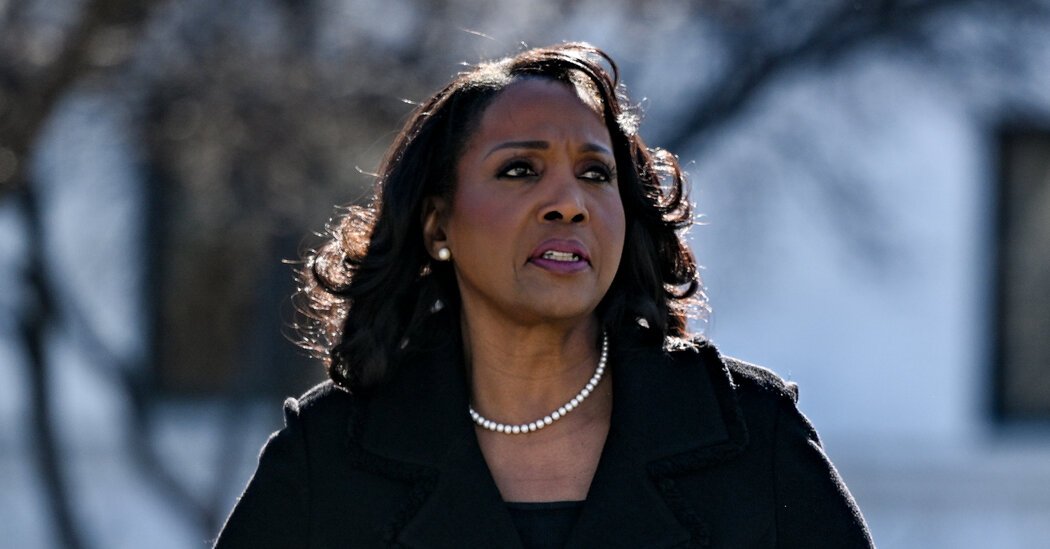
President Trump renewed his intention to try and fire Lisa D. Cook from the Federal Reserve on Monday, saying he would look for a way to oust her after the Supreme Court blocked his previous attempt to fire a sitting governor at the central bank.
In a social media post, Mr. Trump described the Supreme Court’s 5-to-4 decision as “procedural,” adding that he would “take appropriate action immediately to make sure that someone who has committed wrongdoing will not be making vital decisions concerning the Welfare of the United States of America!”
Mr. Trump took the extraordinary step of trying to fire Ms. Cook from the Fed last year, claiming that she had misrepresented her finances in order to obtain more favorable mortgage terms. Ms. Cook has not been charged with a crime, and has denied any wrongdoing.
She challenged her firing in court, as her lawyers sought to argue that the attempted dismissal fit a pattern by Mr. Trump, who has sought to pressure the Fed into lowering interest rates. In late September, a federal judge allowed Ms. Cook to continue serving in the role as she contested the legality of the firing, prompting the administration to appeal to the Supreme Court.
The opinion, written by Chief Justice John G. Roberts Jr., kept that decision in place. The majority found on Monday that the president had not properly afforded Ms. Cook the ability to respond to the allegations against her.
But the decision still left much unanswered. While the justices emphasized the uniquely important nature of the Fed as an independent body, they did not clearly define the conditions under which Mr. Trump could fire a Senate-confirmed governor.
“To be clear, the ultimate question of whether the president can remove Cook for cause will depend in part on the underlying facts,” Chief Justice Roberts wrote for the majority.
“In this opinion, we have not addressed the facts, as they have yet to be found or analyzed under the relevant legal standards,” he continued. “Rather, we have simply addressed the parties’ arguments about the appropriate legal standards under which the facts must be evaluated.”