dailynewsnblog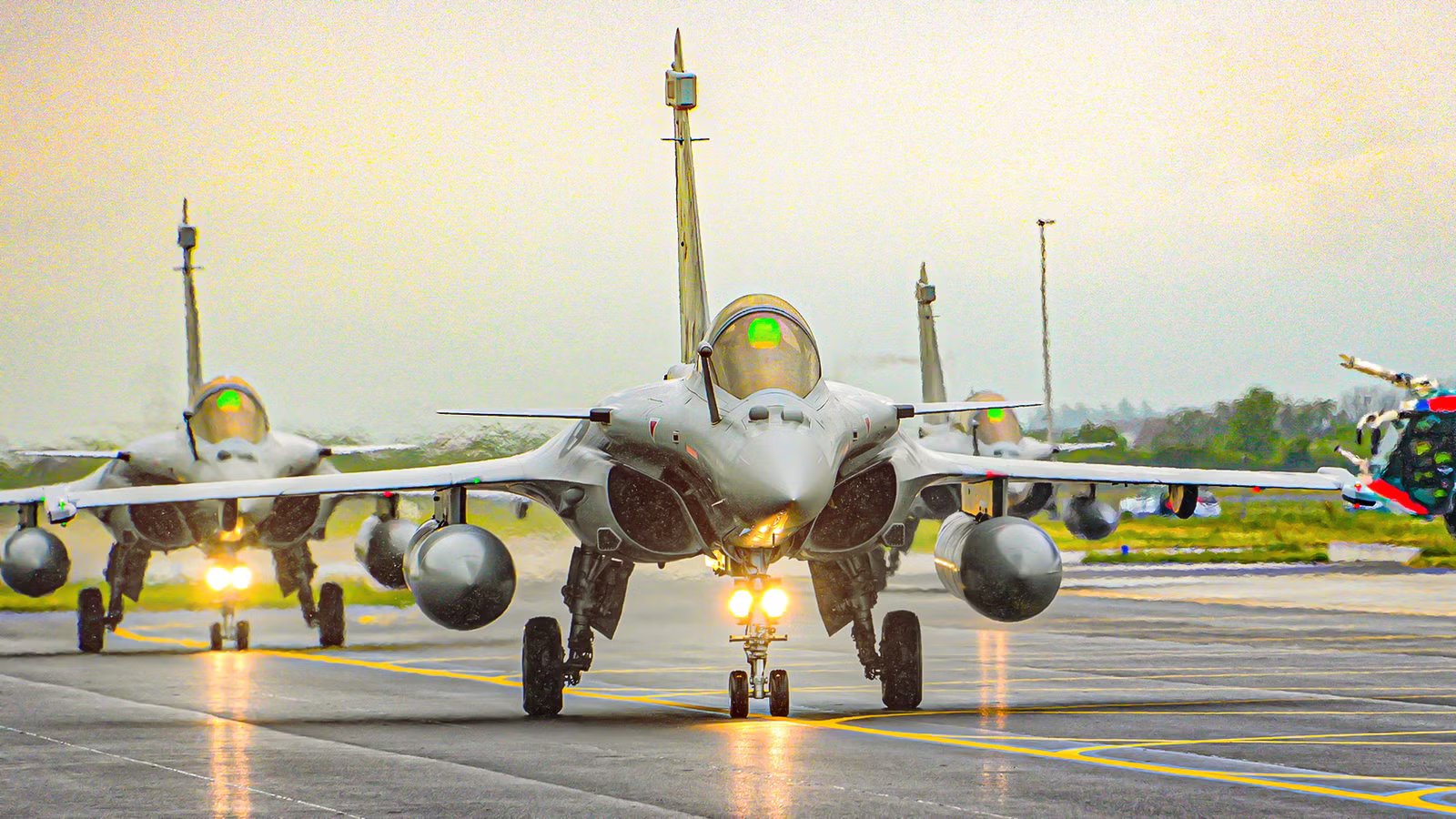
On June 8, 2026, German Chancellor Friedrich Merz confirmed what European defense watchers had been anticipating for months — the Future Combat Air System (FCAS) crewed fighter component or the Next Generation Fighter that was supposed to replace the Dassault Rafale and the Eurofighter Typhoon project was dead. No prototype had ever been built. No demonstrator had flown.
A program valued at over €100 billion ($116 billion), FCAS was launched by Emmanuel Macron and Angela Merkel in 2017 as a symbol of post-Brexit European defense ambition, had collapsed under the weight of an industrial argument and bureaucracy that nine years of political mediation could not resolve. The casualty list is long, the timing catastrophic, and the cause embarrassingly mundane: two companies could not agree on who builds what.
FCAS was not simply a fighter aircraft. Its designers envisioned a “system of systems” — the Next Generation Fighter at the center, a family of autonomous Remote Carrier drones flying alongside it, and an Air Combat Cloud binding everything together through an AI-powered shared kill-chain.
At its most ambitious, FCAS was conceived as the architecture that would define French, German, and Spanish airpower through 2060 and beyond. What makes its collapse significant beyond the immediate defense headlines is what it reveals about the structural limits of European defense industrial cooperation: the same national interests that made the Eurofighter experience so painful in the 1980s were never resolved, only deferred.
Nine Years, No Prototype: The Timeline Of A Program That Died In Committee

FCAS was announced by French President Emmanuel Macron and then-German Chancellor Angela Merkel at the ILA Berlin Air Show in June 2017, entering the world as a political statement. Europe, post-Brexit and facing a resurgent Russia and complicated relationships with the United States under President Trump, needed to demonstrate that it could develop its own cutting-edge air combat capability without Washington’s involvement. Spain joined as a full partner in 2019.
By 2021, the three nations had committed to Phase 1A of the program, a joint technology demonstrator phase, but the industrial negotiations that should have made that demonstrator possible became the battlefield on which the entire program’s future would be decided.
According to Euronews, a technology demonstrator flight originally targeted for 2027 never advanced because the companies involved could not resolve some bureaucratic issues around governance and intellectual property allocation. By early 2026, Macron and Merz had escalated the situation: they met at a dinner in Brussels on March 18, 2026, assigned a German mediator to find a solution, and set a mid-April deadline driven by German federal budget pressures.
That mediator concluded on April 18, 2026, that a jointly built crewed fighter was no longer feasible. Merz conveyed the final decision to Macron on June 6, 2026, on the sidelines of the EU-Western Balkans Summit in Montenegro. As reported by UA.news, German Defense Minister Boris Pistorius made a public announcement on June 9, 2026:
“The fact that the end of FCAS has come now was not a surprise. It has been clear for quite some time, at least since December, following yet another very intensive attempt to reach an agreement, which I led here at the ministry.”
To understand how a program of this ambition arrived at this conclusion without a single physical airframe to show for nine years of work requires examining what the industrial dispute was actually about. It was a conflict about corporate survival, national industrial sovereignty, and the incompatible definitions of “partnership” held by two of Europe’s most powerful aerospace companies.
The Workshare War: Why Dassault And Airbus Could Never Both Win

At the heart of the FCAS collapse was a question that neither France nor Germany could answer in a way the other would accept: who leads the program? Dassault Aviation, France’s fighter champion, is a company that has built every French combat aircraft since the early postwar period. Dassault CEO Éric Trappier argued that the NGF’s development should be led by the company with the most combat aircraft experience, and that diluting that leadership would risk the program’s technical coherence and Dassault’s long-term competitiveness as an independent fighter manufacturer.
Airbus Defence and Space, which manages Germany’s industrial participation and employs tens of thousands of workers across German aerospace facilities, had an equally non-negotiable position: any program funded equally by three European nations must provide equal industrial return to those nations. According to the European Council on Foreign Relations, Dassault had reportedly demanded as much as 80% of the workshare on the NGF component — a figure Germany viewed as incompatible with the principle of an equal European partnership and with the German government’s commitment to its own aerospace industrial base.
The 80% demand would have meant Dassault retained design authority over the most important military aircraft program either company would work on for the next 30 years, with Airbus reduced to a subcontractor role. Germany could not accept that. Dassault would not accept less.
France’s Rafale export program generated two-thirds of France’s €27 billion ($29 billion) in arms exports in 2022, according to ECFR. The Rafale’s competitive position depends entirely on Dassault’s ability to offer a sovereign French fighter with full technology transfer, a sales proposition that requires Dassault to retain genuine design authority over every critical system. Sharing NGF design leadership with Airbus would have handed a competitor direct access to the proprietary technologies that make Rafale exports possible.
Why 5 NATO Allies Are Quietly Retiring Fighter Jets With No Direct Replacement In Sight
NATO allies are retiring fighter jets without replacements—revealing delays, political tensions, and a looming airpower gap across Europe.
Incompatible Requirements: France Wanted A Carrier Jet, Germany Wanted Air Superiority

The industrial dispute was compounded by the fact that France and Germany were not even trying to build the same aircraft. France required a carrier-capable Next Generation Fighter, certified to carry the ASMP-A nuclear cruise missile‘s successor as part of France’s airborne nuclear deterrent, and light enough to operate from the deck of a Charles de Gaulle-class carrier and its successor.
Germany required a heavier, land-based air superiority platform optimized for NATO interoperability, capable of carrying conventional weapons loads appropriate for central European air defense, with no carrier requirement and no obligatory nuclear certification mandate. According to the National Security Journal’s analysis of the FCAS divorce, these two requirements pull in opposite directions at the aircraft design level: carrier operations impose strict weight and dimensional constraints that are structurally incompatible with the heavier airframe a land-based multirole air superiority fighter requires.
Spain, the program’s junior partner, had complicated the picture further. Madrid’s primary requirement was for an aircraft that could replace its aging McDonnell Douglas EF-18A/B Hornets, but Spain also required that any shared fighter carry enough national industrial participation to justify the billions it was contributing to the program budget. That requirement drove Spain’s alignment with the Airbus/Germany equal-workshare position, which in turn deepened the two-against-one dynamic that France increasingly found itself in during the later phases of negotiation.
France’s participation in the Eurofighter program collapsed specifically because Paris could not accept a heavier, land-based air superiority fighter without carrier compatibility or French industrial leadership, and withdrew to develop what eventually became the Rafale. FCAS had been attempting to solve, for the second time, a problem that the European fighter community had explicitly failed to solve the first time. The industrial mediation in March 2026 was, in that context, not a rescue attempt but a formality preceding a conclusion that the program’s architects had been approaching since 2019.
What Survives The Collapse — And What Doesn’t

The FCAS cancellation was not total. The June 8 announcement terminated the crewed Next Generation Fighter element of the program (the aircraft itself), while the Combat Cloud digital network architecture and elements of the Remote Carrier drone program were preserved for a revised bilateral Franco-German framework.
As reported by Breaking Defense, Germany’s government specifically committed to continuing the “core element of FCAS” as a broader European “system of systems,” with a Franco-German ministerial council meeting expected around July 17, 2026, to draft a new joint roadmap for the surviving elements.
The Combat Cloud, the AI-powered network intended to link the NGF, autonomous drones, and existing platforms into a shared operational picture, was always the most technically distinctive element of the FCAS concept, and its architects at Airbus and Thales argued throughout the program’s difficulties that the network was progressing more reliably than the fighter.
According to Defense Magazine, Paris and Berlin have indicated continued cooperation on “non-fighter elements,” including combat cloud and drones, but the practical reality is that France is expected to pursue sovereign drone development under a Dassault-led national program. France’s broader drone posture shifted even more sharply in mid‑2026. On June 15, 2026, Paris formally withdrew from the Eurodrone MALE consortium, ending its participation in the joint program with Germany, Italy, and Spain.
French defense officials cited cost growth, schedule delays, and the platform’s limited survivability in high‑intensity environments as reasons for the exit. As Simple Flying’s analysis of Europe’s fighter capacity post-FCAS details, the Rafale F5 and its successors now represent France’s likely primary path to future air combat capability.
For Germany, the immediate industrial response came through “Team Gen 6”, a consortium of eight German aerospace and defense companies that submitted a position paper to Chancellor Merz and Defense Minister Pistorius at ILA Berlin, asserting that German industry was ready to lead a new sixth-generation European combat aircraft program independently.
According to AeroTime, Sweden was also mentioned as a potential Team Gen 6 partner, with Saab having been quietly courted by Airbus as an alternative to the French-dominated FCAS architecture. Whether Team Gen 6 ever receives government backing for an actual program is a different question, but its rapid emergence signals that German industry had anticipated the FCAS outcome and prepared accordingly.
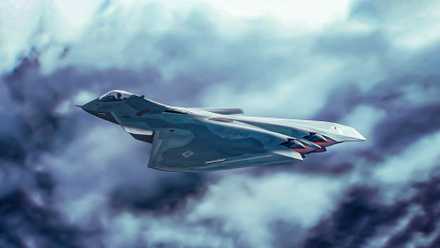
Here’s What 1 F-47 Pilot Will Actually Control In A Swarm Of Autonomous Drones
Discover the philosophy behind the F-47 and its flying companions.
GCAP Steps Into The Void — But Germany’s Invitation Has A Catch

The Global Combat Air Programme (GCAP, formerly known as Tempest), emerged from the FCAS collapse as the only credible active sixth-generation fighter program in Europe with a flying prototype on the near-term horizon. As Simple Flying has detailed, GCAP is built on a formal equal-partnership treaty structure between the UK, Italy, and Japan, with the Edgewing industrial joint venture created by BAe Systems, Leonardo, and Japan Aircraft Industrial Enhancement Company. The project received a £686 million ($908 million) design and development contract on April 2, 2026.
Unlike FCAS, GCAP has a legally binding governance structure, equal workshare among the founding partners, and a clear development trajectory: ‘Excalibur,’ a BAE Systems 757-based flight test aircraft, is expected to fly in 2026; the Tempest Combat Air Demonstrator is expected in 2027; and a production aircraft is targeted for service entry in 2035 — five years ahead of FCAS’s most optimistic recent schedule, and twenty years ahead of the 2055 IOC estimate that FCAS’s accumulated slippages had produced by the time of its cancellation.
On June 14, 2026, British Prime Minister Keir Starmer and Japanese Prime Minister Sanae Takaichi signed a joint declaration on economic security in London that specifically reaffirmed their commitment to GCAP as a central element of bilateral defense cooperation, according to Air Data News. The declaration was issued just six days after the FCAS collapse, a deliberate piece of diplomatic timing that underscored the contrast between GCAP’s momentum and FCAS’s implosion.
As previously seen on Simple Flying’s analysis of how the F-35 and Eurofighter compare in Europe’s current security environment, the FCAS collapse leaves Germany and Spain, both dependent on the Eurofighter for air superiority into the 2030s, in a fundamentally different position from the UK and Italy, which now have a credible sixth-generation program timeline. Germany’s window to influence GCAP’s design phase without disrupting its 2035 schedule is closing fast, and the German government has acknowledged it has no decision ready.
The Wider Strategic Consequence: FCAS’s Failure In A World Moving Fast

The collapse of FCAS comes at a particularly difficult moment for Europe. While the United States is advancing the Boeing F-47 and China is reportedly testing multiple sixth-generation aircraft concepts, Europe has spent nine years on a flagship combat aviation program without producing a prototype. What was intended to showcase European strategic autonomy instead exposed the limits of multinational defense cooperation when industrial and national interests diverge.
The immediate beneficiary is GCAP. With a formal governance structure, active development work, and a 2035 service-entry target, the British-Italian-Japanese program is now the only credible sixth-generation fighter effort in Europe. For Germany and Spain, whose future combat aviation plans were closely tied to FCAS, the pressure to identify a replacement path is growing rapidly.
German Air Force Chief Lt. Gen. Holger Neumann summarized the challenge when he stated that Germany needs a next-generation capability beyond 2035. That requirement remains unchanged, but the program intended to deliver it no longer exists. FCAS spent nine years trying to answer Europe’s future fighter question. Germany and its partners must now find a new answer before the timeline runs out.