dailynewsnblog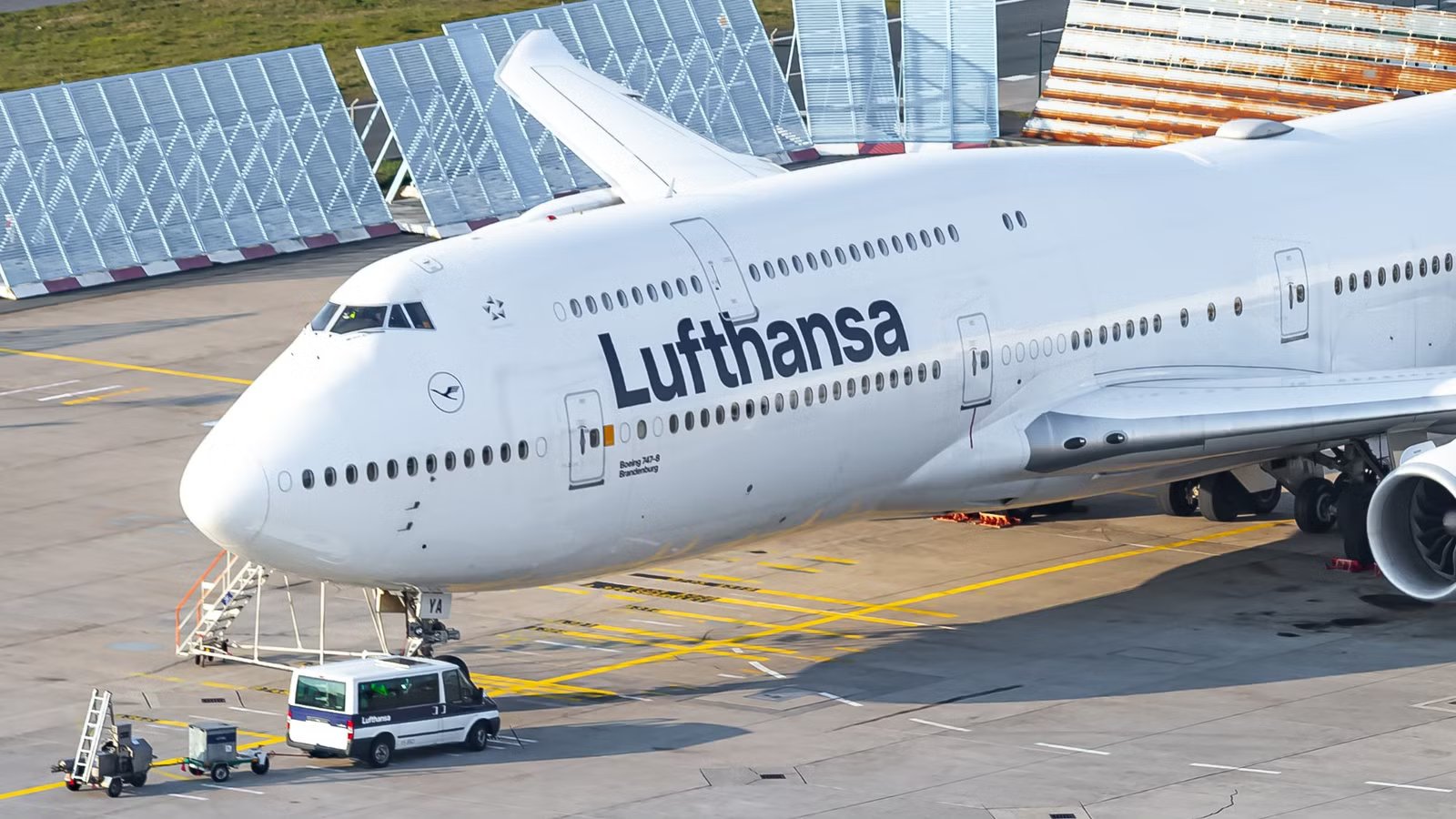
This past week, from June 26 to 27, two Boeing 747-8 jumbo jets operated by  Lufthansa departed the carrier’s hub at
  Frankfurt Airport International (FRA) bound for destinations on the east coast of the US, but never made it. In less than 24 hours, both huge widebody airliners were forced to make a touchdown shortly after takeoff with virtually full fuel tanks.
An aviation enthusiast, the Turbine Traveler shared a video of LH402 surrounded by fire trucks at FRA to protect it from the overheated brakes after its unplanned return. As a result of the overweight landings, both flights, LH418 on Friday and LH402 on Saturday, were also canceled, as shown by status updates on Flightradar24.
A Rough Start To The Weekend For Lufthansa’s 747s

On board Saturday’s flight to  Newark Liberty International Airport (EWR), LH402, the burning brake smell was actually the cause of the diversion. According to the Turbine Traveler, the aircrew reported a smell 20 minutes after departure and decided to return to Frankfurt without dumping fuel. The risk of fire in flight is one of the most severe emergencies possible on any aircraft, and the time it takes to dump fuel from a fully loaded 747 invites a much greater window for the situation to degrade.
Considering that the plane had just taken off, it could have taken as long as 20 or 30 minutes to bring the plane’s weight down before landing. Very little detail has been released about the exact conditions that caused LH418, bound for Washington Dulles International Airport (IAD), to divert on Friday. Yet, it has become public knowledge that a medical emergency happened after liftoff. It stands to reason that the same critical time factor could have applied based on the exact nature of the situation. Once on the ground, the aircraft would be subject to similar maintenance precautions due to the high stress of the landing.
While speculative, it follows the same logic that the air crew may have chosen to accept the overweight landing in order to avoid jeopardizing the life of the passenger. A user on Reddit’s r/flightradar24 forum posted the tracking data of LH418’s overweight landing at Cologne Airport (CGN) in real time, three days ago. One passenger replied, describing the cause of the diversion:
“Baby had a medical emergency. He looks quite happy and lively now, so he should be fine. However, we made an overweight landing without dumping fuel, so they need to inspect the gear…”
Catch what other flight trackers miss
Emergency squawks, holds, NOTAMs — live signals, no signup.
Open tracker
Catch what other flight trackers miss
Emergency squawks, holds, NOTAMs — live signals, no signup.
Open tracker
Triage On The Flight Deck: Aircrew Emergency Decisions

While LH402 circled back to FRA, LH418 diverted to Cologne Bonn Airport (CGN) where it hit the tarmac ‘heavy.’ While the 747-8 has an efficient fuel-jettison system, dumping tens of thousands of gallons of jet fuel safely requires climbing to a designated altitude and orbiting over unpopulated areas or water. Just as the potential risk of a fire on the plane is essentially the most time-critical emergency for an aviator, in severe medical emergencies, every minute matters.
Spending 20 minutes circling to dump fuel could allow a spark to turn into a flame or make the difference between life and death for the passenger. Modern widebody aircraft like the Boeing 747-8 are intentionally engineered to withstand overweight landings in emergencies. The intense kinetic energy is absorbed by the carbon brake discs and tires. That means the damage from an overweight landing is almost entirely confined to consumable landing gear components.
Unfortunately for LH418, it was not possible to find a maintenance technician to inspect the gear fast enough to keep it on time. It was canceled, just as LH402 was due to its severely overheated brakes. Replacing a set of overheated brakes, melted tires, and potentially damaged brake lines costs thousands of dollars and takes a few days, but it is considered routine maintenance. The casualty in this scenario is the itinerary, as was made evident last week, with both flights being canceled for maintenance reasons.

Lufthansa Quietly Moved Its Reactivated Airbus A380 Fleet To Munich & Abandoned Frankfurt
Lufthansa has brought its eight A380s out of storage, but relocated the lot to Munich.
Special Care For Lufthansa’s Biggest Jetliners

Since Lufthansa currently has a long-haul capacity shortage, it is critical to get the ‘Queen of the Skies,’ as the 747 is known, back in the air as soon as possible. As part of its modernization, the airline is actively pushing out its older, much less efficient four-engine Airbus A340-600s and Boeing 747-400s over the next year. However, the 747-8 is the youngest, most modern quadjet they own.
As such, the big Boeings are crucial for Lufthansa’s strategy. In fact, the increased demand for transatlantic flights and premium cabin products has been so high that some Airbus A380 super jumbos were pulled out of storage. This entire situation comes down to delivery timelines for the first production next-gen Boeing 777X widebodies continuing to be delayed. Thus, the 747-8s are slated to remain the flagship backbone of Lufthansa’s high-capacity routes well into the 2030s even as the new 777X finally debuts.