dailynewsnblog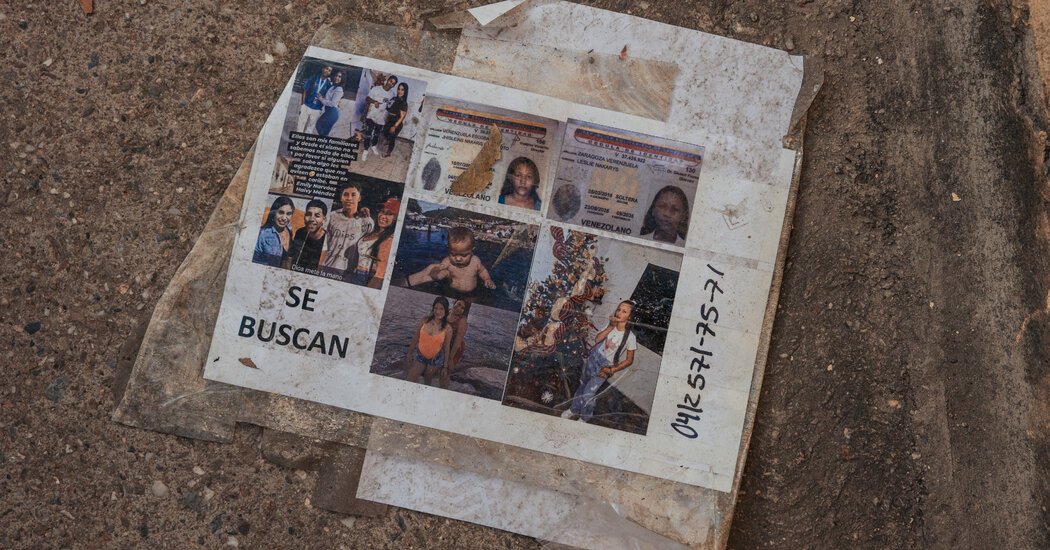
Dozens of people gathered outside a state-run morgue in Caracas on Sunday, searching for relatives who have been missing since Wednesday’s devastating twin earthquakes. Inside, officials displayed photographs of unidentified victims on computer screens as families tried to recognize loved ones.
Many at the morgue known as Venezuela’s National Service of Forensic Medicine were looking for relatives thought to be in the hard-hit coastal state of La Guaira, where road closures had prevented those family members from reaching the area.
The morgue is receiving 40 to 80 bodies a day, according to two forensic doctors at the morgue who requested anonymity because they were not authorized to speak publicly. They said the victims included people who were pulled alive from collapsed buildings but later died in hospitals, as well as victims brought from La Guaira by their relatives.
In La Guaira, officials are processing about 750 bodies a day, the doctors said, and about 50 forensic workers are commuting from Caracas every day to help with the work. As of Sunday, the official death toll in Venezuela was 1,450, but that is likely a vast undercount.
Identifying victims has proved to be especially difficult because many bodies were badly crushed beneath collapsed buildings, according to the two doctors and a third doctor working in a La Guaira facility. Forensic specialists are using fingerprint recovery techniques, while relatives are identifying loved ones by distinctive features such as tattoos, moles and even manicures.
At the Caracas morgue, 150 bodies remained unclaimed as of Sunday afternoon, including 130 who had yet to be identified. The two doctors at the Caracas morgue said the morgue had been offering free cremations to affected families and that officials have not ruled out the use of mass graves if fatalities continue to mount.
The Venezuelan Society of Infectious Diseases issued guidance discouraging the use of mass graves on Sunday, saying it makes identification difficult, can prolong anguish for the families of the deceased and is unnecessary from a public health perspective.
Outside the morgue, residents have been leaving bags of lime in a grass roots effort to help dry out decomposing bodies. But the forensic doctors said they cannot use them because international protocols prohibit the application of lime to human remains, as it can damage tissue and make identification difficult.