dailynewsnblog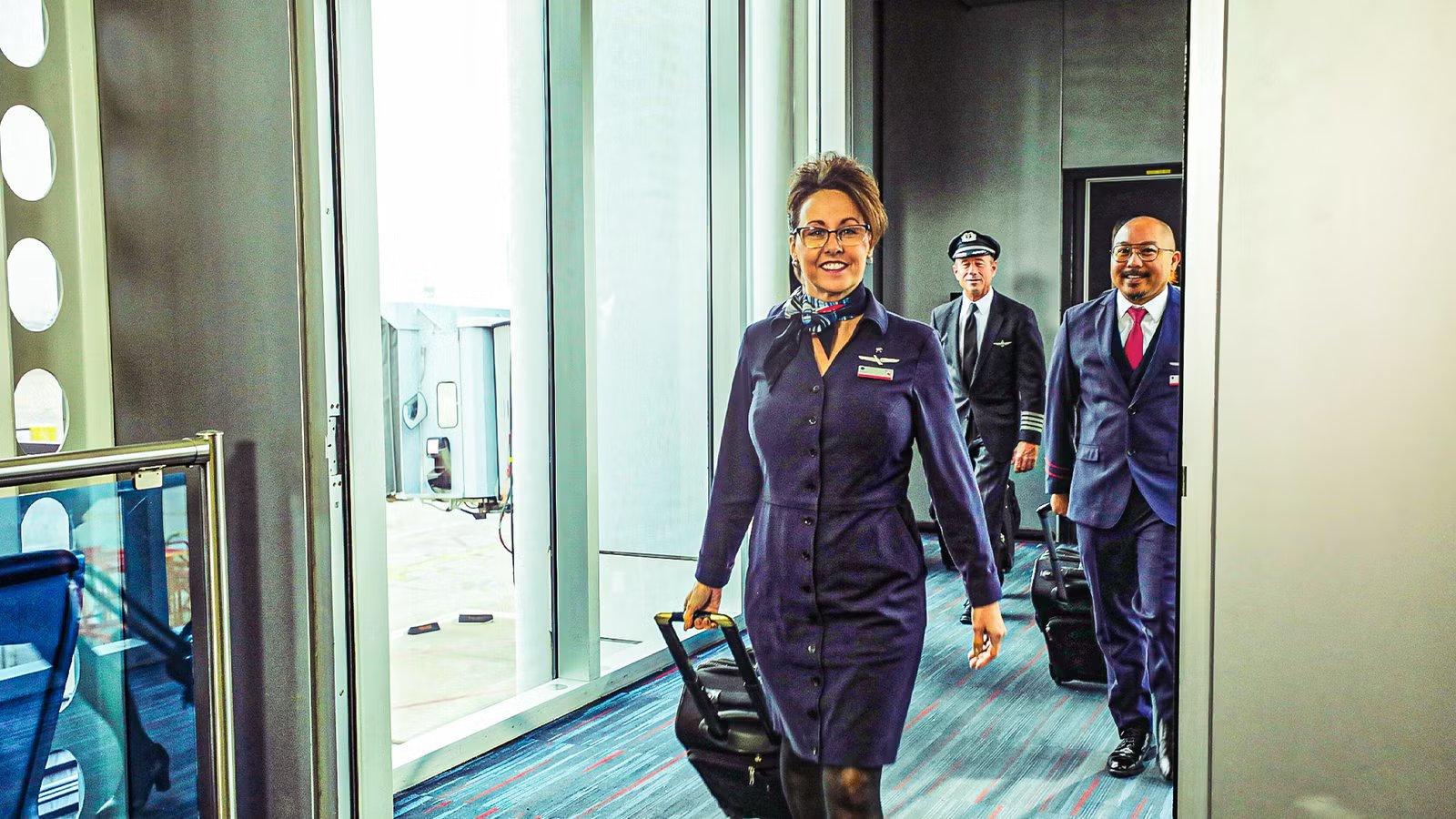
Unlike pilots, the US Flight Attendant pay structure is not formally tiered by specific ‘ranks’ on a five-level hierarchy. Compensation at the major carriers is purely driven by position and seniority rather than by a distinct rank designation. In this guide, we will find out more about how ranking works as a guideline and how to structure the five tiers.
The largest salary component for a flight attendant at most major US airlines is the base hourly rate, which increases with seniority. Flight attendants’ pay generally does not change with aircraft type, as it does for pilots, and the hourly rate is tied solely to years with the company, known as seniority. The Big Three also have a lead flight attendant on narrowbody flights, while international widebody flights are staffed with a purser, a position that requires special training and commanding premium pay.
Entry-Level / Reserve Flight Attendant

The first stage of the flight attendant journey is at the entry level, after initial training. New hires are often referred to as reserve flight attendants and are ‘on reserve’ or ‘standby’ for the whole month. All flights are last-minute, so they will not have a set schedule but will have a minimum guaranteed number of hours, even if they don’t fly much.  Delta Air Lines is the exception to the rule, as they do not put new hires on reserve; instead, they give them days off, available days, and scheduled line trips.
First-year flight attendants at American Airlines earn $36.81 per hour under their 2024 contract, with pay reaching approximately $40 per hour by 2029. Delta’s first-year flight attendants start at $36.92 per hour. United’s new agreement sets an even higher entry rate. At the contractual minimum of 71–75 guaranteed hours monthly, first-year total annual earnings range from approximately $31,300 to $45,000.
Flight schedules are often based on seniority, with senior crew choosing their trips, base, and work hours. At American Airlines, new hires have two years of reserve status before moving to the ‘line’. Working up the line for international flights at United Airlines can take anywhere from months to years, depending on the base and seniority, according to information on Reddit.
Simple Flying Quiz
Think you really know American Airlines?
Answer 10 questions and put your knowledge to the test
Think you really know American Airlines?
Answer 10 questions and put your knowledge to the test
Easy (15s)Medium (10s)Hard (5s)
Line Flight Attendant

According to the US Bureau of Labor Statistics, in 2024, there were 130,800 flight attendants in service at US airlines. Many flight attendants leave the industry in the first few years of flying due to demanding schedules, being away from home, and low starting pay, causing a high dropout rate in the first few years. The line flight attendant is the backbone of the flight attendant workforce and typically has between five and eight years of flying experience, but has enough seniority to control their schedule somewhat.
Mid-career flight attendants at major US carriers typically earn between $55 and $70 per hour, translating to annual earnings of approximately $55,000–$80,000 depending on hours flown, per diem accumulation, and route mix. Domestic and international schedules diverge meaningfully at this level, with international routes generating substantially higher income through per diem. As seniority rises, flight attendants can live away from their home base and commute, or choose to work just regional routes.
Once past the five-year mark, flight attendants often stay long term as they are protected by labor unions. The strong seniority system allows them more control over their schedules, higher rates of pay, and more job security. This means that many will stay until retirement age and may choose to work part-time. The US Bureau of Labor Statistics projects that by 2034, there will be a 9% increase in flight attendant roles compared with 2024.
A Look At The Salaries Of The US Big 3 Airline Pilots In 2026
Airlines are in a fierce competition for top talent, and pilots are reaping the rewards.
Senior Line Flight Attendant

Senior flight attendants are at the top of the pay scale, which can be reached after 12 to 13 years. They earn approximately $83–$86 per hour at Delta Air Lines and  American Airlines, with the latter’s pay scale reaching $84.50 at year 13, and at Delta above $86 per hour. Total annual compensation for this group, including boarding pay, per diem, profit sharing, and premium trips, reaches around $107,000–$109,000 at the two highest-paying Big Three carriers.
Delta Air Lines consistently leads in total compensation for this group due to its profit-sharing program, which has historically delivered among the strongest bonus payouts in the US airline industry. Perhaps surprisingly, Delta is non-unionized, whereas American Airlines is represented by the Association of Professional Flight Attendants, and the Association of Flight Attendants represents United Airlines. This means Delta must offer superior or competitive pay and working conditions to attract its flight attendants.
Delta Air Lines was also the first US airline to introduce boarding pay (compensated at 50% of hourly pay) before door closure.  United Airlines meanwhile, entered a five-year contract, where flight attendants’ salaries were largely increased, boarding pay was formalized, and reserve overrides. American Airlines, in turn, introduced boarding pay and higher premiums for those working in galley positions or on international routes.
Lead / In-Charge Flight Attendant

The lead or in-charge flight attendant is considered to be a skilled leadership position on narrowbody flights. They can command premium pay above the standard hourly rate. At major carriers, the premium for lead positions ranges from $1 to $7.50 extra per hour, depending on the carrier and contract, applied on top of the flight attendant’s base seniority rate.
This position leads the cabin, crew coordination, and is responsible for cabin safety, compliance, and premium cabin service. They run the safety briefing and coordinate with the flight crew at all times. They are responsible for paperwork, inventory, and get involved with conflict resolution and passenger issues. It is similar to the purser’s role but on narrowbody aircraft and often domestic flights, whereas the purser works on widebody aircraft on international routes.
At United, reserve attendants earn an extra $2 per hour, while premium pay applies to lead positions such as purser. Taking on a leadership role is one of the primary ways senior flight attendants increase earnings beyond their base scale plateau. They can also save per diem or be a language of destination speaker. With seniority, they can also maximize their flight schedules and earn premium payments on some routes.

$100 Hourly And Boarding Pay: Inside United Flight Attendants’ Historic Deal
United flight attendants could soon become the highest-paid in the industry.
Purser / International Service Director

The purser or international service director is the highest-paid flight attendant position in the US commercial airline structure. The purser position pays more than a lead position and requires an extra training program. The position is assigned specifically to international widebody flights and some domestic widebody operations, making it accessible only to the most senior crew with the relevant experience and certifications.
A purser at Delta Air Lines earns an average of $76,686 in base pay, with more than 50% of Delta pursers having over 20 years of experience, according to These Gold Wings. When total compensation is calculated, including the purser premium, profit sharing, per diem on international layovers, and boarding pay, total annual earnings for senior pursers at major carriers can reach $120,000–$140,000 plus.
Pursers can earn between $8.50 and $10.00 per hour extra for managing the flight attendants on board. Under the United Airlines newly ratified contract, it will push the senior hourly rate toward $96.58 as of the date of signing, plus four years, with the $100-per-hour milestone projected to be crossed by 2030.
Key Factors

Flight attendants are primarily on board for safety reasons, and passenger comfort secondly. Although their work is demanding, and they have safety responsibilities, their salary is more related to that of someone working in hospitality. The salary cannot be compared to their counterparts on board, the pilots, whose compensation is much higher due to the skillset required and the training involved. Although the salary may be modest, it can improve with seniority. Although most flight attendants work around 75 hours a month, some may push it up to 100 hours a month.
The flight attendant’s salary is based on an hourly rate that increases the longer you stay with an airline. Seniority is not transferable to another airline, so moving airlines in general means starting again at a lower rank. Flight attendants also receive a per diem payment, which is paid on nights away from base. This is based on the cost of living in the city where they stay, so a flight attendant will earn more if flying to Tokyo than flying to Frankfurt. Some US airlines pay this at a standard hourly rate instead.
The hourly rate applies only when the aircraft door is closed until it’s reopened at the destination. Some US airlines now pay a reduced rate for pre-flight duties, boarding, and post-flight duties, whereas previously they were unpaid. A flight attendant starting out with one of the three US legacy carriers will likely be earning under $40,000 per year, while an experienced flight attendant can earn over $100,000 per year.