dailynewsnblog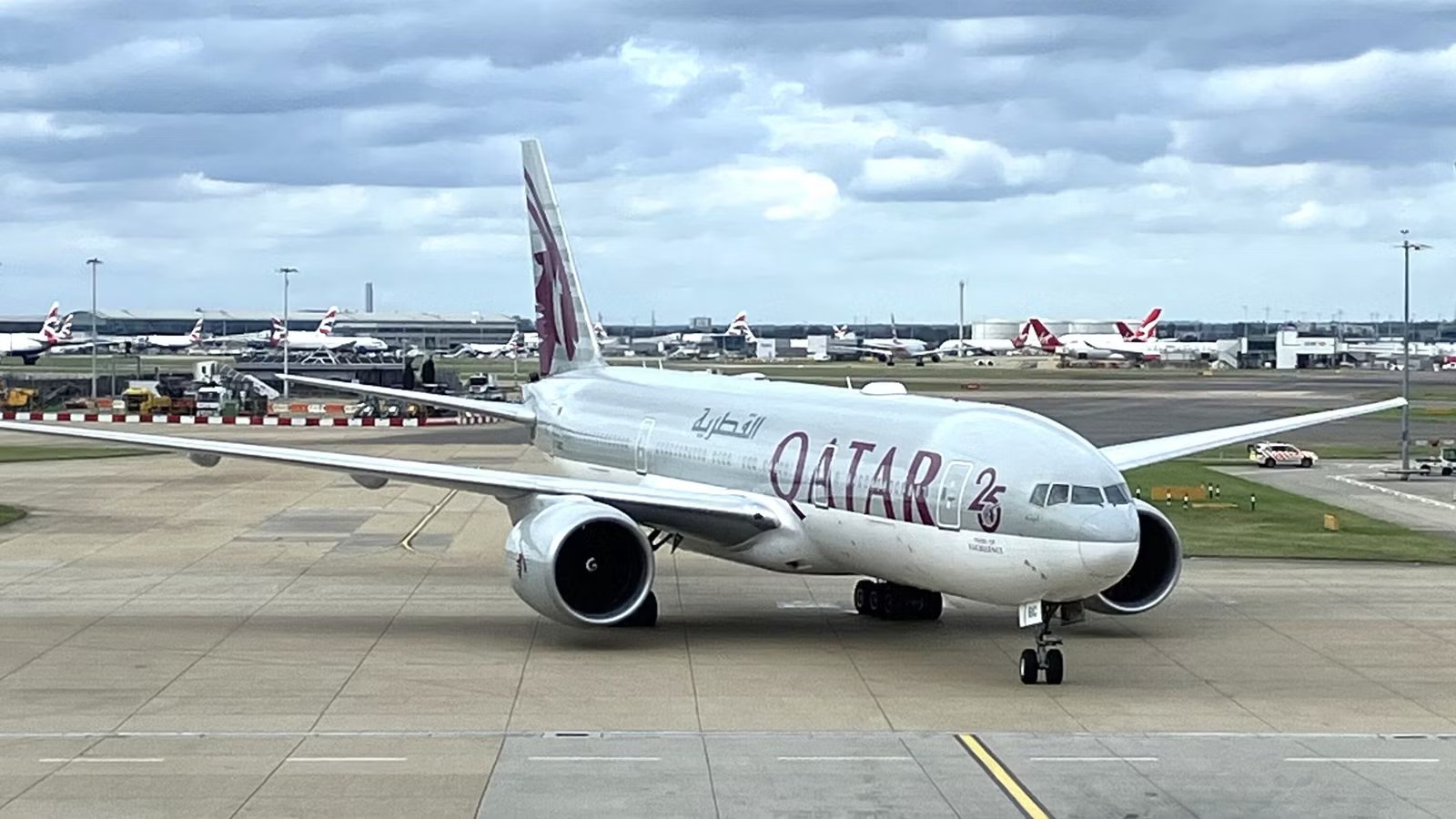
Next month,  Qatar Airways is set to launch a triangular route from its main hub at Doha Hamad International Airport (DOH) that will serve two new South American destinations. These are El Dorado International Airport (BOG) in Bogotá and Simón Bolívar International Airport (CCS) in Caracas. The latter of these airports is especially significant, as it “becomes the first Gulf carrier to serve Venezuela.”
Operating twice a week, this route is targeted not just at point-to-point traffic between South America and Doha, but also at passengers looking to make onward connections at the  oneworld member’s Middle Eastern hub. Qatar Airways highlights “Australia, China, Japan, Lebanon, South Korea, and the United Arab Emirates” as onward destinations where it expects demand to be particularly high.
Coming Soon

On July 22, Qatar Airways will commence operations on its new triangular route to South America. The first rotation will fly from Doha to Caracas, then onwards to Bogotá, and finally back to Doha. However, thereafter, the route will be operated in the opposite direction, flying nonstop to Bogota and returning to Doha via Caracas. This will help with the payload restrictions relating to Bogota’s high elevation.
Simple Flying Quiz
Think you really know Qatar Airways?
Answer 10 questions and put your knowledge to the test
Think you really know Qatar Airways?
Answer 10 questions and put your knowledge to the test
Easy (15s)Medium (10s)Hard (5s)
The maximum one-stop block time on this route between December and July is 20 hours and 50 minutes. The flights will operate twice a week, departing Doha on Wednesdays and Sundays. They are numbered as QR783 flying both east and westbound, and spend 90 minutes on the ground in Bogota, followed by a two-hour stopover in Caracas. The airline commented on the new route in a statement.
“The service represents a significant milestone for the airline, as Qatar Airways becomes the first Gulf carrier to serve Venezuela, and the first airline to operate flights from the Middle East to Caracas and Bogotá.”
What’s It Like Onboard?

According to Cirium, an aviation analytics company, Qatar Airways is set to deploy 777-200LR widebody twinjets on this new triangular route. Fleet data from ch-aviation shows that the Doha-based Qatari flag carrier and oneworld member currently has a total of six of these aircraft at its disposal, and they average 16.4 years old.
Despite their relatively older mean age compared to Qatar Airways’ fleet-wide average of 10.1 years, passengers flying on the airline’s Boeing 777-200LR jets can still expect a modern onboard experience. Indeed, fleet data from aeroLOPA shows that 42 of the plane’s 272 seats are examples of Qatar Airways’ revered ‘QSuite’ business class product. These are laid out in a 1-2-1 setup.
The staggered layout means that seats alternate between facing forward and backward as you go from row to row, with the backward-facing middle pairs being especially well-suited to couples. Likewise, the backward-facing outer seats are closer to the window than their forward-facing counterparts. The jet’s 230 economy seats are laid out in a 3-4-3 setup, but this narrows to 3-3-3 and 2-3-2 at the back.

Why Qatar Airways Is Rebuilding Its Qsuite After Winning World’s Best Airline For The 9th Time
Qatar Airways is about to lead the industry again.
Qatar Airways’ Only Current South American Flights Serve Brazil

The addition of Qatar Airways’ new flights to Bogota and Caracas is set to represent something of a coup in the South American market for the Middle Eastern carrier, given that it currently serves only one destination in this region. The airport in question is São Paulo Guarulhos Governor André Franco Montoro International (GRU) in Brazil, and Qatar Airways scheduled 77 flights there from Doha this month.
Of these, more than half (46) are operated by the Airbus A350-1000. Meanwhile, the remaining 31 are served by aircraft from the Boeing 777 family, split between 28 777-200LRs and three 777-300ERs. Flying from Doha to São Paulo, passengers can expect a westbound block time of around 15 hours. Meanwhile, the return leg is scheduled to take a grand total of 14 hours and 20 minutes.