dailynewsnblog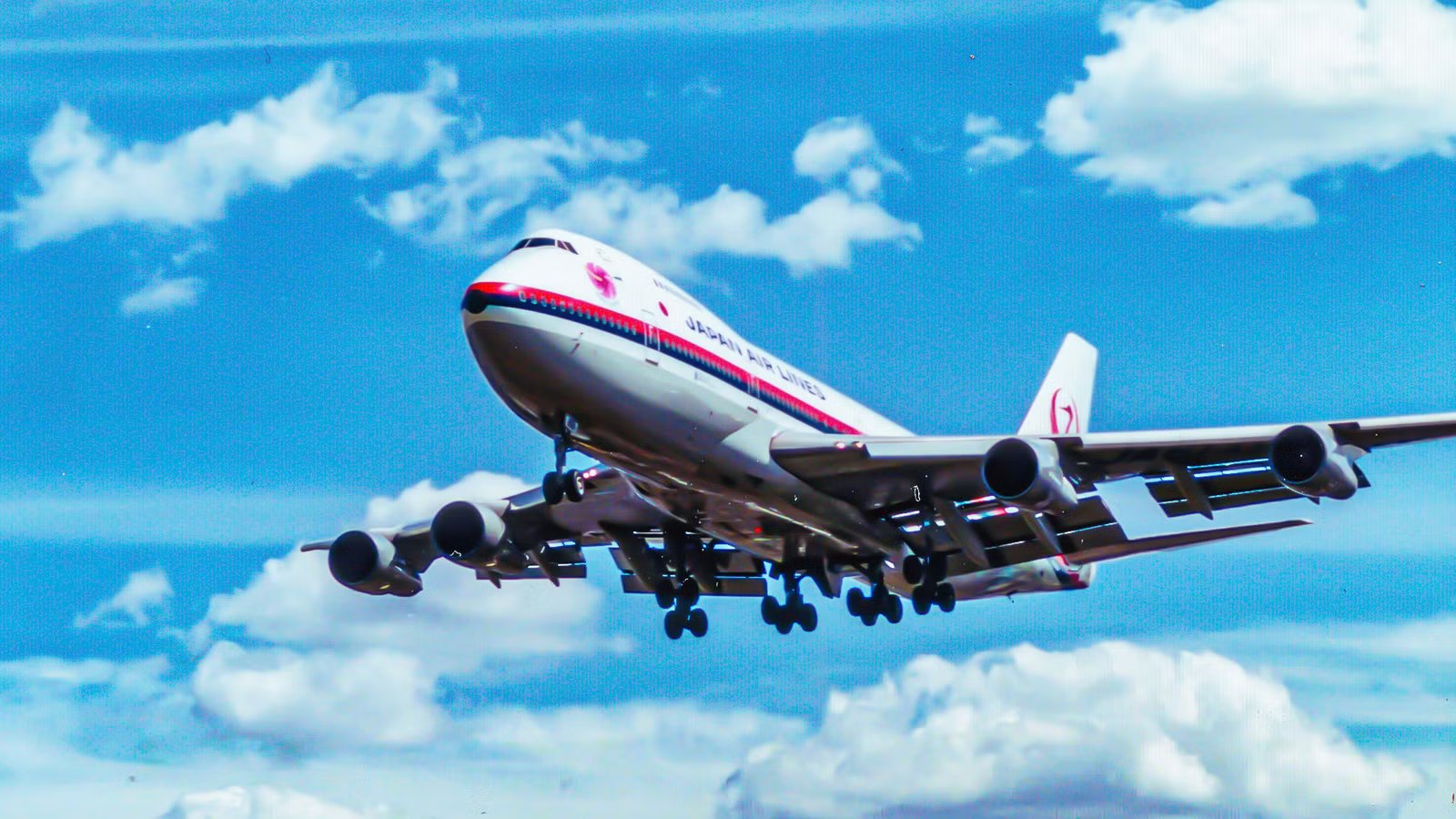
Through the late 1960s and into the early 1970s, passengers flying from New York to Tokyo on a Boeing 747 expected to stop in Anchorage, Alaska. The 747-100 did not carry enough fuel to make the transpacific crossing nonstop with a full passenger load, and Anchorage lay at the midpoint of the great circle route between the US East Coast and Japan. The refueling stop added hours to the journey and was a standard part of flying between North America and Asia.
The Boeing 747-200, which entered service in 1971, eliminated that stop. Through a combination of more powerful engines, a higher maximum takeoff weight, and increased fuel capacity, the variant added approximately 1,550 nautical miles (2,870 km) of range over the 747-100. That was enough to clear the New York to Tokyo distance with comfortable reserves, and it opened a list of other city pairs that had previously required intermediate stops. The upgrade was straightforward in concept but significant in effect, and the principle behind it has driven every generation of long-range widebody aircraft since.
Why The 747-100 Couldn’t Fly New York To Tokyo Nonstop

The  Boeing 747-100 entered service with Pan Am in January 1970 and reshaped long-haul aviation almost immediately, but it could not reach every city pair nonstop. The aircraft was powered by four Pratt & Whitney JT9D-3A engines producing approximately 43,500 pounds (193 kN) of thrust each, with a maximum takeoff weight of 735,000 pounds (333,390 kg). That combination gave the 747-100 a range of approximately 5,300 nautical miles (9,800 km) with a full passenger load, enough for transatlantic routes like New York to London but short of the distances required for transpacific operations.
New York to Tokyo covers approximately 5,850 nautical miles (10,834 km), and actual routing with wind and air traffic control considerations often pushes the effective distance further. With 350 to 400 passengers on board and the associated fuel load, the 747-100 did not carry enough fuel to make the crossing reliably without stopping. The standard solution was a refueling stop in Anchorage, Alaska, which lay roughly at the midpoint of the great circle route between the US East Coast and Japan. The stop added several hours to the journey but was operationally necessary given the aircraft’s range limitations.
Anchorage became one of the world’s busiest international transit airports during this period, handling a steady flow of 747-100s and other long-haul aircraft on North Pacific routes. Airlines, including Pan Am, Japan Air Lines, Northwest Orient, and Lufthansa, all routed transpacific flights through Anchorage. The stop was accepted as a normal part of the travel experience on these routes, but it was a constraint that airlines sought to eliminate as soon as aircraft performance allowed.
The Engine And Weight Upgrades That Changed The Math

Boeing’s solution was the 747-200, which received FAA type certification on December 23, 1970, and entered commercial service in 1971. The aircraft used the same basic airframe as the 747-100 but addressed the range limitation through three changes: more powerful engines, a higher maximum takeoff weight, and increased fuel capacity. The combination added approximately 1,550 nautical miles (2,870 km) of range over the 747-100, pushing the aircraft’s reach to roughly 6,850 nautical miles (12,700 km) with a full passenger load.
The 747-200 was the first 747 variant to offer airlines a choice of engine manufacturer. The Pratt & Whitney JT9D-7 series, the General Electric CF6-50, and the Rolls-Royce RB211-524 were all available, each producing approximately 50,000 pounds (222 kN) of thrust. That represented a roughly 15% increase over the JT9D-3A engines on the 747-100. The higher thrust output supported a maximum takeoff weight of up to 833,000 pounds (377,842 kg), an increase of 98,000 pounds (44,452 kg) over the original variant. The additional weight capacity was used primarily to carry more fuel.
The range improvement was not achieved through any single change. It was the interaction of all three. More powerful engines allowed the aircraft to take off at a higher gross weight. The higher gross weight allowance permitted more fuel to be loaded. The additional fuel extended the range beyond the threshold required by transpacific routes. Each element depended on the others.
Why The Airbus A350-1000 Is The Only Jet That Can Fly Sydney To London Nonstop
At 10,573 miles (17,015 km), the journey is no mean feat.
The Routes The 747-200 Opened

The route that mattered most was New York to Tokyo at approximately 5,850 nautical miles (10,834 km). The 747-200’s 6,850 nautical mile (12,700 km) capability cleared that distance with over 1,000 nautical miles (1,852 km) of reserve, providing enough margin to handle headwinds, routing deviations, and alternate-airport diversions without any question about whether the aircraft could make it. Japan Air Lines, Pan Am, and Northwest Orient all began operating the route nonstop once the 747-200 entered their fleets.
The same range increase opened other city pairs that had previously required intermediate stops. Frankfurt to Los Angeles, at approximately 5,800 nautical miles (10,742 km), became a viable nonstop route for Lufthansa. London to Singapore, Paris to Tokyo, and several other European-Asian routes moved within reach depending on seasonal wind patterns and passenger loads. In each case, the operational economics improved. Eliminating a fuel stop removed the landing fees, ground handling costs, fuel purchase at an intermediate airport, additional crew duty time, and the schedule penalty of adding two to three hours to the total journey.
Boeing sold nearly 400 747-200s during the variant’s production run, making it the most commercially successful early 747 model. The aircraft gave airlines the first widebody capable of connecting most of the world’s major city pairs nonstop with a full passenger load, and it established the operational template for every long-range widebody that followed.
What Anchorage Was Like As A Fuel Stop

For passengers flying transpacific routes in the late 1960s and early 1970s, a stop in Anchorage was a routine part of the journey. The aircraft would land, passengers would deplane into the terminal while the aircraft was refueled, and the stop typically lasted between one and two hours depending on the carrier and the turnaround. Anchorage International Airport built a transit facility to handle traffic, including duty-free shops and a restaurant that served passengers who were often arriving in the middle of the night Alaska time. Airlines including Pan Am, JAL, Northwest Orient, Korean Air, and several European carriers all scheduled regular stops. The airport invested in fuel storage, ramp capacity for multiple widebody aircraft, and customs and immigration processing for transit passengers. At its peak as a refueling hub, Anchorage handled hundreds of widebody transits per month on North Pacific routes.
As the 747-200 and later the 747-400 entered service with progressively longer range, the passenger fuel stop became unnecessary on most routes and Anchorage’s role as a transit hub changed. The passenger terminal quieted down. The cargo ramps did not. Freighters carrying heavy loads still benefit from a technical stop to take on fuel, and the same great circle position that once made Anchorage a midpoint for passenger 747s now makes it one of the most efficient cargo transfer points in the world. The airport’s location allows aircraft to reach approximately 90% of the industrialized world within a 9.5-hour flight.
The numbers reflect that. In April 2026, Airports Council International ranked Ted Stevens Anchorage International Airport as the busiest cargo airport in the United States and the third busiest in the world, behind only Hong Kong and Shanghai Pudong. Anchorage handled nearly 3.9 million tonnes of cargo in 2025, a 40% increase since 2019. FedEx, UPS, and a roster of international freight carriers operate around the clock. The airport that lost its passenger transit traffic to longer-range aircraft reinvented itself around the cargo market, and the geographic advantage that had put it on the route map in the first place proved permanent.
Why The Boeing 787-10 Dreamliner Can Suddenly Fly Routes Only The Airbus A350 Could Handle
An increased maximum takeoff weight allowance is key for Boeing.
From The 747-200 To The A350-1000ULR: How Range Economics Have Continued To Evolve

The 747-200 was not the last aircraft to use engine and weight upgrades to eliminate stops and open new routes. The same principle has repeated across every generation of widebody since. The 747-400, which entered service in 1989, pushed its range to approximately 7,260 nautical miles (13,450 km), a redesigned wing with winglets, and a two-crew glass cockpit that eliminated the flight engineer. Routes that the 747-200 could serve nonstop only under favorable conditions became routine, and several new city pairs opened that even the -200 could not reach.
The Boeing 777-200LR extended the concept further in 2006, reaching 9,395 nautical miles (17,395 km) and becoming the longest-range commercial aircraft in the world at the time. In 2018, Singapore Airlines used the Airbus A350-900ULR to relaunch Singapore to New York nonstop at approximately 8,285 nautical miles (15,343 km), a route that had been attempted and abandoned years earlier because economics did not work with the aircraft available at the time. The A350-1000ULR and the Boeing 777-8, both currently in development or early service, will push the range envelope further still.