dailynewsnblog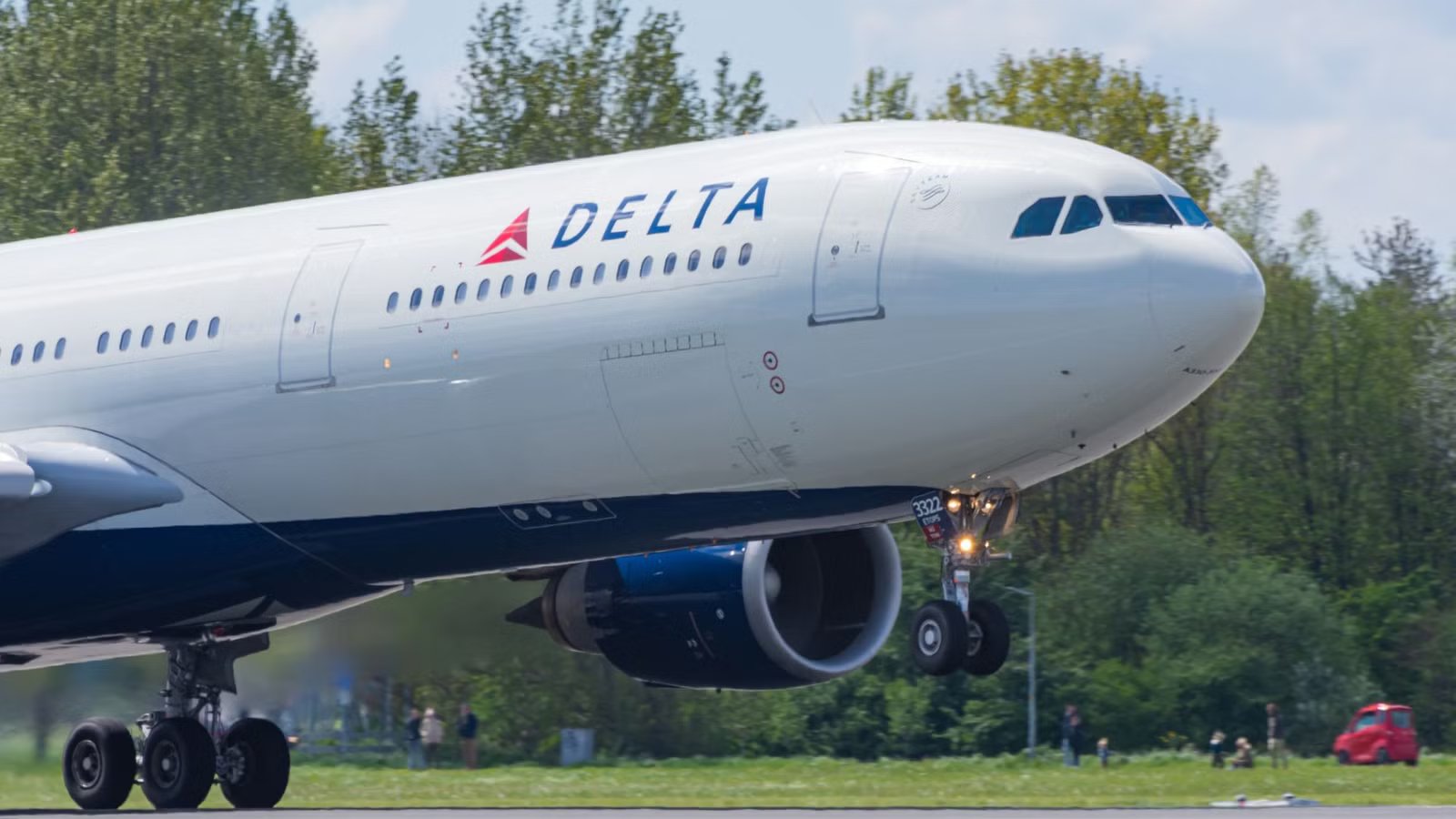
Passengers aboard  Delta Air Lines Flight DL276 experienced an unexpected disruption after the transatlantic service from
  Boston Logan International Airport (BOS) to Nice-Côte d’Azur Airport (NCE) returned to its departure airport shortly after takeoff. Flight-tracking data showed the Airbus A330-300 reversing course less than 30 minutes into the journey, prompting an emergency response at Boston Logan.
The aircraft landed safely and was met by emergency personnel as a precaution before returning to the gate. A report by Air Live indicated that smoke had been reported in the cockpit, although no official cause had been identified or released by the operator at the time of writing.
Flight Crew Initiates Early Return To Boston

Delta Flight DL276 departed from the airline’s major hub, Boston Logan, at approximately 8:00 PM local time on June 25, taking off from runway 4R on what initially appeared to be a routine overnight transatlantic service.
Flight-tracking information showed the aircraft, registered as N820NW, beginning its departure over the Atlantic before unexpectedly stopping its climb at around 10,000 feet. Shortly after takeoff, flight crews reported smoke on board and requested an immediate return to Boston, turning the flight into an unplanned operational event.
Air traffic controllers coordinated the aircraft’s return route to Boston Logan, where it landed safely on runway 15R less than 30 minutes after departure. Emergency vehicles were positioned to meet the arriving aircraft as a precaution, while the jet later taxied back to gate E15, the same gate from which it had departed earlier that evening.
Simple Flying contacted Delta for a comment, but a representative was not immediately available.

Smoke or fume reports on aircraft are treated with a high level of caution because flight crews may not immediately know the source, location, or severity of the issue. Even what initially appears to be a minor odor or isolated smoke indication can be difficult to diagnose during flight, which is why standard aviation procedures generally prioritize returning immediately to a suitable airport. Airport fire crews also regularly train extensively to deal with a variety of incidents that can arise from such events.
The aviation industry’s cautious approach toward smoke events has also been influenced by past accidents. One of the most notable examples was Swissair Flight 111 in 1998, when a fire that initially appeared to be a systems issue spread through concealed spaces above the cockpit ceiling and ultimately became uncontrollable. Investigators later found that the event escalated rapidly, contributing to the loss of the aircraft and all 229 people on board. Incidents such as that have shaped modern aviation procedures, reinforcing the emphasis on immediate action whenever unexplained smoke or fumes are detected during flight.
The key to dealing with such incidents is generally by taking precautionary actions rather than attempting to continue operations, no matter how insignificant a situation may look. Returning to the departure airport allows airlines to assess the aircraft while reducing operational risk and ensuring passengers can be accommodated on alternative flights if required.
Delta Air Lines’ Widebody Strategy: Why The Airbus A350 & A330 Work Together
A new era for the iconic carrier.
The Airbus A330’s Role In Delta’s Long-Haul Network

The aircraft involved in the incident is part of Delta’s widebody fleet used across international and long-distance operations. The airline has operated A330s since it acquired its first after merging with Northwest Airlines in 2008. Deltacontinues to rely on the type for numerous transatlantic and intercontinental routes serving Europe, Asia, and other global markets. Delta is also the world’s largest operator of the A330 family, with Planespotters.net data showing the airline operating around 80 examples.
Delta currently operates multiple variants of the family, including the A330-200, A330-300, and newer A330-900NEO models. The carrier has continued investing in the aircraft type, including additional A330NEO orders to support future international growth. Delta’s newer A330-900NEO configuration seats 281 passengers and has a published range of approximately 6,995 miles (11,257 km).
The A330 remains an important part of Delta’s network because it combines long-range capability with widebody passenger capacity and operational flexibility. Across the broader A330 family, aircraft can typically carry between roughly 250 and more than 300 passengers, depending on airline configuration, making them well-suited for high-demand long-haul routes. Delta continues to modernize its widebody fleet while using the A330 as a key component of its international operations.