dailynewsnblog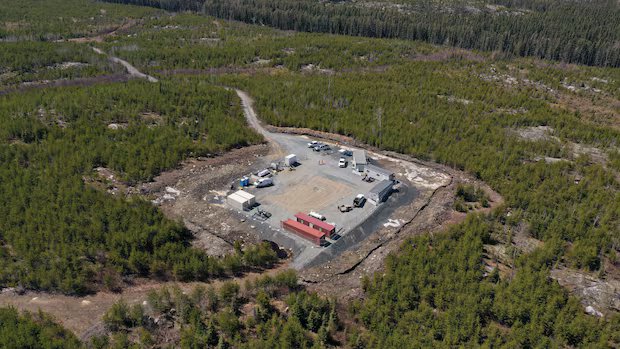
For years, northwestern Ontario has been eyed as the potential host for Canada’s first deep geological repository (DGR) for nuclear waste.
The site in question, located near the Township of Ignace and Wabigoon Lake Ojibway Nation, would see Canada’s spent nuclear fuel buried hundreds of metres underground — a concept that’s drawn large criticism from environmental advocates and First Nation leaders.
On Wednesday, the federal government announced the DGR is possibly being listed as a project of national interest, which means the construction timeline for the $26-billion project could be accelerated under the Building Canada Act.
The news is being welcomed by some leaders, who say the project is critical for the region’s economic revival. However, others, namely those involved with We the Nuclear Free North, say the government’s efforts to fast-track its approval are “a betrayal of public trust.”

The northern Ontario community of Ignace has agreed to be the future home of Canada’s nuclear waste. The National’s Nick Purdon went to the region to find out why the majority of people were in favour of the move and see how the toxic materials will be stored deep underground.
About 1,200 people live in Ignace, located about 245 kilometres northwest of Thunder Bay, while Wabigoon Lake Ojibway Nation has about 200 members on reserve.
Aaron Gullins, chief administrative officer of Ignace, said the township’s population could double or triple in size if the DGR is approved.
“We’re hoping that Ignace realizes that growth,” Gullins said, “because it hasn’t done well in the last couple of decades.”
After years of industrial losses and an ever-rising cost of living, the township is welcoming opportunities “to offset some of those pressures and make sure that the community can thrive like it once did back in the ‘80s.”
Project ‘still subject to impact assessments’: feds
The DGR is undergoing a federal impact assessment under the Impact Assessment Act and a Canadian Nuclear Safety Commission licensing review under the Nuclear Safety and Control Act. As well, it’s subject to a regulatory assessment and approval process by Wabigoon Lake Ojibway Nation.
“The Building Canada Act is not about bypassing approvals. It is intended to streamline federal regulatory processes to ensure that projects of national interest move forward efficiently and predictably,” wrote Pierre-Alain Bujold, media relations person with the Privy Council Office, in an email to CBC News Thursday.
“Projects listed under the Act are still subject to impact assessments, as well as Crown consultations with potentially impacted Indigenous communities.”
According to the Government of Canada, before any decision is made about listing the DGR as a project of national interest, “consultations will be held with Indigenous communities who may be impacted by the project, to determine whether this project should be listed under the Act.”
“These consultations will begin over the next several months, with the intent for the Minister of One Canadian Economy to make a recommendation for Governor in Council decision in the fall,” the government’s website says.
‘The future of Ontario is in northern Ontario’
Regional leaders are celebrating the national interest in the DGR, including the Northwestern Ontario Municipal Association (NOMA) and Federation of Northern Ontario Municipalities (FONOM).
“We knew that the future of Ontario is in northern Ontario, and the fact that the federal government wants to move fast is music to our ears,” said FONOM president and mayor of Kapuskasing, Dave Plourde.

“It’s about taking the bull by the horns and moving forward and making sure that we have everything we need in place to really take advantage of the growth that’s going to happen.”
That, he said, means making critical infrastructure improvements along the Highway 11-17 corridor to address long-standing safety concerns.
NOMA and FONOM have been advocating for the federal government to recognize the highway — which forms the country’s primary east-west transportation corridor — as strategic national infrastructure.
7:01Northwest nuclear waste repository could become a nationally important project
The federal government is considering listing Canada’s first deep geological repository, proposed for the Ignace area, as a project of national interest. We hear from Federation of Northern Ontario Municipalities President Dave Plourde about what this could mean for the region.
“Both those routes are in dire need of repair, whether it be for nuclear waste [transportation] — just the mining alone that’s going to happen in our neck of the woods — certainly is going to increase the traffic along those highways,” Plourde said.
The municipal associations are calling on the provincial and federal governments to work “to identify and advance priority segments for expansion, twinning, and safety improvements along Highway 11 and Highway 17,” says Wednesday’s news release.
Calls for consultations, thorough examination
Transportation is among the main concerns of those opposed to the DGR. A recent rally drew dozens of community members and First Nation leaders to Thunder Bay earlier this month, with a focus on issues related to safety, the environment and the rights of the region’s First Nations.
“Our primary concern is always the safety — and through whatever ways or means are decided, we need a comprehensive and full examination of the safety aspects,” said Wendy O’Connor, a volunteer with We the Nuclear Free North.

“It’s always the physical safety and the social safety of the project, considering nothing like this has been undertaken before.”
Work on the world’s first deep geological repository for nuclear waste, located in Onkalo, Finland, is nearing completion.
The Nuclear Waste Management Organization (NWMO), which is leading Canada’s DGR project, has responded to transportation concerns by pointing out that radioactive materials have already been transported across the country for decades.
However, critics say the scale of the DGR, the amount of materials to be transported, and the distance to be covered is unlike anything seen before.
“There are no proofs to be had regarding the safety of such a facility, and considering the long-term danger of the waste for tens of thousands of years in practical terms and maybe longer, that is a big concern as well,” O’Connor said.
“We have some particular concerns there regarding meaningful Indigenous consultation, and we’ve always maintained that people all along the transportation route and in the watershed of the project deserve to be consulted because they will be affected.”